Category: Solutions

How to Manage a Fleet of 100+ Vehicles Without Burning Out

How to Manage a Fleet of 100+ Vehicles Without Burning Out

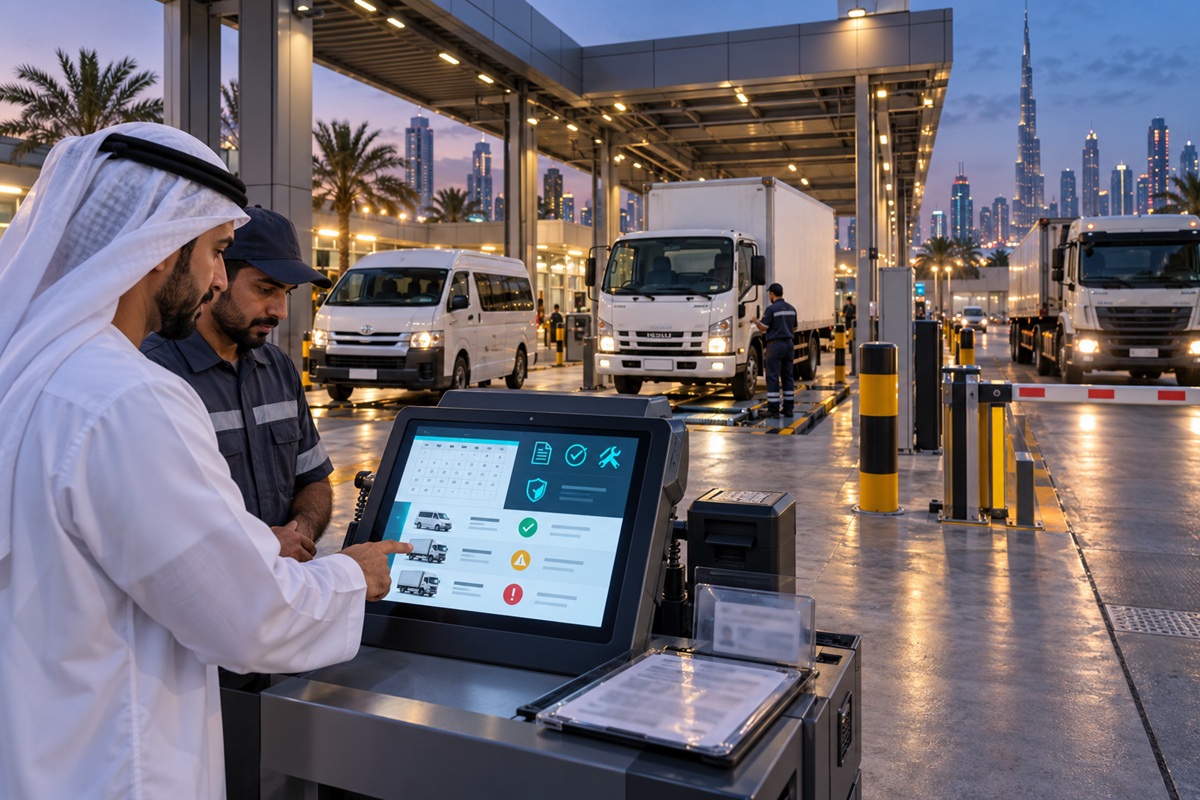
Managing a fleet of 100 or more vehicles in UAE requires three structural changes from managing a 20-vehicle fleet: a team structure with clear delegation (fleet manager + depot supervisors + safety officer + workshop coordinator, each with defined data access and accountability), technology automation that eliminates information gathering from the fleet manager’s day (alerts replace phone calls; automated reports replace manual compilation; automated compliance monitoring replaces calendar chasing), and exception-based management discipline (the fleet manager reviews exceptions and makes decisions; the system monitors continuously and flags only what requires human judgment). The fleet manager who tries to personally monitor 100 vehicles the way they monitored 20 will fail not from incompetence but from a management model that does not scale.
Read More »
Fleet Expansion Planning: Adding Vehicles Without Losing Control

Fleet Expansion Planning: Adding Vehicles Without Losing Control

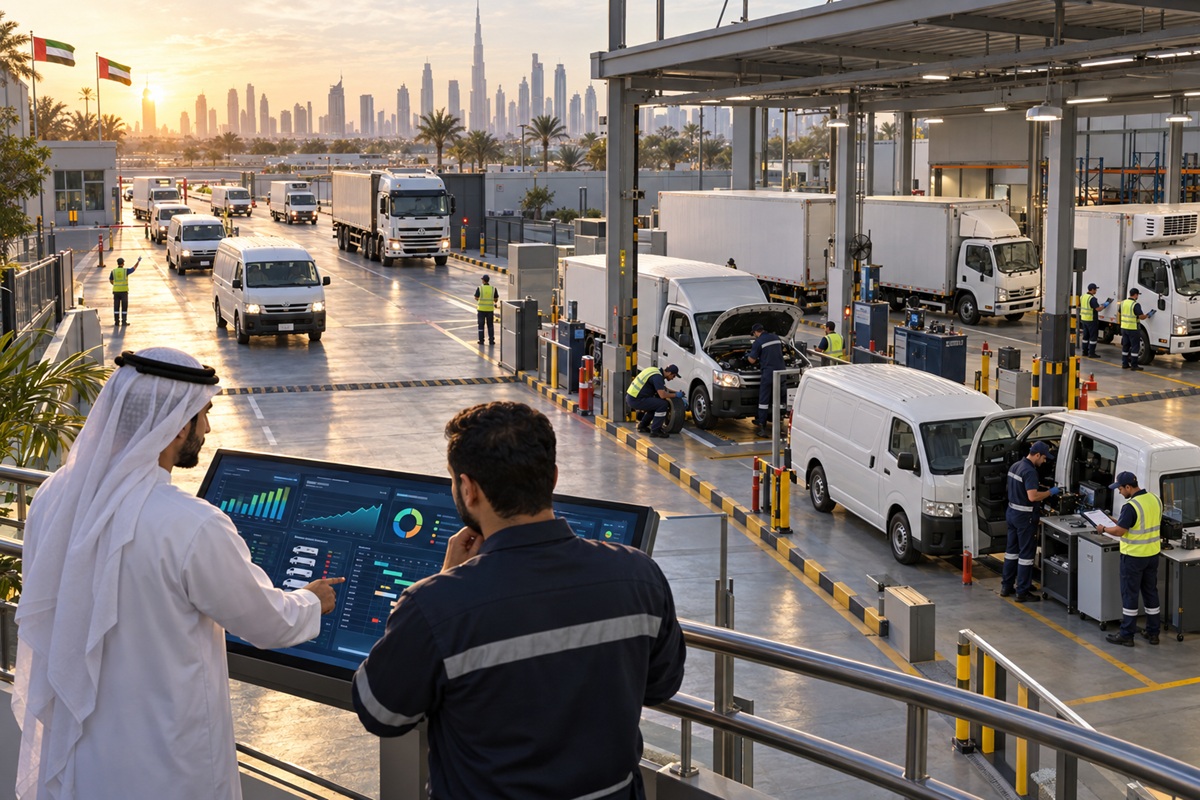
Fleet expansion planning for UAE commercial fleets involves four sequential decisions: whether expansion is genuinely needed (utilisation analysis to verify current fleet is above 80% utilised before adding vehicles), what to procure (vehicle specification matched to operational requirements, UAE summer operating temperature rating, compliance certification requirements), how to onboard new vehicles efficiently (GPS device installation, Asateel and IVMS registration, insurance, Mulkia, driver assignment, and fleet platform configuration a 5 to 7 day process per vehicle batch), and how to maintain management control as the fleet grows (team structure scaling, alert routing configuration for new vehicles, compliance calendar expansion). The most common fleet expansion mistake in UAE is adding vehicles in response to operational pressure without first verifying that current vehicles are fully utilised GPS utilisation data consistently reveals 20 to 30 percent underutilised capacity in fleets that believe they are at operational limits.

Read More »
Driver Management Best Practices for Fleet Managers in UAE

Driver Management Best Practices for Fleet Managers in UAE

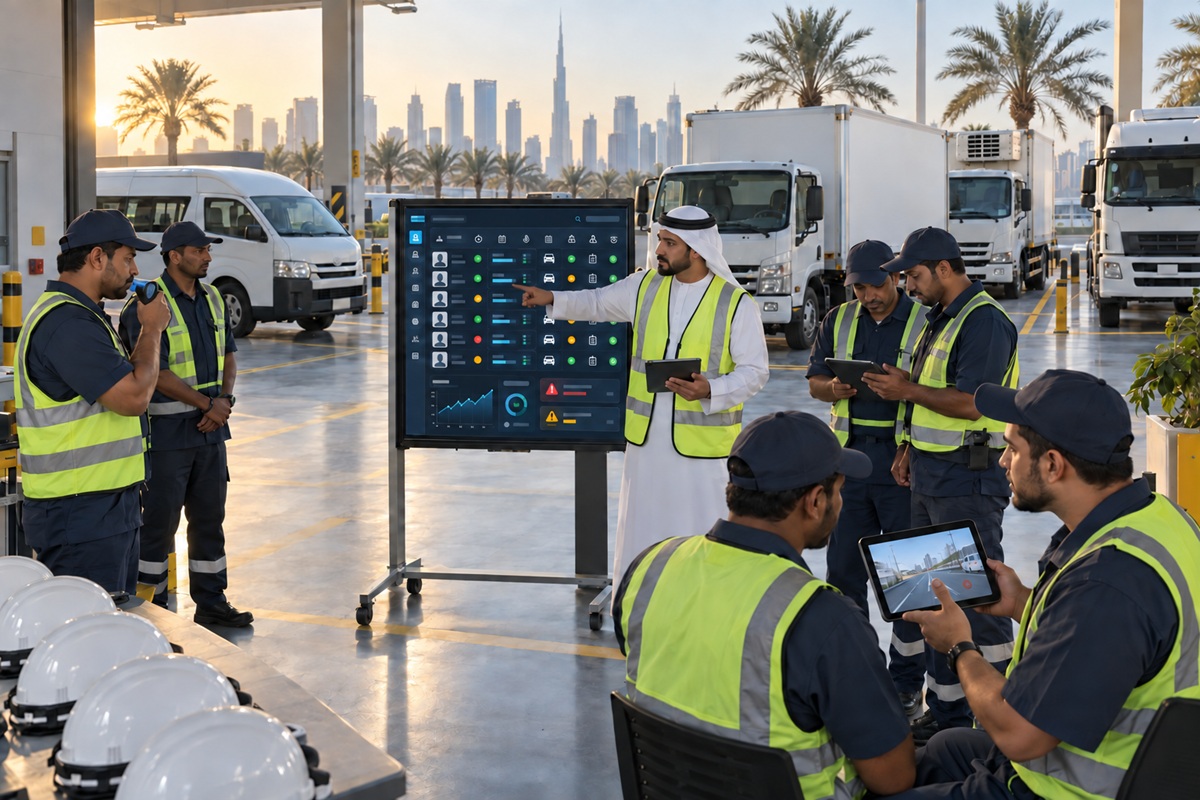
Driver management for UAE commercial fleet managers covers five domains: hiring and onboarding (UAE licence verification, ADNOC defensive driving certification, drug screening, and induction training), performance monitoring (GPS safety scoring, harsh event tracking, fuel efficiency scoring, and weekly scorecard review), coaching (data-specific weekly conversations with bottom-quartile drivers, positive recognition for top performers), compliance tracking (UAE licence expiry, ADNOC credential renewal, journey management documentation), and retention (driver welfare in UAE summer conditions, fair incentive programmes, transparent performance data). Fleets with structured driver management programmes GPS safety scoring, weekly coaching, and positive recognition consistently achieve 30 to 40 percent lower at-fault incident rates and 15 to 25 percent lower driver turnover than fleets managing drivers reactively.

Read More »
Fleet Accident Management: From Incident to Report in 24 Hours

Fleet Accident Management: From Incident to Report in 24 Hours

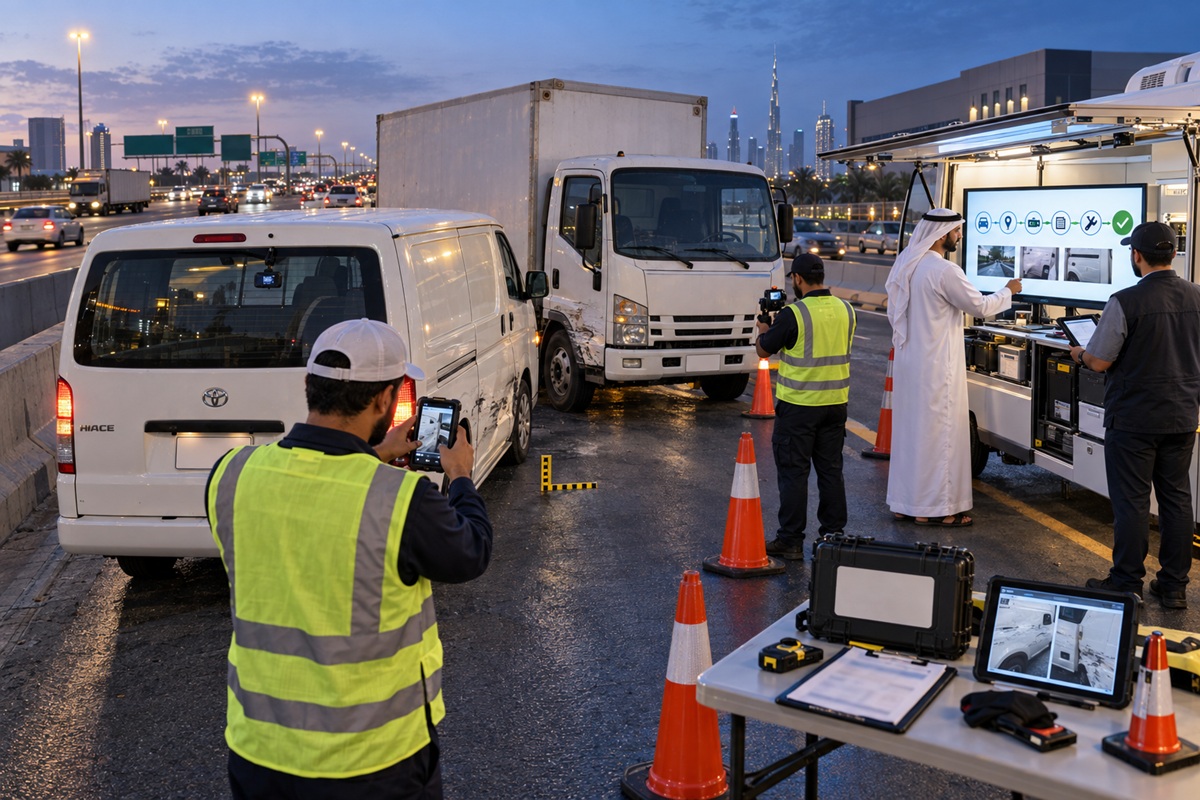
Fleet accident management is the structured process of responding to, documenting, investigating, and reporting commercial vehicle incidents from the moment the driver notifies the fleet manager to the completed insurance claim, ADNOC HSE report (for contractor fleets), and corrective action record. Fleet incident reporting software accelerates this process by providing GPS incident reconstruction (vehicle speed, route, and events in the period before and during the incident), dashcam footage retrieval (driver-facing and forward-facing camera recording), structured digital incident forms, and automated report generation for insurers, Police, and ADNOC HSE management. The 24-hour reporting target is achievable with integrated fleet incident software without it, gathering the same information manually typically takes 3 to 7 business days.

Read More »
Engine Diagnostics and OBD-II for UAE Fleet Vehicles

Engine Diagnostics and OBD-II for Fleet Vehicles in UAE

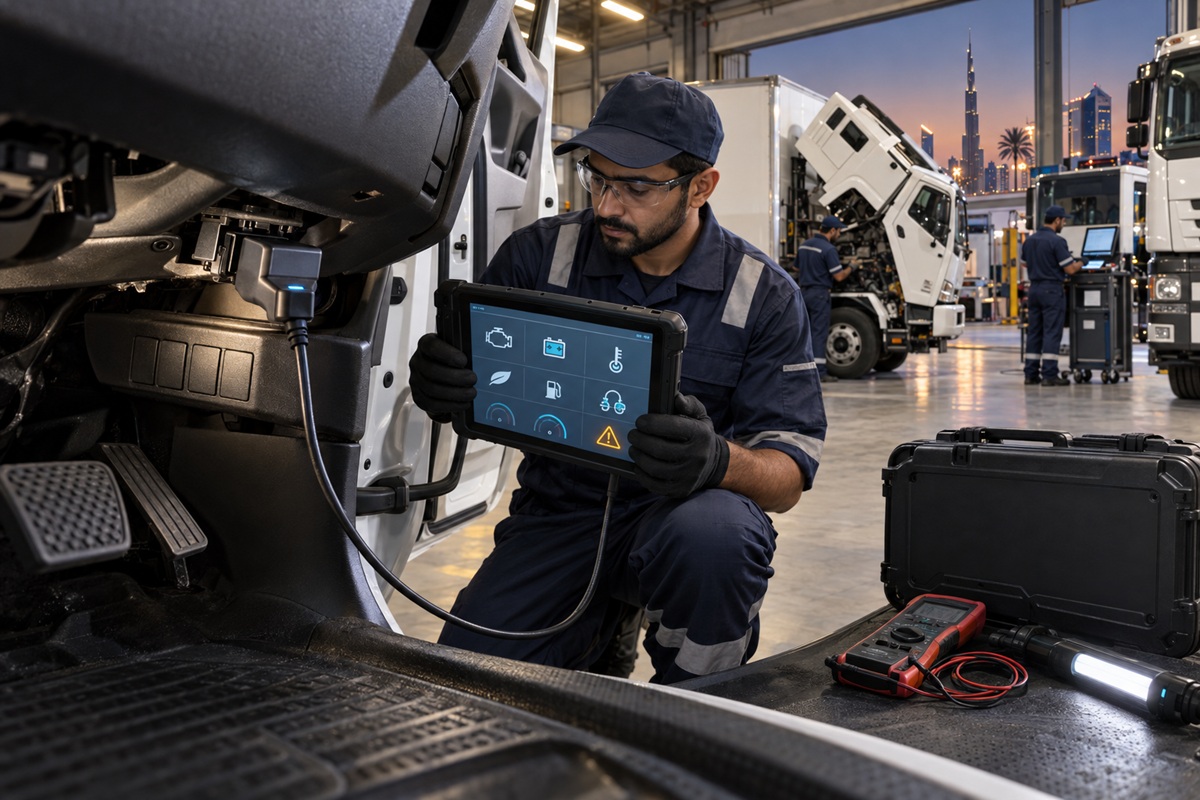
OBD-II (On-Board Diagnostics, second generation) is the standardised diagnostic interface on all commercial vehicles manufactured after 2001 that provides real-time access to the vehicle’s engine management computer data. In fleet management, a GPS tracking device with OBD-II interface reads diagnostic data continuously and transmits it to the fleet management platform when the engine management computer detects a fault and generates a diagnostic trouble code (DTC), the fleet platform receives it within seconds, before the driver sees the dashboard warning light. This real-time fault detection enables fleet managers to schedule targeted maintenance before a developing fault causes a breakdown the core mechanism of predictive fleet maintenance.

Read More »
Workshop Management for Fleet Operators - Complete UAE Guide

Workshop Management for Fleet Operators: Complete UAE Guide

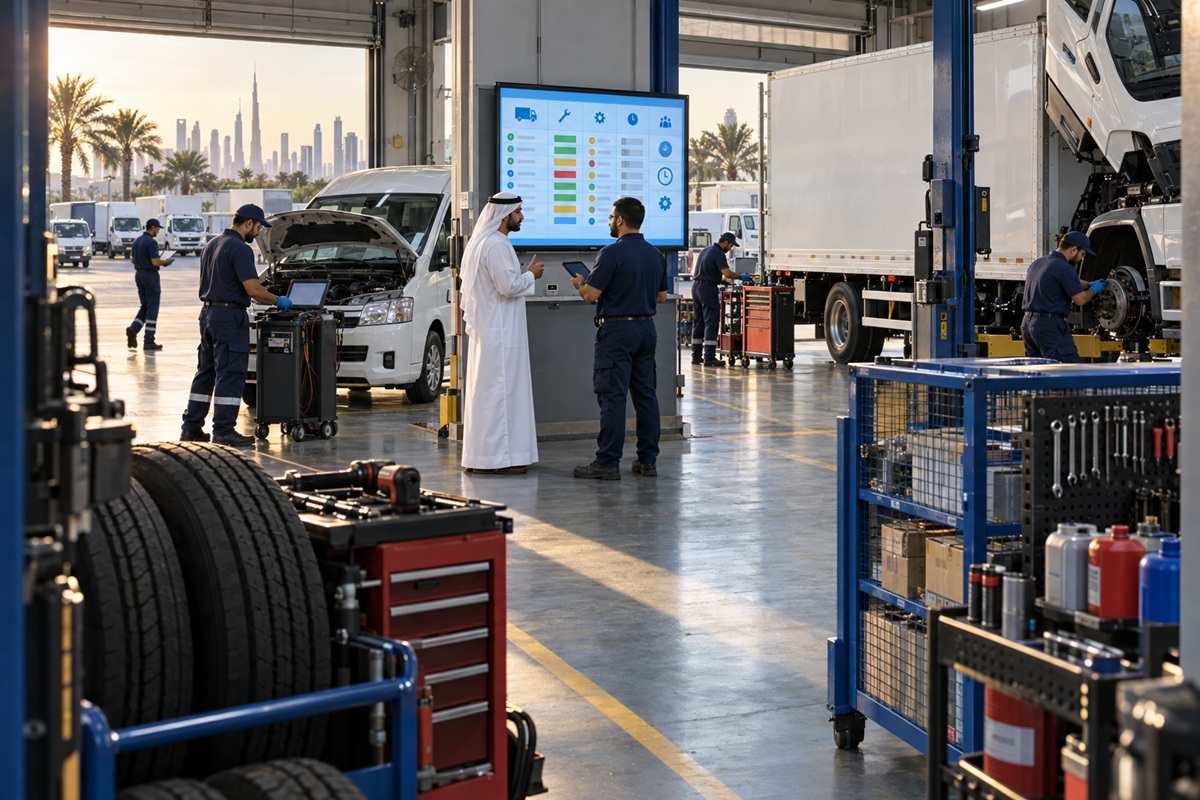
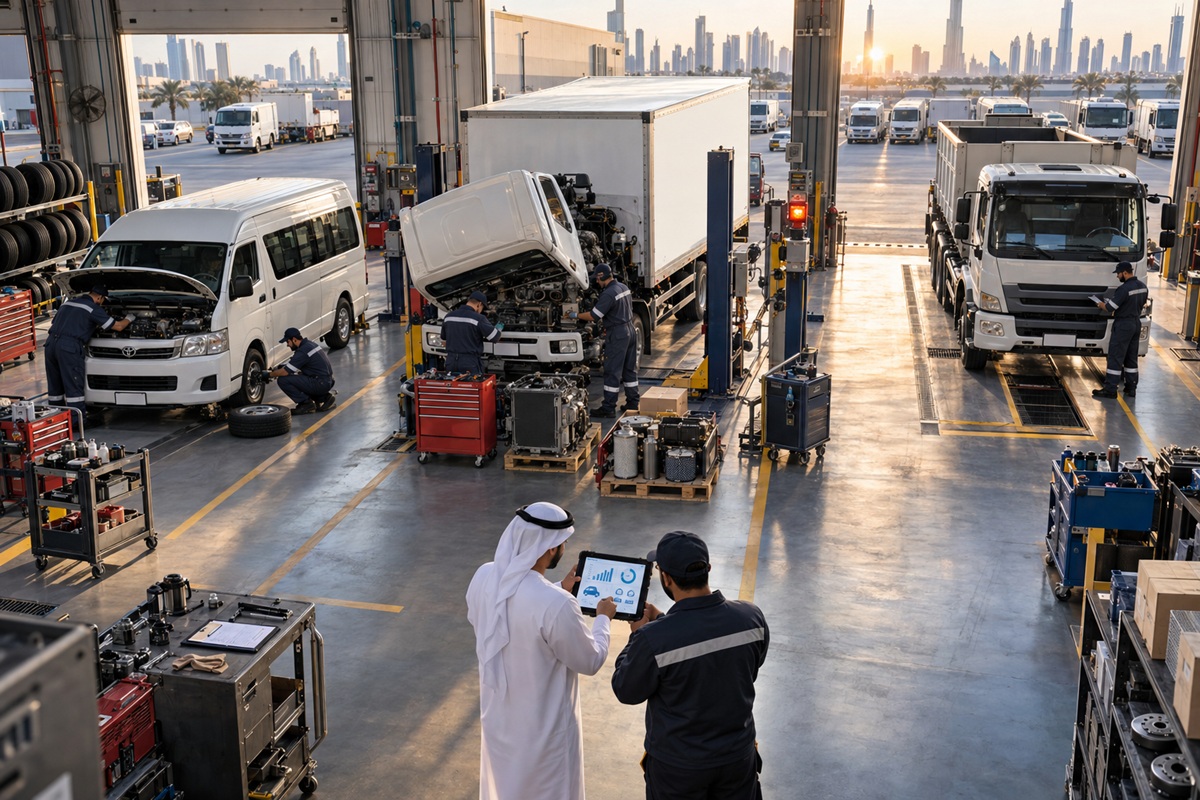
Workshop management for fleet operators encompasses the scheduling, execution, and tracking of all vehicle maintenance and repair work from planned preventive services and OBD-triggered predictive repairs to driver-reported defect corrections and breakdown recovery. Effective fleet workshop management integrates with the fleet management platform to receive maintenance alerts from GPS mileage triggers and OBD diagnostics, create work orders automatically, manage parts inventory and procurement, track technician time and job status, and measure workshop performance against KPIs including vehicle turnaround time, first-time fix rate, and cost per maintenance event. For UAE commercial fleets, workshop management software that integrates with GPS fleet tracking eliminates the coordination gap between the operations team and the workshop both work from the same maintenance calendar and the same vehicle history.

Read More »
Fleet Safety Management Software: Reducing Incident Rates by 40%

Fleet Safety Management Software: Reducing Incident Rates by 40%

Fleet safety management software reduces UAE commercial vehicle incident rates through four integrated mechanisms: AI driver behaviour scoring (detecting and coaching on harsh braking, speeding, rapid acceleration, and cornering events), AI dashcam monitoring (real-time fatigue and distraction detection with in-cab alerts), GPS incident reconstruction (providing objective location, speed, and event data for every incident), and ADNOC IVMS HSE reporting (generating weekly driver safety reports in ADNOC-specified format for contractor fleet compliance). UAE commercial fleets using fleet safety management software with systematic driver coaching programmes report 30 to 45 percent reduction in at-fault incident rates within 12 months translating to AED 150,000 to AED 500,000 in avoided incident costs for a 100-vehicle fleet.

Read More »
Vehicle Inspection App for Fleet Drivers - Daily Check Best Practices in UAE

Vehicle Inspection App for Fleet Drivers: Daily Check Best Practices in UAE

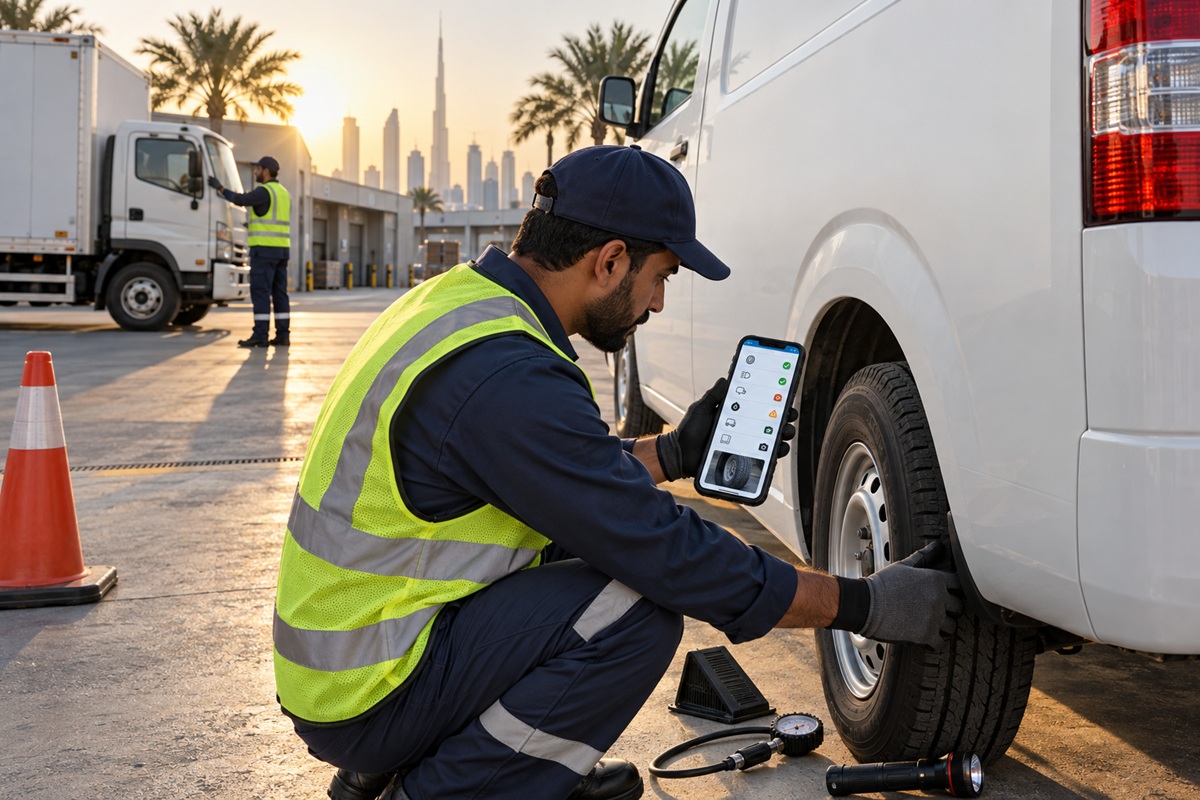
A vehicle inspection app for fleet drivers replaces paper defect books and manual pre-trip checklists with a digital inspection form completed on the driver’s smartphone before each shift. The driver works through a structured checklist tyres, lights, fluid levels, brakes, mirrors, bodywork condition, cleanliness tapping pass/fail on each item and photographing any defects. Completed inspections are submitted to the fleet management platform immediately, alerting the fleet manager or workshop to any flagged defects in real time. For UAE fleet operations, digital vehicle inspection apps satisfy ADNOC IVMS journey management documentation requirements and provide the pre-trip inspection record that insurance carriers require as evidence of due diligence in vehicle condition management.

Read More »
RTA Vehicle Renewal and Mulkia Alerts - Automating Compliance for UAE Fleets

RTA Vehicle Renewal and Mulkia Alerts: Automating Compliance for UAE Fleets

RTA vehicle renewal alerts for UAE fleets are automated notifications that fire before a vehicle’s Mulkia (registration card), vehicle insurance, or vehicle inspection certificate expires giving fleet managers sufficient lead time to renew before the vehicle is technically in violation of UAE traffic law. Operating a commercial vehicle with an expired Mulkia in UAE results in a fine of AED 500 per vehicle and vehicle impoundment for extended non-renewal. Fleet management software that tracks all vehicle document expiry dates and generates configurable advance alerts typically 30 days and 7 days before expiry prevents the most common fleet compliance failure in UAE commercial fleet operations.

Read More »
How to Track Fleet Maintenance Costs and Control Budget Overruns in UAE

How to Track Fleet Maintenance Costs and Control Budget Overruns in UAE

Fleet maintenance costs in UAE are tracked at three levels: per-event (the cost of each individual maintenance job), per-vehicle per-month (total maintenance spend for each vehicle divided by the number of operating months), and per-kilometre (total maintenance cost divided by total distance driven the metric that enables meaningful comparison between vehicles with different mileage). Fleet maintenance cost analytics software extracts this data from work order completion records, compares actual spend against the maintenance budget for each vehicle and fleet category, and generates early warning alerts when any vehicle or vehicle group is tracking above the budget baseline enabling the fleet manager to investigate and intervene before end-of-quarter budget overruns accumulate.

Read More »
Scroll to Top