
AI-Powered Fleet Alerts: How Smart Notifications Reduce Reaction Time
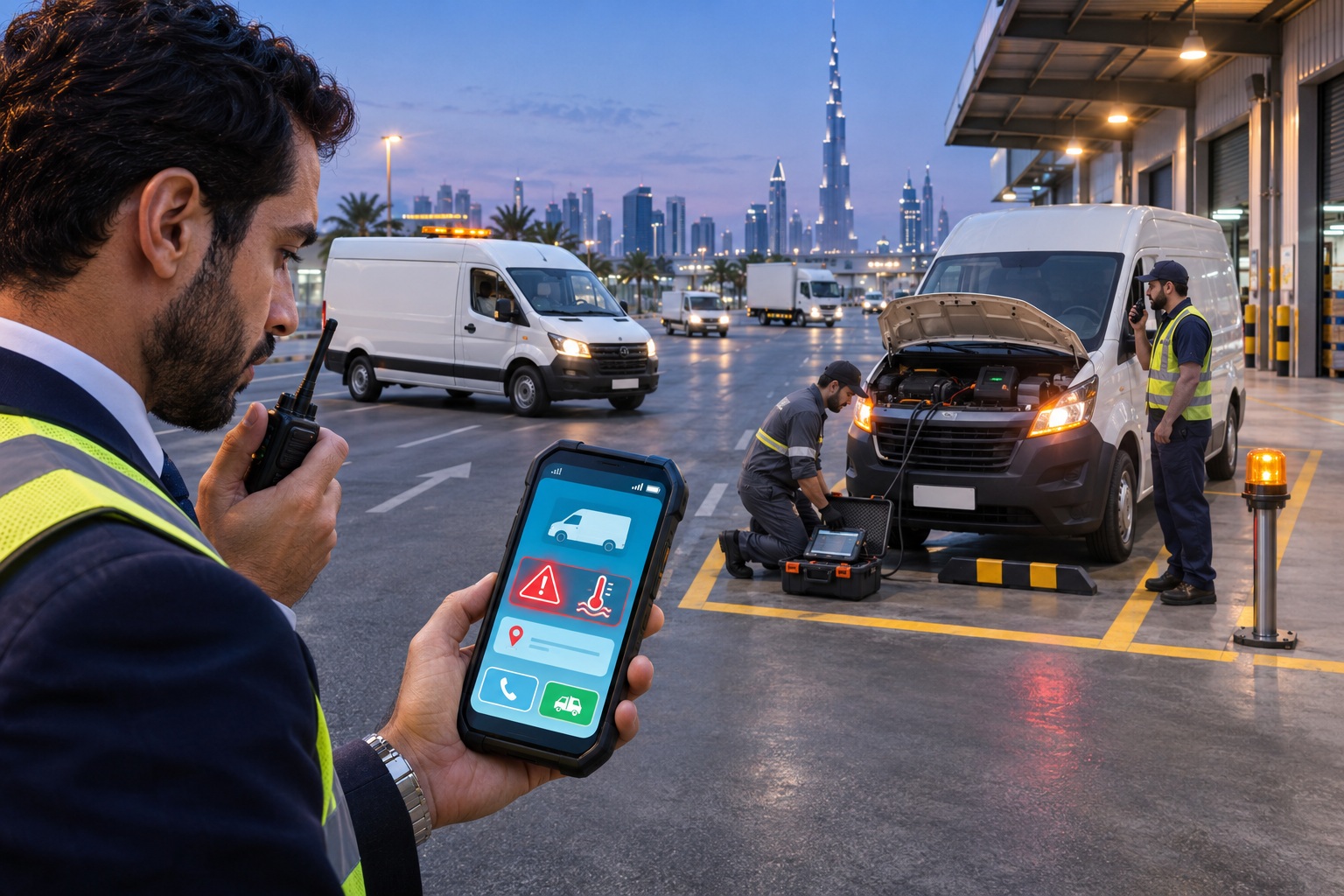
Key Takeaways
- Reaction time is the gap between an event and a response. Alerts exist to shorten it.
- AI alerts learn normal behaviour and flag deviations, so there are fewer false alarms than fixed rules.
- Rank alerts by risk and route them to the right role.
- Priority events: temperature breach, fuel drops, geofence exits, harsh driving, device tampering.
- Too many alerts cause alert fatigue. Tune thresholds in the first 30 days.
A reefer truck’s temperature climbs two degrees at 2 am. A driver exceeds the speed limit on Sheikh Mohammed bin Zayed Road. Fuel drops sharply at a site gate. In many fleets, each of these is discovered the next morning in a report.
By then, the cargo is spoiled, the fine is issued and the fuel is gone. The data existed. The notification did not reach anyone in time.
This guide explains how AI fleet alerts work, how they differ from fixed-rule alerts, which events deserve them and how to roll them out without overwhelming your team.
What Are AI Fleet Alerts?
AI fleet alerts are notifications generated when machine learning models detect events that deviate from expected vehicle, driver or cargo behaviour. They are delivered by dashboard, mobile push, SMS or email, and can be prioritised and routed automatically.
Fixed-rule systems alert when a number crosses a line, such as speed above 120 km/h. AI systems add context: time of day, route, vehicle type, load and history.
Why Does Reaction Time Matter?
Problem: managers learn about incidents from reports, calls or customers. Cost: late response turns small issues into losses: spoiled cargo, theft, accidents and missed deliveries. Consequence: reactive operations and constant firefighting. Solution: alerts that reach the right person within minutes with enough context to act. Outcome: shorter response times and fewer repeat incidents.
Fixed-Rule Alerts vs AI Fleet Alerts: What Is the Difference?
Factor | Fixed-Rule Alerts | AI Fleet Alerts |
Trigger | Single threshold | Pattern and context |
False alarms | Common | Reduced as models learn |
Prioritisation | Equal for all | Ranked by risk |
Adapts to vehicle or route | No | Yes |
Detects unusual combinations | No | Yes |
Setup effort | Manual tuning per rule | Initial tuning, then learns |
Which Fleet Events Should Trigger Alerts?
Event | Risk | Typical Recipient |
Temperature breach on reefer | Cargo loss and compliance | Cold chain manager, driver |
Sudden fuel drop | Theft | Fleet manager |
Geofence exit or unauthorised stop | Misuse or theft | Dispatcher |
Harsh braking or collision event | Safety | Safety manager |
Speeding above zone limit | Fines and safety | Supervisor |
Device unplugged or GPS jam | Tampering | Fleet manager |
Excessive idling | Fuel waste | Supervisor |
Service due or fault code | Breakdown | Maintenance team |
How Does an AI Alert Work Step by Step?
- Telematics devices send location, sensor and driver data continuously.
- The platform compares live data against learned patterns for that vehicle, route and time.
- A model scores the deviation by likely risk and cost.
- The system groups related signals, such as fuel drop plus unscheduled stop.
- The alert is sent to the responsible role by the right channel.
- The recipient acknowledges, acts and records the outcome.
- Outcomes feed back to improve future alerts.
How Do You Avoid Alert Fatigue?
The most common failure is too many alerts. Teams start ignoring them, and the one important warning is missed.
- Start with five to seven high-value alert types
- Set severity levels and send only critical alerts by SMS or push
- Group repeated events into a single notification
- Route alerts by role, shift and branch
- Review the alert log weekly during the first month
- Retire alerts nobody acts on
Real Operational Example: Cold Chain Distributor in Dubai
Scenario: a food distributor runs 30 refrigerated vehicles. Temperature reports are reviewed each morning, and breaches are found after delivery.
With real-time alerts, a rising temperature trend triggers a notification to the dispatcher and driver before the threshold is crossed. Door-open events are linked to location, which shows that most breaches happen during long unloading stops. The company changes unloading procedures and sets a door-open time alert.
The response window moves from hours to minutes, and the company holds evidence of action for customers.
This is an illustrative scenario, not a customer result.
How to Roll Out AI Fleet Alerts
- List the five costliest incidents in the past year.
- Map each to a measurable event and a responsible role.
- Configure alerts for the pilot group of 10 to 20 vehicles.
- Define response procedures and target response times.
- Run for 30 days, then tune thresholds and remove noise.
- Expand to the full fleet and track alert-to-action time monthly.
Future Outlook
Alerts are moving from notifying to recommending: suggesting which vehicle can cover a delayed job or which driver needs coaching. Video telematics will add context clips to alerts, and integration with dispatch and maintenance will let some responses start automatically.
Conclusion
The value of an alert is the time it saves. AI fleet alerts reduce noise, rank risk and put the right information in front of the right person in time to act.
Start small, assign owners and measure response time. The savings appear as fewer losses, not more reports.
Ready to Gain Complete Fleet Visibility?
Most fleet problems are found after the loss. V Zone International gives UAE and GCC operators real-time tracking, fuel monitoring and AI fleet intelligence, so you can act before costs rise. Book a demo to see how it works with your own vehicles and routes.
Frequently Asked Questions
What are AI fleet alerts?
AI fleet alerts are notifications triggered when machine learning detects unusual vehicle, driver or cargo events. They are ranked by risk and sent to the right role, which shortens response time and reduces false alarms.
How do AI alerts differ from normal GPS alerts?
Normal alerts fire when a fixed threshold is crossed. AI alerts use context and history, such as route, time and vehicle type, to spot meaningful deviations and avoid unnecessary notifications.
How do you reduce alert fatigue?
Start with a few high-value alert types, set severity levels, group repeated events, route alerts by role and review the log weekly. Remove alerts that nobody acts on.
Which alerts matter most for UAE fleets?
Temperature breaches, fuel drops, geofence exits, harsh driving, speeding, device tampering and service due alerts usually carry the highest cost or risk. Prioritise based on your own incident history.
How fast should teams respond to alerts?
Set targets by severity. Critical alerts such as cargo temperature or theft should be acknowledged within minutes. Track alert-to-action time as a KPI and improve it monthly.