Author: vzone-growth

How to Manage a Fleet of 100+ Vehicles Without Burning Out

How to Manage a Fleet of 100+ Vehicles Without Burning Out

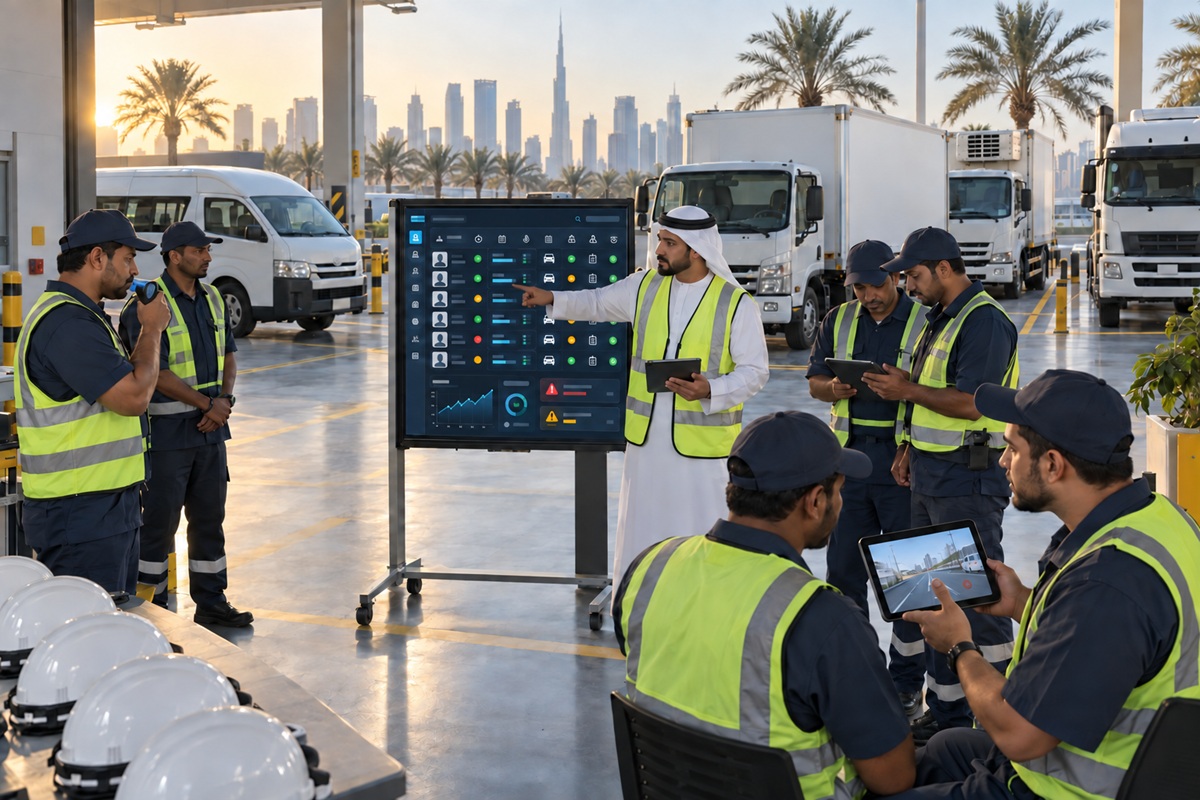
Managing a fleet of 100 or more vehicles in UAE requires three structural changes from managing a 20-vehicle fleet: a team structure with clear delegation (fleet manager + depot supervisors + safety officer + workshop coordinator, each with defined data access and accountability), technology automation that eliminates information gathering from the fleet manager’s day (alerts replace phone calls; automated reports replace manual compilation; automated compliance monitoring replaces calendar chasing), and exception-based management discipline (the fleet manager reviews exceptions and makes decisions; the system monitors continuously and flags only what requires human judgment). The fleet manager who tries to personally monitor 100 vehicles the way they monitored 20 will fail not from incompetence but from a management model that does not scale.

Read More »
Fleet Management Dashboard: What Every UAE Manager Should See Daily

Fleet Management Dashboard: What Every UAE Manager Should See Daily

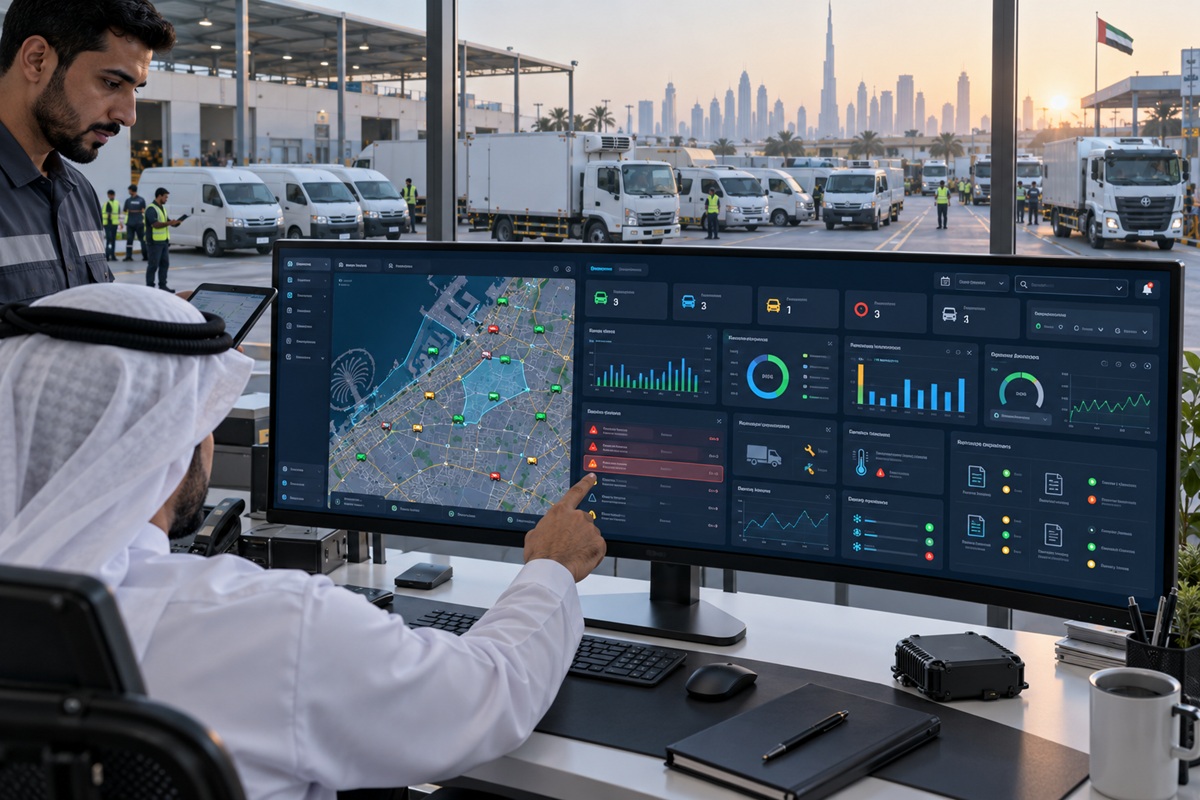
A fleet management dashboard for UAE fleet managers should display five panels simultaneously: a live fleet map (all vehicles, current position, speed, driver identity, and status), an alert queue (unresolved alerts from the past 24 hours ranked by severity), a safety summary (fleet-average driver safety score, bottom-quartile driver count, overnight idling highlights), a compliance status panel (compliance documents expiring within 30 days, Asateel/IVMS submission status), and a fuel and cost snapshot (yesterday’s fuel cost per km vs baseline, idling cost total, any card reconciliation exceptions). Opening this dashboard every morning takes 8 to 12 minutes; it replaces the 45 to 60 minutes of phone calls, WhatsApp messages, and spreadsheet checks that produce the same operational awareness without the same data quality or speed.

Read More »
How Fleet Managers Reduce Costs Without Cutting Fleet Size

How Fleet Managers Reduce Costs Without Cutting Fleet Size

UAE fleet managers can reduce total fleet operating costs by 20 to 35 percent without cutting fleet size through ten strategies: eliminating engine idling (saves 8–12% of fuel), deploying eco-driving coaching (saves 15–20% of fuel), eliminating fuel theft (recovers 8–15% of fuel budget), optimising maintenance scheduling to prevent breakdowns (reduces maintenance cost 20–30%), leveraging telematics safety data for insurance renewal negotiation (reduces premiums 10–20%), automating compliance to eliminate violation fines, improving workshop efficiency to reduce vehicle downtime, optimising vehicle utilisation to defer procurement, renegotiating vendor contracts with data-backed fleet volumes, and using route optimisation to reduce total kilometres driven. All ten strategies are enabled by GPS fleet management technology most produce positive ROI within 30 to 90 days.

Read More »
Fleet Expansion Planning: Adding Vehicles Without Losing Control

Fleet Expansion Planning: Adding Vehicles Without Losing Control

Fleet expansion planning for UAE commercial fleets involves four sequential decisions: whether expansion is genuinely needed (utilisation analysis to verify current fleet is above 80% utilised before adding vehicles), what to procure (vehicle specification matched to operational requirements, UAE summer operating temperature rating, compliance certification requirements), how to onboard new vehicles efficiently (GPS device installation, Asateel and IVMS registration, insurance, Mulkia, driver assignment, and fleet platform configuration a 5 to 7 day process per vehicle batch), and how to maintain management control as the fleet grows (team structure scaling, alert routing configuration for new vehicles, compliance calendar expansion). The most common fleet expansion mistake in UAE is adding vehicles in response to operational pressure without first verifying that current vehicles are fully utilised GPS utilisation data consistently reveals 20 to 30 percent underutilised capacity in fleets that believe they are at operational limits.

Read More »
Driver Management Best Practices for Fleet Managers in UAE

Driver Management Best Practices for Fleet Managers in UAE

Driver management for UAE commercial fleet managers covers five domains: hiring and onboarding (UAE licence verification, ADNOC defensive driving certification, drug screening, and induction training), performance monitoring (GPS safety scoring, harsh event tracking, fuel efficiency scoring, and weekly scorecard review), coaching (data-specific weekly conversations with bottom-quartile drivers, positive recognition for top performers), compliance tracking (UAE licence expiry, ADNOC credential renewal, journey management documentation), and retention (driver welfare in UAE summer conditions, fair incentive programmes, transparent performance data). Fleets with structured driver management programmes GPS safety scoring, weekly coaching, and positive recognition consistently achieve 30 to 40 percent lower at-fault incident rates and 15 to 25 percent lower driver turnover than fleets managing drivers reactively.

Read More »
Fleet Manager KPI Scorecard: 20 Metrics That Actually Matter

Fleet Manager KPI Scorecard: 20 Metrics That Actually Matter

The 20 fleet management KPIs that UAE fleet managers should track fall into five domains: cost (fuel cost per km, maintenance cost per vehicle, total cost per km), safety (at-fault incident rate, driver safety score average, harsh event frequency), operations (vehicle availability rate, fleet utilisation rate, on-time delivery rate), maintenance (planned vs unplanned ratio, MTTR, first-time fix rate), and compliance (Asateel/IVMS submission uptime, Mulkia compliance rate, driver licence compliance rate). Each KPI should have a UAE-specific target, a defined data source, and a review frequency weekly for safety and operations KPIs, monthly for cost and compliance KPIs. Fleet management software generates all 20 KPIs automatically from GPS telematics and fuel card data.

Read More »
A Day in the Life of a UAE Fleet Manager (And How Technology Simplifies It)

A Day in the Life of a UAE Fleet Manager (And How Technology Simplifies It)

A UAE fleet manager’s day spans four domains that rarely pause simultaneously: operations (vehicle dispatch, route management, breakdown response), compliance (Asateel, IVMS, Mulkia renewals, driver licence tracking), driver management (safety scoring, coaching, incident follow-up), and cost management (fuel monitoring, maintenance approvals, budget tracking). In a 50-vehicle fleet without telematics, these domains generate approximately 25 to 35 manual tasks per day requiring calls, WhatsApp messages, physical log checks, and spreadsheet updates. With GPS fleet management technology, the same domains generate 8 to 12 dashboard reviews and exception responses the rest is automated monitoring, alert generation, and report delivery that requires human response only when something is actually wrong.

Read More »
Fleet Accident Management: From Incident to Report in 24 Hours

Fleet Accident Management: From Incident to Report in 24 Hours

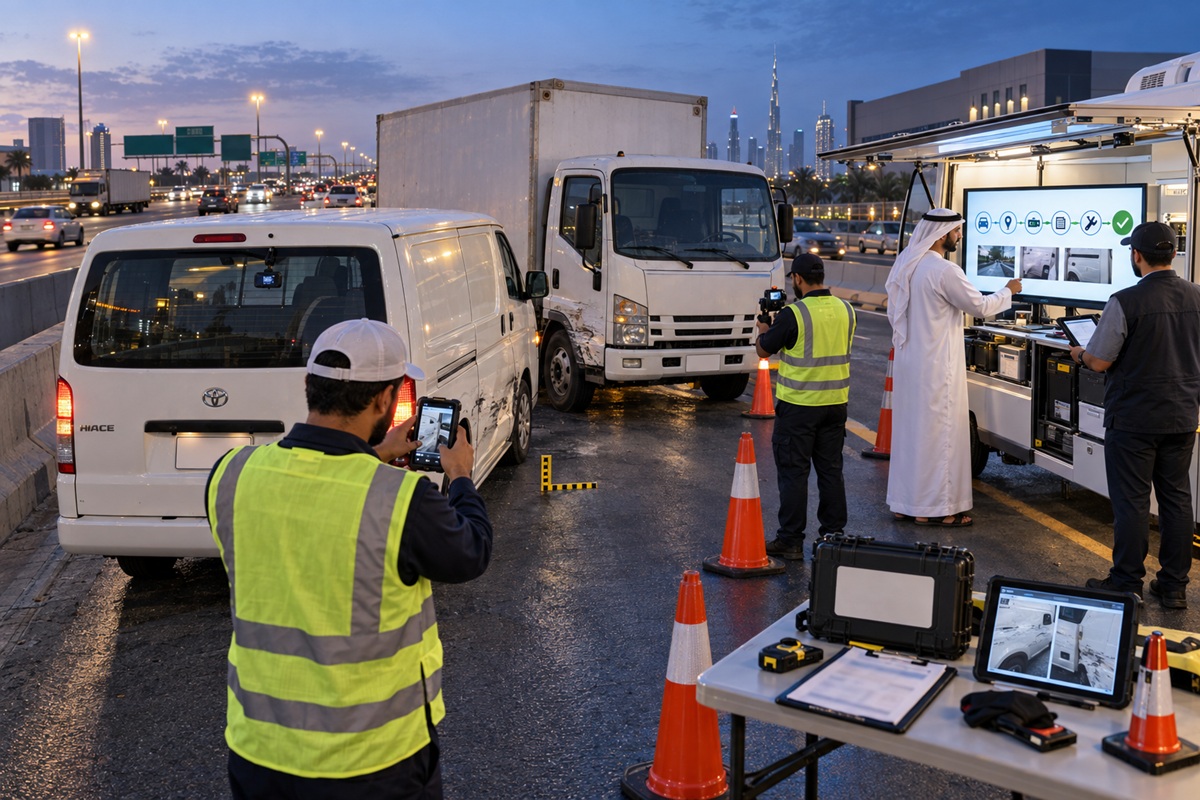
Fleet accident management is the structured process of responding to, documenting, investigating, and reporting commercial vehicle incidents from the moment the driver notifies the fleet manager to the completed insurance claim, ADNOC HSE report (for contractor fleets), and corrective action record. Fleet incident reporting software accelerates this process by providing GPS incident reconstruction (vehicle speed, route, and events in the period before and during the incident), dashcam footage retrieval (driver-facing and forward-facing camera recording), structured digital incident forms, and automated report generation for insurers, Police, and ADNOC HSE management. The 24-hour reporting target is achievable with integrated fleet incident software without it, gathering the same information manually typically takes 3 to 7 business days.

Read More »
Engine Diagnostics and OBD-II for UAE Fleet Vehicles

Engine Diagnostics and OBD-II for Fleet Vehicles in UAE

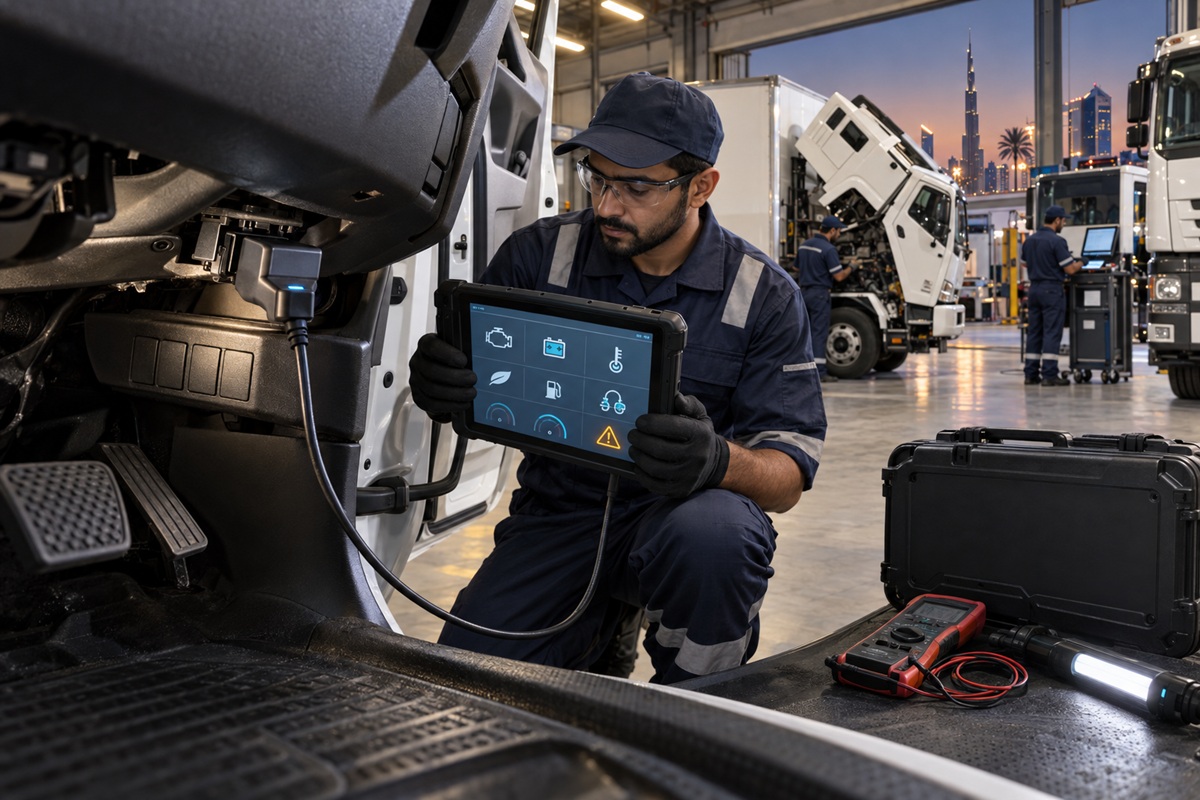
OBD-II (On-Board Diagnostics, second generation) is the standardised diagnostic interface on all commercial vehicles manufactured after 2001 that provides real-time access to the vehicle’s engine management computer data. In fleet management, a GPS tracking device with OBD-II interface reads diagnostic data continuously and transmits it to the fleet management platform when the engine management computer detects a fault and generates a diagnostic trouble code (DTC), the fleet platform receives it within seconds, before the driver sees the dashboard warning light. This real-time fault detection enables fleet managers to schedule targeted maintenance before a developing fault causes a breakdown the core mechanism of predictive fleet maintenance.

Read More »
Workshop Management for Fleet Operators - Complete UAE Guide

Workshop Management for Fleet Operators: Complete UAE Guide

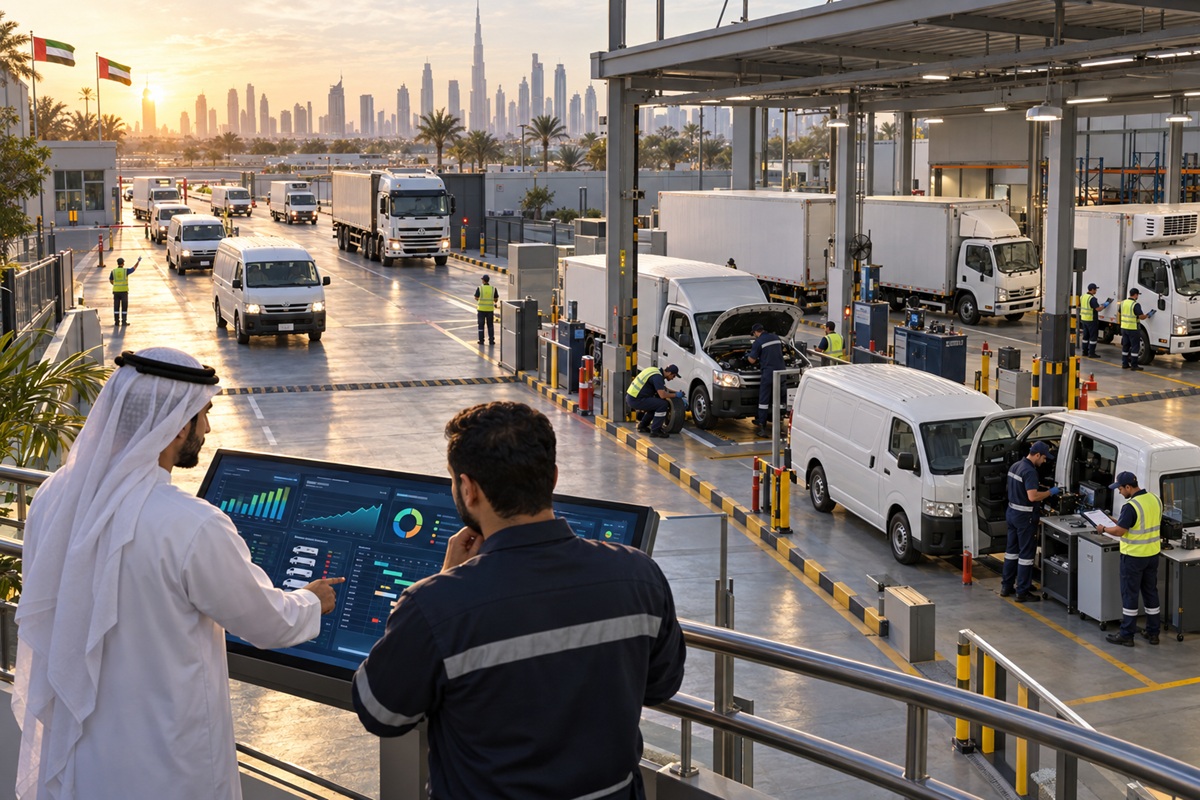
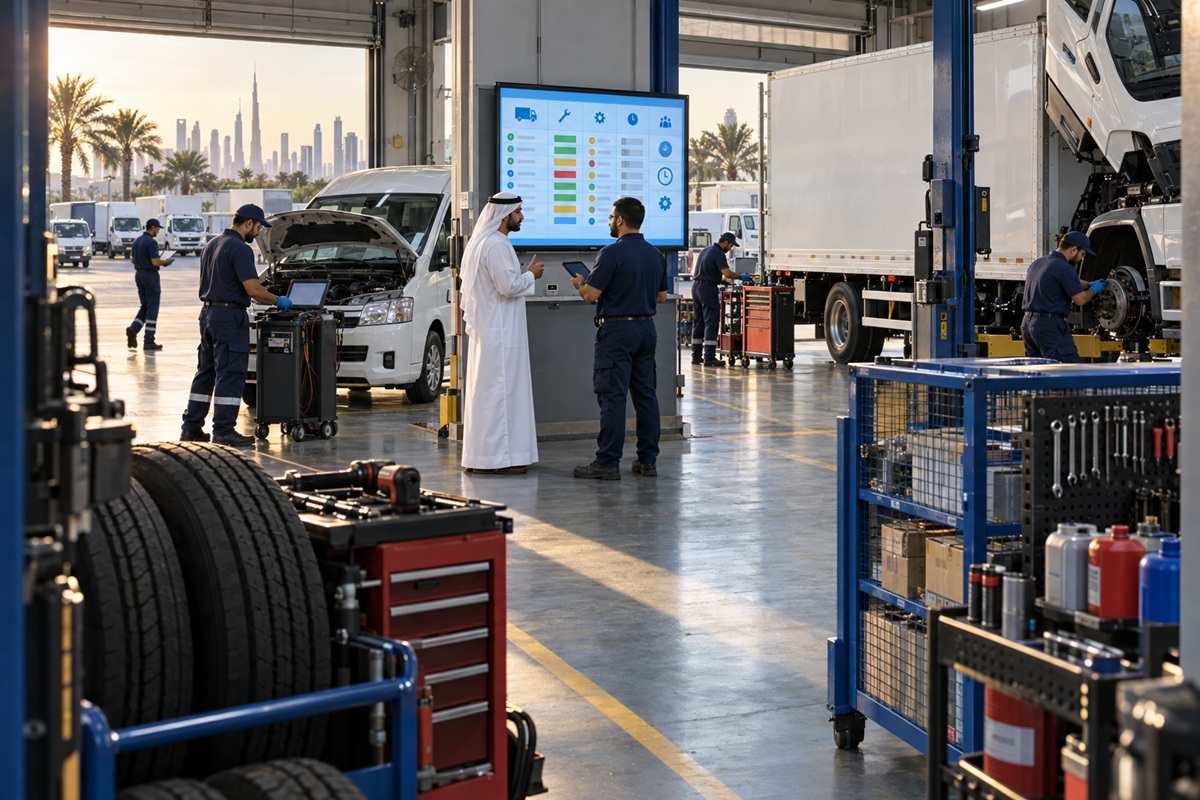
Workshop management for fleet operators encompasses the scheduling, execution, and tracking of all vehicle maintenance and repair work from planned preventive services and OBD-triggered predictive repairs to driver-reported defect corrections and breakdown recovery. Effective fleet workshop management integrates with the fleet management platform to receive maintenance alerts from GPS mileage triggers and OBD diagnostics, create work orders automatically, manage parts inventory and procurement, track technician time and job status, and measure workshop performance against KPIs including vehicle turnaround time, first-time fix rate, and cost per maintenance event. For UAE commercial fleets, workshop management software that integrates with GPS fleet tracking eliminates the coordination gap between the operations team and the workshop both work from the same maintenance calendar and the same vehicle history.

Read More »
Scroll to Top