Author: vzone-growth

Vehicle Tracking System - The Complete Guide

Vehicle Tracking System: The Complete Guide

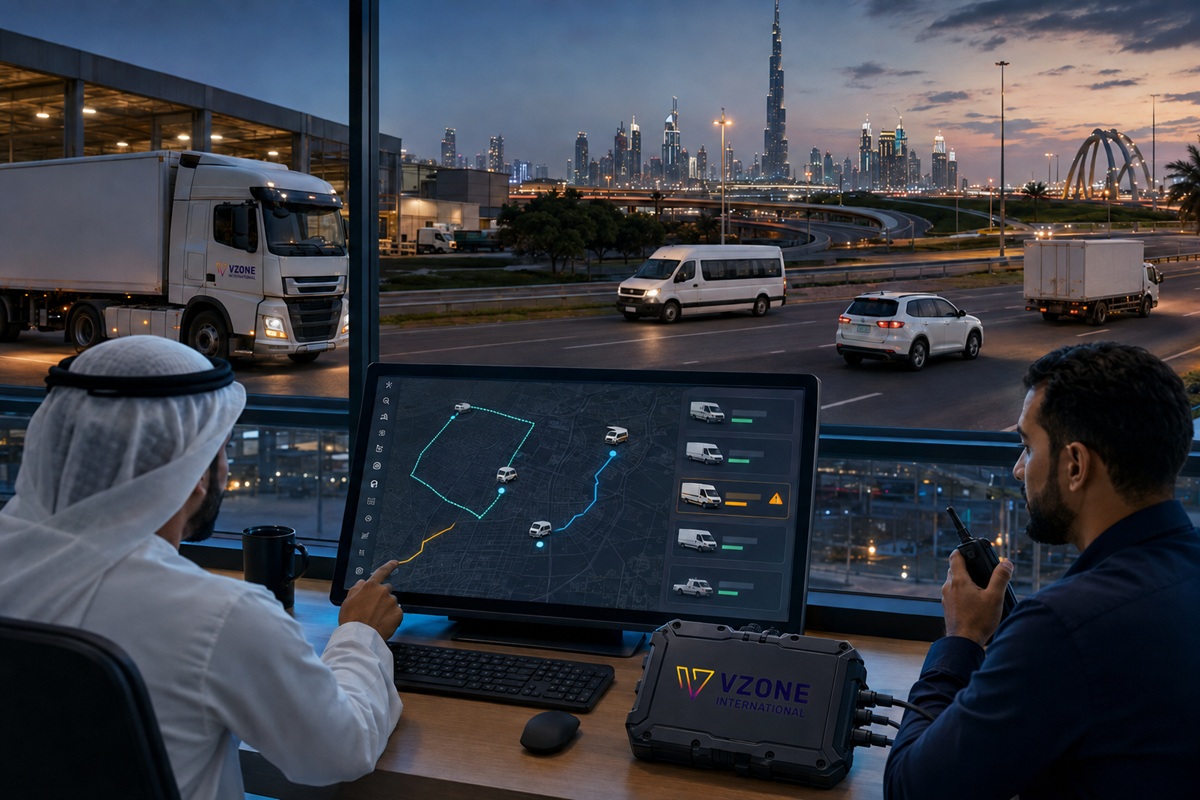
A vehicle tracking system is a device and software combination that uses GPS satellites to determine a vehicle’s location and GSM cellular networks to transmit that location to a cloud platform where it is displayed as a live map position accessible to the vehicle owner or fleet manager from any browser or mobile app. Modern GPS vehicle tracking systems update location every 10 to 30 seconds, achieve position accuracy of 2 to 5 metres in open-sky conditions, and provide additional data including speed, heading, ignition status, and driving behaviour events.
Read More »
Bulk Fuel Tank Monitoring - Managing Depot-Level Fuel in UAE

Bulk Fuel Tank Monitoring: Managing Depot-Level Fuel in UAE

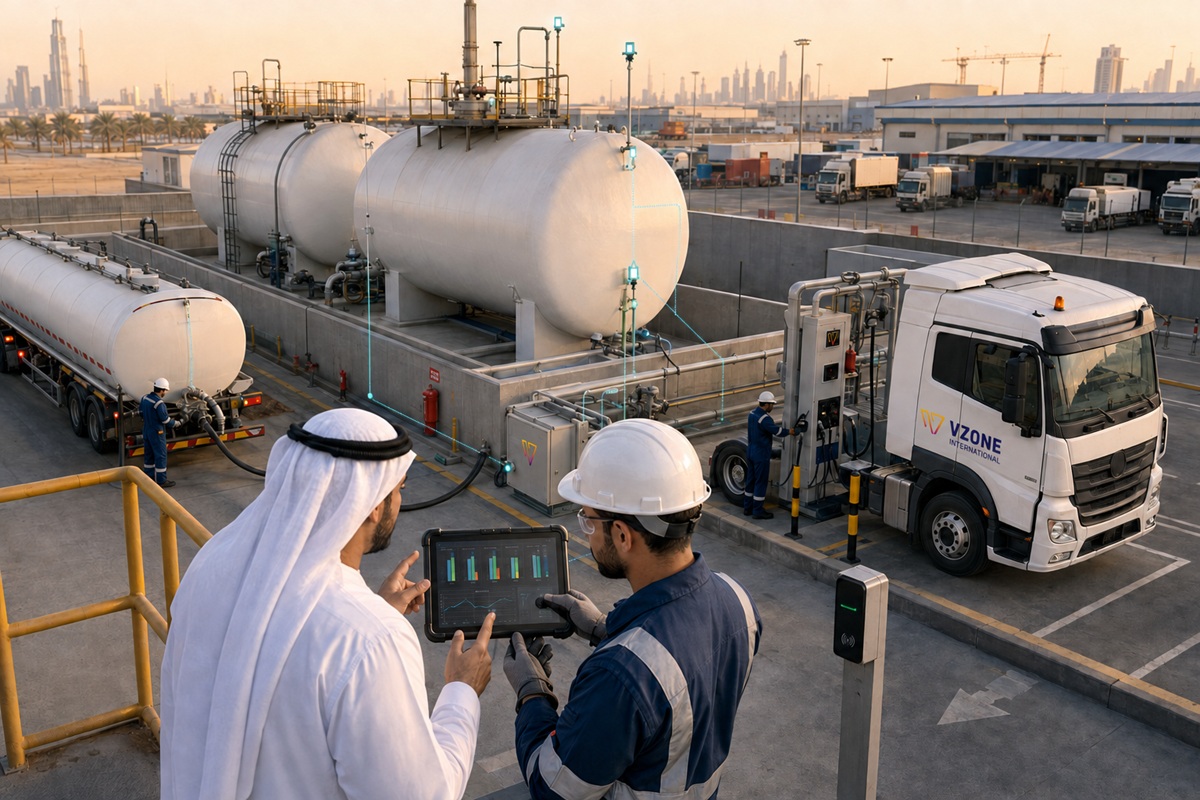
Bulk fuel tank monitoring for UAE depots and construction sites uses IoT level sensors installed in storage tanks to provide real-time fuel level data tracking deliveries in, dispensing out, and detecting unexplained losses that indicate theft or leakage. Without monitoring, UAE depot fuel tanks typically lose 5 to 12 percent of throughput to theft, unmeasured dispensing, and delivery shortfalls losses that are invisible in monthly fuel card statements because the theft occurs at the depot level before fuel reaches individual vehicles. Tank monitoring sensors transmit level data continuously to the fleet management platform, generating alerts for rapid level drops (theft or leak), delivery arrival confirmation, low stock reorder triggers, and dispensing records that reconcile against vehicle fill events.

Read More »
GPS Fleet Tracking for Remote Areas in GCC - Coverage and Solutions

GPS Fleet Tracking for Remote Areas in GCC: Coverage and Solutions

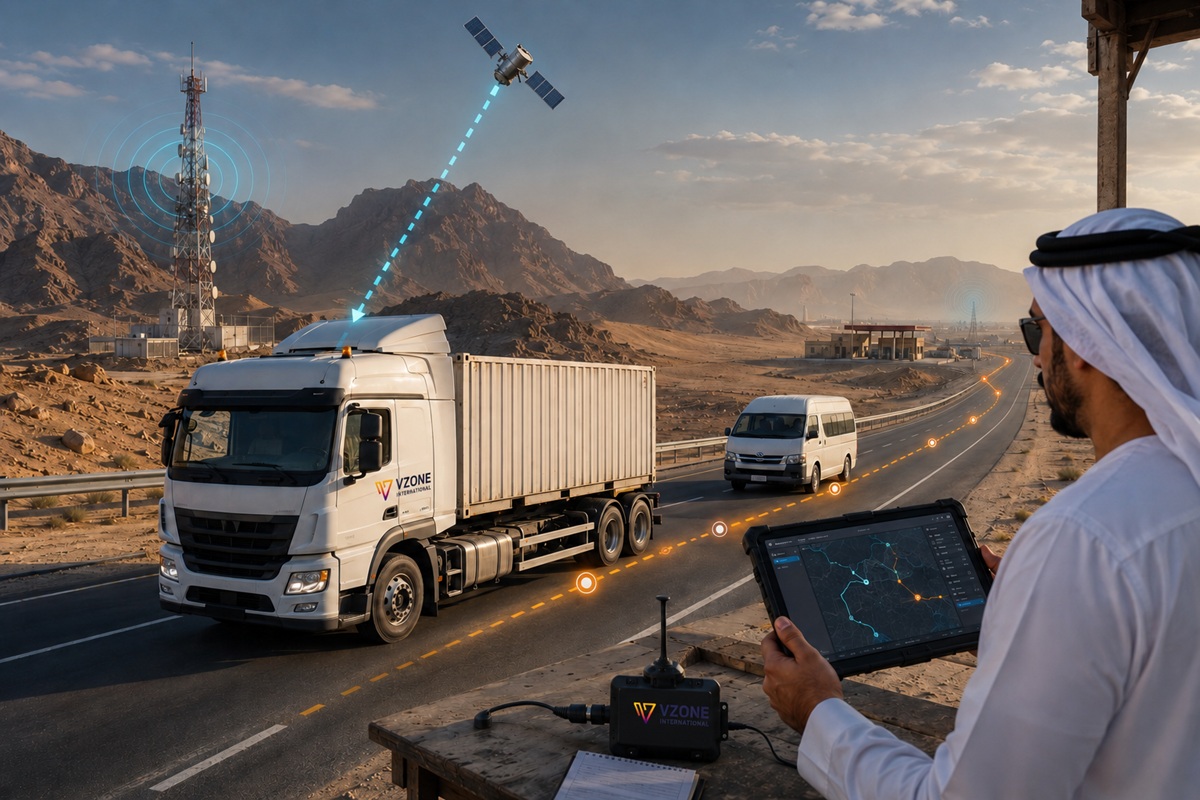
GPS fleet tracking in UAE and GCC remote areas faces two distinct challenges: cellular connectivity gaps (the GPS device cannot transmit position data to the cloud when outside 4G coverage) and GPS satellite signal quality (rare in UAE open desert but relevant in deep wadis and rock formations). The cellular gap problem is solved by store-and-forward architecture devices buffer data locally during coverage gaps and upload when connectivity resumes, maintaining an unbroken compliance record. For routes with extended coverage gaps beyond the buffer duration, satellite-based GPS transmission via Iridium SBD provides continuous position data regardless of cellular infrastructure. UAE’s Western Region desert routes, UAE-Oman cross-border corridors, and remote ADNOC facility access routes are the primary applications for satellite-supplemented GPS fleet tracking in the GCC.

Read More »
GPS Fuel Monitoring for Trucks - Tracking Consumption Per Route in UAE

GPS Fuel Monitoring for Trucks: Tracking Consumption Per Route in UAE

GPS fuel monitoring for heavy trucks in UAE tracks fuel consumption per route, per driver, and per load using CAN bus integration reading fuel level, consumption rate, and engine performance data directly from the truck’s controller area network rather than from the fuel gauge alone. Heavy truck fuel is the largest single operating cost in UAE logistics typically AED 12,000 to AED 25,000 per truck per month for GCC-route long-haul operations and a 15 to 20 percent consumption reduction from GPS-enabled driver coaching and route optimisation saves AED 1,800 to AED 5,000 per truck per month. Per-route consumption tracking enables fleet managers to compare identical routes driven by different drivers, identify route-specific fuel efficiency patterns, and build the baseline data for accurate fuel cost allocation per client or per contract.

Read More »
Idle Time and Fuel Waste - How UAE Fleets Are Losing Money Daily

Idle Time and Fuel Waste: How UAE Fleets Are Losing Money Daily

Fleet engine idling engines running while vehicles are stationary wastes 8 to 15 percent of total fuel consumption in typical UAE commercial fleets, with no corresponding vehicle movement or productive output. UAE’s extreme summer heat adds a category of idling not found in European fleet guides: A/C idling, where drivers run engines to power air conditioning during breaks and waiting periods in 45°C+ ambient conditions. GPS fleet management software measures idling time per vehicle and per driver by detecting ignition-on events with speed reading of zero, calculates the daily and monthly fuel cost of each vehicle’s idling pattern, and generates alerts when idling duration exceeds a configured threshold. UAE commercial fleets that deploy idling monitoring with driver coaching consistently reduce idling by 60 to 70 percent within 30 days, recovering AED 800 to AED 2,500 per vehicle per year in previously wasted fuel.

Read More »
Fuel Card vs. GPS Fuel Monitoring - Which Works Better for UAE Fleets

Fuel Card vs. GPS Fuel Monitoring: Which Works Better for UAE Fleets?

Fuel cards and GPS fuel monitoring are complementary rather than competing tools for UAE fleet fuel management. Fuel cards control where and how much fuel is purchased restricting transactions to approved fuel stations, capping per-transaction and daily volumes, and providing itemised purchase records per vehicle. GPS fuel monitoring measures what actually happens to that fuel tracking driving behaviour that determines consumption, detecting siphoning that removes fuel after it is in the tank, and calculating consumption per kilometre per vehicle. The most effective UAE fleet fuel management integrates both: fuel card controls reduce purchasing fraud and unauthorised purchases; GPS monitoring catches driving waste, siphoning, and the consumption anomalies that card controls alone cannot detect.

Read More »
Fuel Theft Detection for Fleet Vehicles - How AI Catches It Fast

Fuel Theft Detection for Fleet Vehicles: How AI Catches It Fast

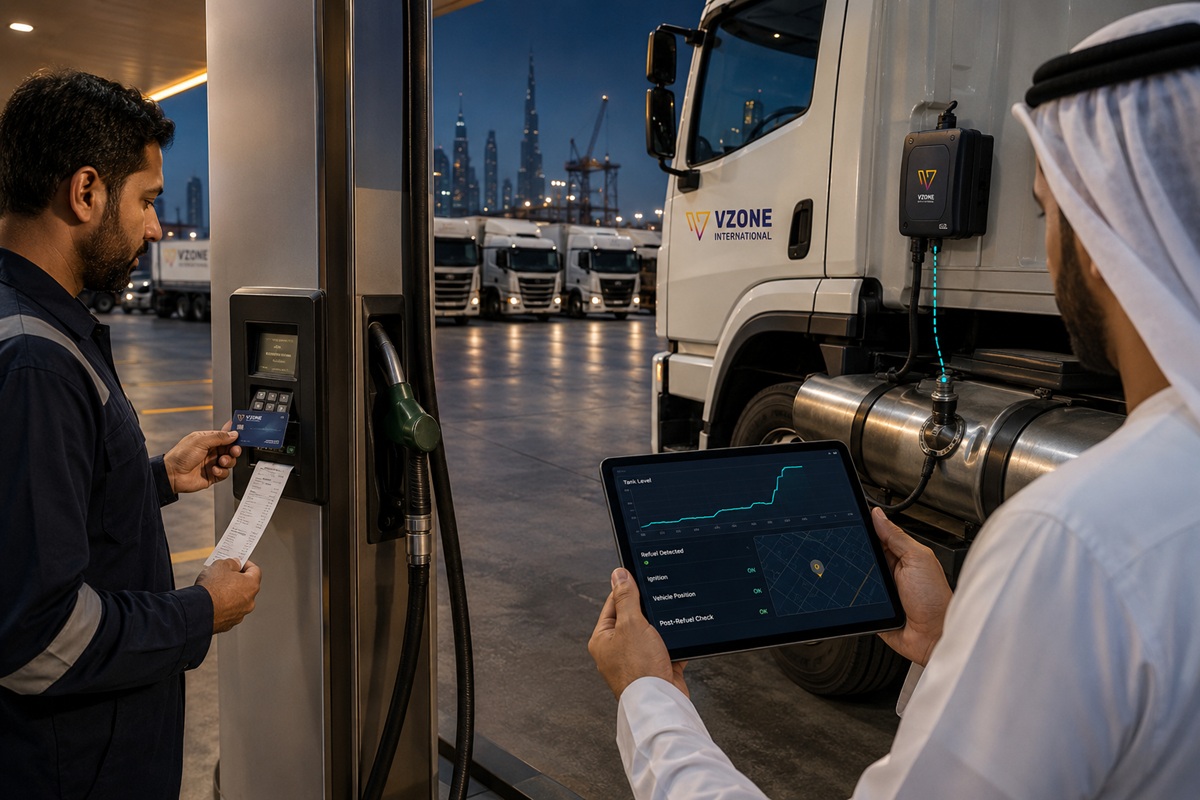
Fuel theft in UAE commercial fleet vehicles is detected through two integrated systems. Fuel level sensors installed in the vehicle’s tank transmit real-time fuel level data to the fleet management platform when the level drops without a corresponding engine-on event (the vehicle is parked but losing fuel), a siphoning alert fires within 2 to 5 minutes with the vehicle’s GPS location and estimated volume removed. Fuel card transaction reconciliation matches each card purchase against GPS vehicle location at the time of the transaction if the vehicle was not at the fuel station when the card was used, a card misuse alert flags the transaction. AI anomaly detection identifies consumption patterns that deviate from the vehicle’s established baseline flagging unusual fill volumes, unexpected level drops, and consumption rates inconsistent with the trip’s distance and load. UAE commercial fleets typically recover 8 to 15 percent of their fuel budget upon deploying fuel theft detection.

Read More »
How to Cut Fleet Fuel Costs by 30% Using Telematics in UAE

How to Cut Fleet Fuel Costs by 30% Using Telematics in UAE

Fleet fuel monitoring software reduces UAE commercial fleet fuel costs by 20 to 30 percent through four mechanisms: idling reduction (eliminating the engine-running-without-movement fuel waste that accounts for 10 to 15 percent of total consumption in typical UAE urban fleets), eco-driving coaching (reducing aggressive acceleration and over-speed driving that increases fuel consumption by 20 to 35 percent above efficient driving baselines), fuel theft detection (identifying unexplained fuel level drops that indicate siphoning or card misuse a consistent finding in 8 to 15 percent of unmanaged UAE commercial fleets at first deployment), and route optimisation (reducing total kilometres driven through more efficient dispatch and routing). For a 50-vehicle UAE fleet spending AED 500,000 per year on fuel, a 25 percent reduction saves AED 125,000 annually typically achieved within 6 months of deployment.

Read More »
Monthly Salik Reporting for Finance Teams (UAE Fleet Guide 2026)

Monthly Salik Reporting for Finance Teams (UAE Fleet Guide 2026)

Monthly Salik reporting for finance teams involves pulling reconciled, per-vehicle toll data from the fleet monitoring system, coding each vehicle’s charges to the correct cost centre or client project (for chargeback), reviewing flagged or unauthorized charges before posting, checking actual spend against vehicle toll budgets, and exporting the structured data to the ERP or accounting system for month-end close. Automated toll monitoring removes the manual step of matching a single combined Salik statement to dozens of vehicles by hand.

Read More »
Front vs. Dual vs. 360-Degree Fleet Dashcam - Which Configuration Is Right for Your UAE Fleet

Front vs. Dual vs. 360-Degree Fleet Dashcam: Which Configuration Is Right for Your UAE Fleet?

Fleet dashcam configurations range from single forward-facing cameras (road-only recording) to dual-lens systems (road + driver-facing AI monitoring) to 360-degree cameras (full surround coverage including blind spots and cargo area). For most UAE commercial fleet operations, dual-lens AI dashcams are the optimal choice providing both road-event documentation and driver behaviour detection without the data cost and installation complexity of full 360-degree coverage.

Read More »
Scroll to Top