Author: vzone-growth

Real-Time Fleet Operations Visibility - How to Eliminate Surprises

Real-Time Fleet Operations Visibility: How to Eliminate Surprises

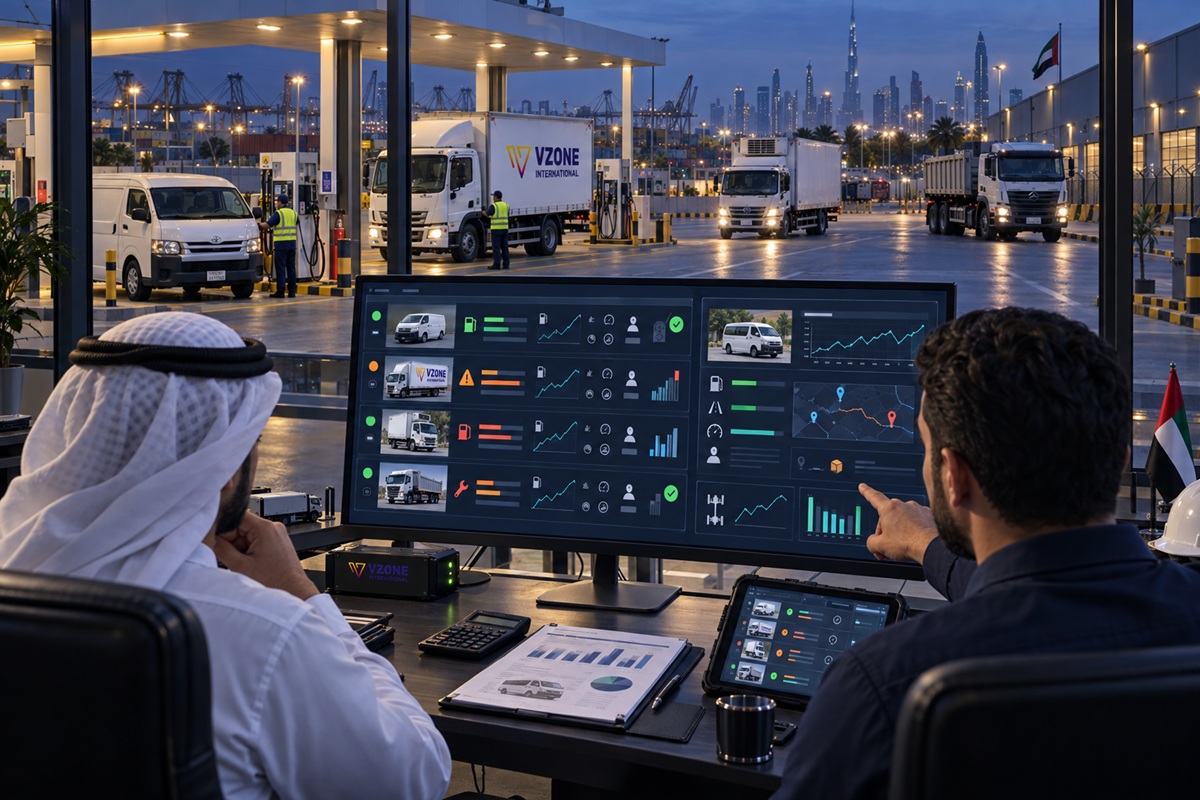
Real-time fleet operations visibility for UAE operations managers means knowing the status of every vehicle in the fleet at every moment not from driver phone calls and WhatsApp updates, but from GPS position data updating every 10 to 30 seconds on a live operations dashboard. The operational difference between reactive and proactive fleet management is the time gap between a problem occurring and the operations manager becoming aware of it: without real-time visibility, a breakdown on the E11 might not reach the operations manager for 20 to 40 minutes (driver notices, calls supervisor, supervisor calls ops manager); with real-time visibility, the vehicle stopping on the E11 with engine ignition off triggers an alert within 90 seconds and the operations manager is already re-routing the nearest available vehicle before the driver’s first call.

Read More »
GPS Tracker Price in Dubai and the UAE - What It Really Costs

GPS Tracker Price in Dubai and the UAE: What It Really Costs

A GPS tracker in the UAE costs between AED 300 and AED 1,200 for the hardware, plus AED 50 to AED 130 per vehicle per month for the platform subscription. The total three-year cost of ownership hardware, installation, SIM, and subscription is typically AED 2,500 to AED 6,000 per vehicle. Quotes showing only the device price are incomplete; the subscription is the larger cost over any period longer than 6 months.

Read More »
How to Achieve Fleet Fuel Cost Reduction in 2026

How to Achieve Fleet Fuel Cost Reduction in 2026

UAE fleet operators can reduce fuel costs by focusing on four key areas: GPS fuel monitoring, driver behaviour improvement, route optimisation, and preventive maintenance. When implemented together, these strategies can deliver 20–30% total fuel cost reduction within 12 months.

Read More »
10 Ways to Reduce Fuel Waste in Your Fleet

10 Ways to Reduce Fuel Waste in Your Fleet

A practical guide for UAE fleet operators covering 10 strategies to reduce fuel waste, including fuel monitoring, idling reduction, driver coaching, route optimisation, theft detection, vehicle maintenance, speed control, fleet right-sizing, driver scorecards, and fuel-data analysis.

Read More »
What Is a Fuel Monitoring System and How Does It Work?

What Is a Fuel Monitoring System and How Does It Work?

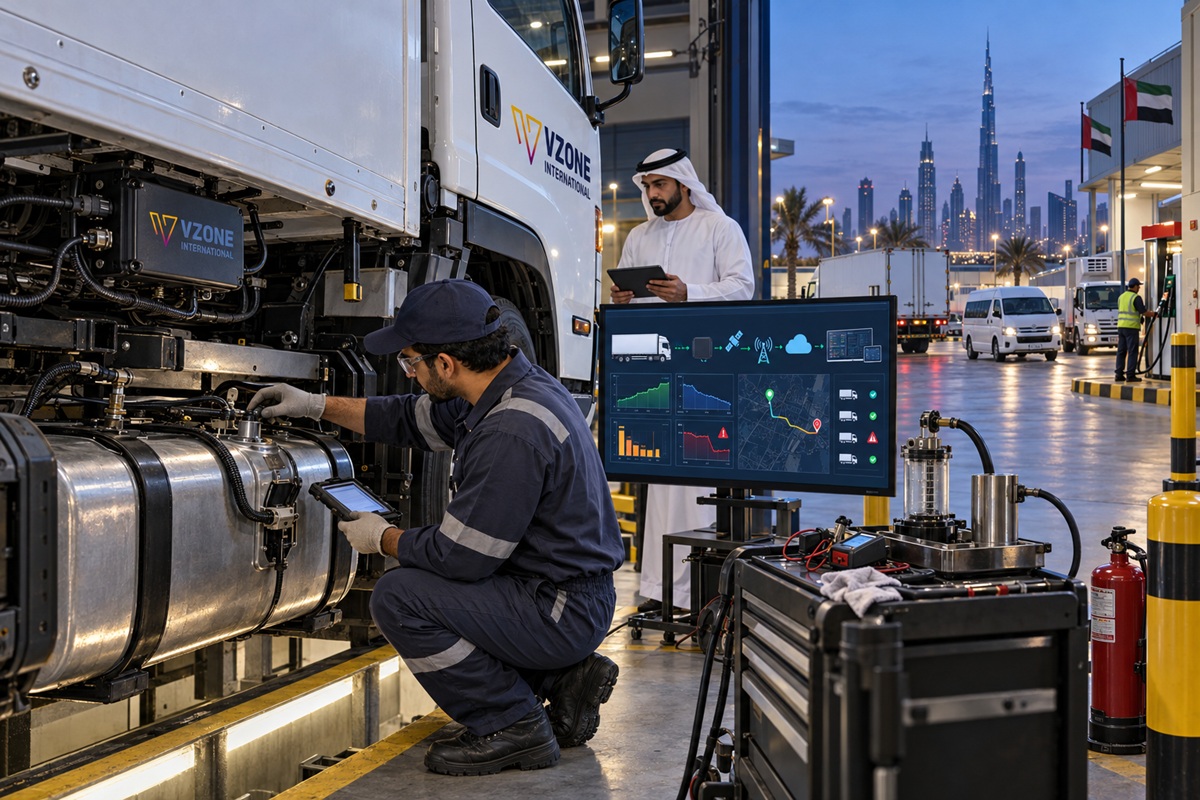
A fuel monitoring system is a hardware and software solution that tracks fuel levels, consumption, and losses in commercial vehicles and storage tanks in real time detecting theft, measuring waste, and providing per-vehicle fuel cost data that manual fuel logs and card statements cannot deliver. It works by combining calibrated fuel level sensors in vehicle tanks with GPS telematics, which transmits sensor readings to a cloud platform where they are matched against trip data to calculate consumption per kilometre and flag anomalies.

Read More »
Commercial Fleet Fuel Management: UAE Benchmarks and Industry Standards

Commercial Fleet Fuel Management: UAE Benchmarks and Industry Standards

Fuel is the largest single operating cost for UAE commercial fleets, representing 28 to 42 percent of total vehicle operating cost depending on fleet type higher for high-mileage commercial vehicle operations, lower for mixed urban and light vehicle fleets. UAE fuel consumption benchmarks by vehicle category: light commercial van (urban delivery) 9 to 14 L/100 km; pickup truck (construction) 12 to 18 L/100 km; medium rigid truck (mixed routes) 18 to 28 L/100 km; heavy semi-trailer (highway) 28 to 42 L/100 km. Top-quartile UAE fleet operators using GPS telematics achieve 15 to 20 percent below the industry median consumption benchmark for their vehicle category. Fleets without telematics typically perform at or above the industry median.

Read More »
AI Fuel Cost Optimization: Using Machine Learning to Predict UAE Fleet Spend

AI Fuel Cost Optimization: Using Machine Learning to Predict UAE Fleet Spend

AI fuel cost management for UAE commercial fleets applies machine learning to GPS telematics data and fuel consumption records to do three things that rule-based fleet management systems cannot: predict future fuel spend with high accuracy by modelling the relationship between driving patterns, route conditions, seasonal factors, and consumption outcomes; detect consumption anomalies in real time by comparing each trip’s actual consumption against the AI model’s expected consumption for that specific combination of vehicle, driver, route, load, and weather conditions; and identify optimisation opportunities that are not visible to human analysis fuel efficiency patterns correlated with specific times of day, driver behaviour clusters that respond differently to coaching interventions, and route segments that consistently drive above-expected consumption across all drivers. VZone International’s AI Fleet Assistant, trained on 300M+ km of UAE and GCC driving data, applies these capabilities to UAE fleet fuel management with regional calibration not available in global fleet AI platforms.

Read More »
Fuel Cost Per Vehicle Report - How to Build One and What to Track

Fuel Cost Per Vehicle Report: How to Build One and What to Track

A fuel cost per vehicle report for UAE commercial fleets tracks five core metrics per vehicle per reporting period: total fuel spend (AED), total kilometres driven (GPS-verified), fuel consumption per 100 km (litres), fuel cost per kilometre (AED), and variance from the vehicle’s established baseline. The report is structured with a fleet-level summary (total spend, fleet-average consumption, budget variance), a per-vehicle ranking table sorted by fuel cost per kilometre (identifying high-cost outliers), a driver efficiency section (consumption per 100 km normalised for route type), and an exceptions section (vehicles with significant month-on-month cost increases, card reconciliation exceptions, and idling cost highlights). Fleet management software generates this report automatically from GPS telematics and fuel card data no manual spreadsheet calculation required.

Read More »
How to Build a Fleet Preventive Maintenance Schedule in UAE

How to Build a Fleet Preventive Maintenance Schedule in UAE

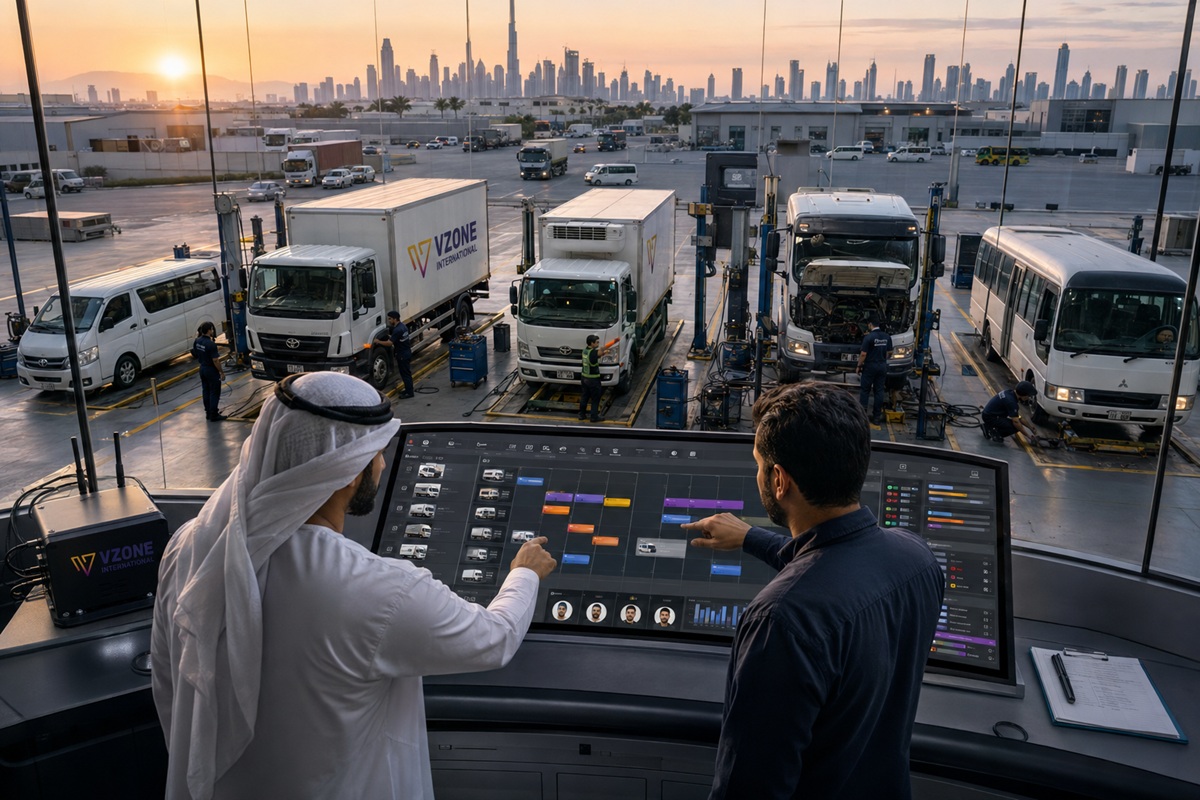
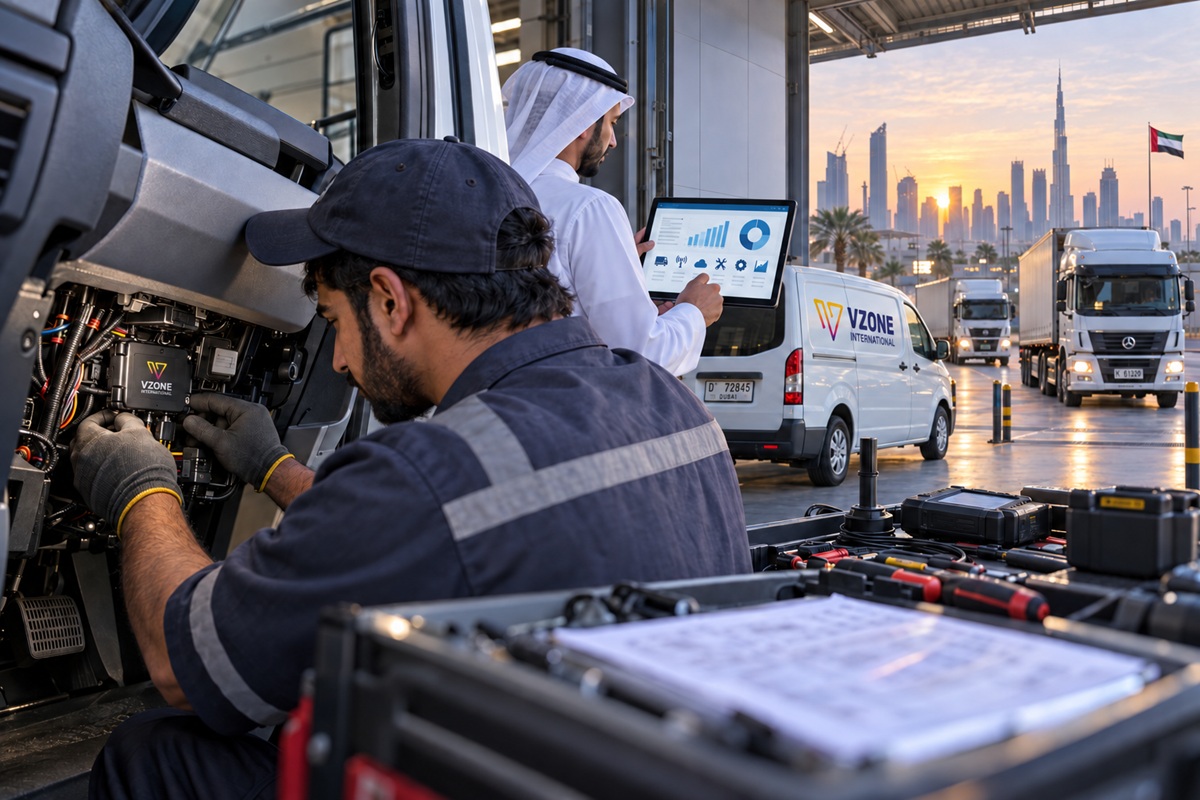
Building a fleet preventive maintenance schedule in UAE requires six steps: (1) categorise your vehicles by type and operating profile, (2) establish UAE-calibrated service intervals for each vehicle category accounting for summer heat and dust, (3) choose GPS mileage as the primary trigger rather than driver-reported odometer readings, (4) define the maintenance tasks and parts for each service interval, (5) configure service alerts in fleet maintenance software to fire at 80% and 95% of each interval, and (6) track completion and update intervals based on actual component condition data. UAE-specific interval adjustments are material: engine oil should be changed every 5,000 to 8,000 km rather than the European 10,000 to 15,000 km default, and air filter replacement should follow condition rather than fixed intervals in high-dust environments.

Read More »
Automated Fuel Management System - End-to-End Control for UAE Fleets

Automated Fuel Management System: End-to-End Control for UAE Fleets

An automated fuel management system for UAE commercial fleets integrates four data sources into a single workflow: bulk depot tank monitoring (deliveries in, dispensing out, stock level), fuel card transaction data (commercial station purchases per vehicle), GPS vehicle telematics (consumption per km, idling, driving behaviour), and ERP financial reporting (cost allocation to cost centres and client contracts). Automation removes the manual monthly reconciliation that most UAE fleet fuel managers currently perform cross-referencing card statements, GPS trip data, and depot dispensing logs separately and replaces it with a continuous, real-time fuel visibility dashboard where variances are flagged immediately rather than discovered at month-end review. UAE commercial fleets with automated fuel management systems report 20 to 30 percent reduction in total fuel spend within 12 months.

Read More »
Scroll to Top