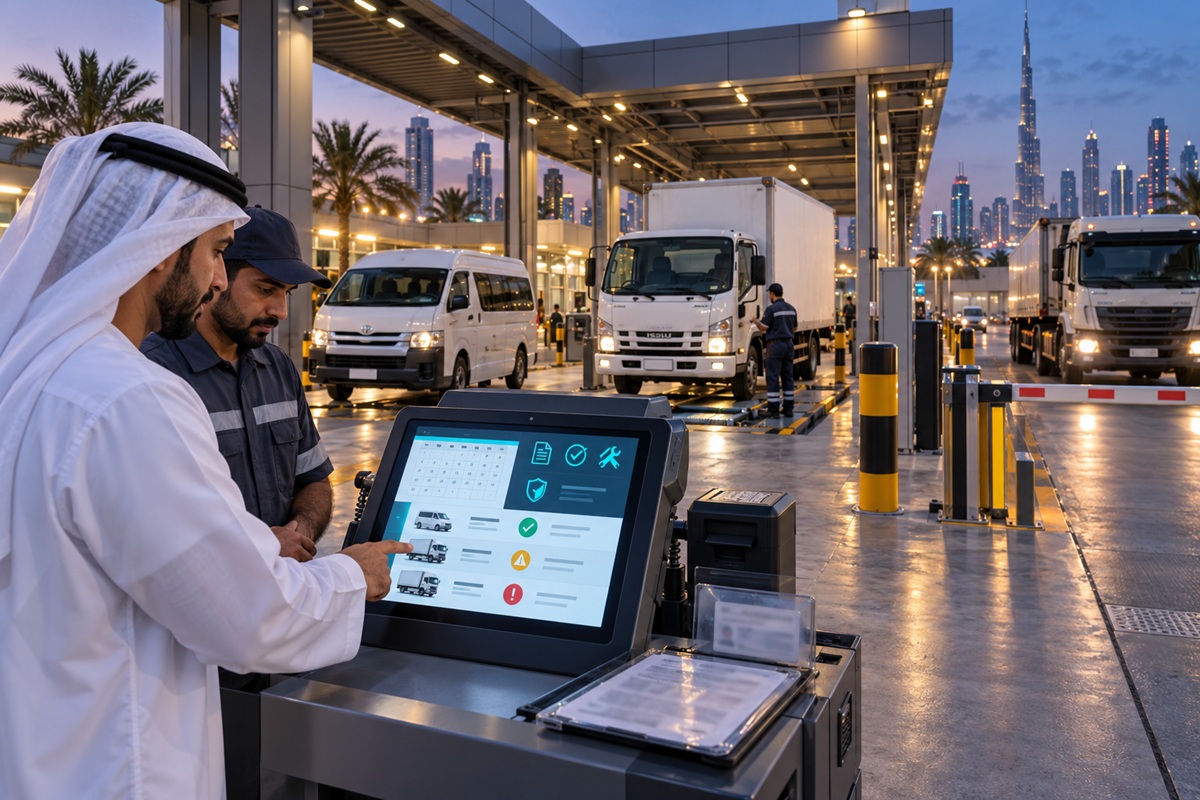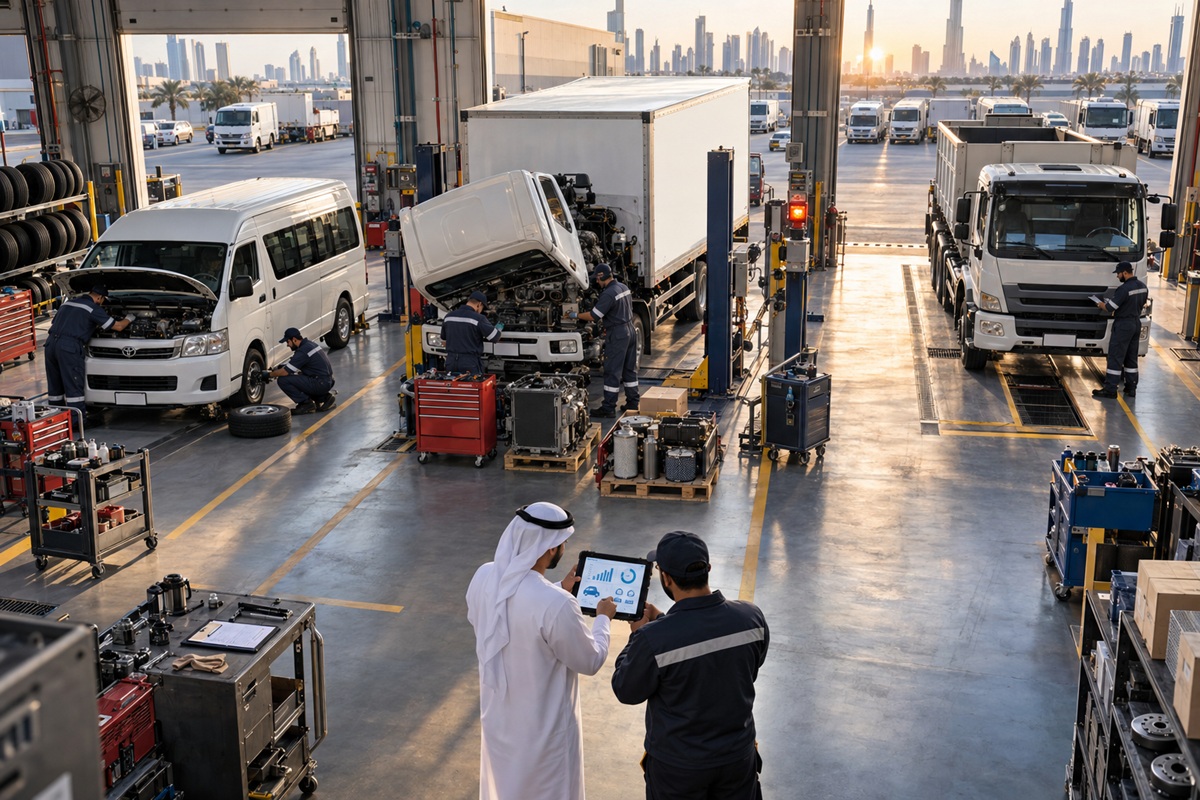
The monthly fuel management process for most UAE commercial fleet operators involves a version of the same time-consuming reconciliation: extracting the fuel card statement from the ENOC or ADNOC portal, extracting the GPS distance data from the fleet tracking platform, manually calculating consumption per vehicle, comparing against budget, noting the variances, and attempting to identify whether the variances are from theft, inefficiency, or route changes. This process takes 4 to 8 hours of the fleet manager’s time each month, produces a report that is already 30 days old by the time it is reviewed, and generates limited actionable insight because the data sources are disconnected.
An automated fuel management system eliminates this reconciliation exercise by connecting all fuel data sources bulk tank sensors, fuel card APIs, GPS vehicle telematics, and ERP cost allocation into a single integrated workflow that continuously reconciles fuel data and surfaces variances in real time rather than at month-end. When a fuel card transaction occurs at an ENOC station, the system immediately matches it against the GPS vehicle location. When the depot bulk tank level drops, the system immediately compares the drop against recorded dispensing events. When a driver’s fuel consumption per 100 km exceeds their vehicle baseline, the system generates a coaching alert before the end of that trip. The 8-hour monthly reconciliation becomes a 20-minute exception review.
Key Takeaways
- An automated fuel management system integrates bulk tank monitoring, fuel card transaction data, GPS telematics, and ERP financial reporting into a single continuously reconciled data workflow replacing the manual monthly reconciliation that consumes 4 to 8 hours of fleet manager time with a real-time dashboard that surfaces exceptions immediately.
- The five fuel data sources that must be integrated for complete automation are: bulk tank level sensors (depot stock), fuel card APIs (commercial station purchases), vehicle fuel sensors (tank level per vehicle), GPS telematics (consumption, idling, behaviour), and ERP or accounting system (cost allocation, budget tracking, financial reporting). Each source is necessary; none is sufficient alone.
- Automated fuel cost allocation attributing fuel expenditure to cost centres, departments, client contracts, or project codes automatically from the vehicle-to-project assignment in the fleet management system eliminates the manual monthly finance exercise of distributing fuel invoices across business units. For UAE fleet operators billing fuel cost to clients, automated allocation enables accurate cost-plus billing without manual extraction.
- Fuel KPIs generated automatically by the system cost per kilometre per vehicle, idling cost per vehicle, consumption vs budget variance per vehicle, and driver efficiency score convert fuel management from a monthly financial exercise into a continuous operational metric that fleet managers review weekly rather than monthly.
- The implementation sequence for automated fuel management in UAE fleets is: GPS telematics first (the data foundation), fuel card API integration second (purchase visibility), vehicle fuel sensors third (siphoning detection), bulk tank monitoring fourth (depot stock control), ERP integration fifth (financial reporting and cost allocation). Each layer adds incremental value; the full system delivers the 20 to 30 percent fuel cost reduction that partial implementations approach but do not fully achieve.
The Five Data Layers of Automated Fuel Management
| Layer | Data Source | What It Provides | Manual Alternative (and Its Limitations) | Integration Method |
| 1. GPS Telematics | GPS tracking device (Teltonika + Wialon platform) | Trip distance, route, speed profile, idling time, harsh events, driver identity per trip | Driver odometer submissions systematically understated; no route or behaviour data | Native VZone/Wialon integration GPS data is the platform foundation |
| 2. Fuel Card API | ENOC, ADNOC Distribution, or international fleet card data feed | Commercial station purchases: time, location, volume, cost per transaction per card/vehicle | Monthly card statement PDF no real-time visibility; no location data for reconciliation | Card issuer API or data export → Wialon fuel card integration module |
| 3. Vehicle Fuel Sensors | Calibrated level sensor in vehicle fuel tank | Real-time tank level, fill events, siphoning detection, consumption calculation between fills | Driver fuel log inaccurate, manipulable, no siphoning detection | Sensor → GPS device → Wialon platform alongside position data |
| 4. Bulk Tank Sensors | IoT level sensor in depot/site storage tank | Depot stock level, delivery volumes, dispensing records, theft/leak detection | Manual dip measurement infrequent, no theft detection, no delivery reconciliation | IoT sensor → cellular gateway → Wialon integration or dedicated ATG platform → Wialon API |
| 5. ERP Integration | SAP, Oracle, Odoo, Zoho, or other ERP/accounting system | Cost centre allocation, budget vs actual fuel spend, financial reporting, client billing | Manual fuel cost export → finance team spreadsheet → ERP manual entry monthly, 2-week lag | Wialon ERP connector (SAP, Oracle, Odoo, Zoho native) → automatic cost posting per vehicle |
What Automation Replaces: The Manual Fuel Management Workflow
Understanding the value of automated fuel management requires understanding what it replaces the manual processes that UAE fleet fuel managers currently perform to achieve partial fuel visibility. The contrast is not between having data and not having data; it is between having data that arrives 30 days late, requires 8 hours of assembly, and still has gaps versus having continuous real-time data that flags exceptions without requiring any manual assembly.
The Monthly Fuel Reconciliation Exercise
The typical monthly fuel reconciliation for a 50-vehicle UAE commercial fleet without automation: download the ENOC card statement (30 minutes), download the ADNOC card statement for Abu Dhabi vehicles (15 minutes), extract GPS mileage per vehicle from the fleet platform (20 minutes), calculate consumption per vehicle in a spreadsheet (45 minutes), compare against budget (20 minutes), identify vehicles above budget baseline (30 minutes), attempt to determine cause of variances without fuel sensor data (uncertain outcome), generate a summary for the finance team (30 minutes). Total: approximately 3.5 hours for a relatively organised fleet, longer for fleets with multiple card types or manual processes for some data. The result is a report that shows what happened 30 days ago by which point the fuel waste or theft has continued for another 30 days before the next review.
What Automation Replaces It With
The automated equivalent: log into the Wialon fuel management dashboard (2 minutes), review the exception alerts flagged since the last login fuel card misuse events, vehicles above consumption baseline, bulk tank anomalies (15 minutes), action any alerts that require immediate response (coaching conversation, investigation, driver instruction), review the KPI summary for the week (5 minutes). Total: 20 to 30 minutes per week rather than 3.5 hours per month. The review is weekly rather than monthly. The data is current rather than 30 days old. Variances that would have accumulated for 30 days are identified within hours of occurring.
Automated Fuel KPIs for UAE Fleet Management
Automated fuel management systems generate fuel KPIs continuously from the integrated data sources without requiring any manual calculation. The KPIs that matter most for UAE fleet fuel management are:
| KPI | Definition | Calculated From | Target for UAE Fleet | Management Action When Off Target |
| Fuel Cost Per Kilometre (FCPK) | Total fuel cost divided by total kilometres driven per vehicle | GPS distance + fuel card cost + vehicle sensor consumption | AED 0.18-0.35/km depending on vehicle type (see Cat-37 benchmarks) | Identify whether FCPK spike is from route change, behaviour change, or cost increase; coaching or route review |
| Idling Cost Per Vehicle Per Month | Fuel cost of idling events (ignition on, speed zero) per vehicle | GPS idling detection × idle consumption rate × diesel price | Below AED 300/vehicle/month for well-managed UAE fleet | Idling alert programme; coaching on A/C idling policy compliance |
| Fuel Efficiency Score Per Driver | Normalised fuel consumption per 100km per driver vs fleet average, adjusted for route type | GPS distance + vehicle fuel sensor or card data, normalised by route classification | Top quartile drivers within 5% of fleet best; bottom quartile targeted for coaching | Weekly coaching conversation with bottom quartile; positive recognition for top quartile |
| Depot Tank Loss Ratio | Unexplained fuel loss from bulk tank as percentage of total throughput | Bulk tank sensor deliveries in – dispensing out – closing stock vs expected stock | Below 2% (measurement tolerance) for monitored UAE depot | Investigate loss mechanism: theft, delivery shortfall, or leak; security or maintenance response |
| Card Reconciliation Exception Rate | Percentage of fuel card transactions with GPS location mismatch | Card API location vs GPS vehicle location at transaction time | Below 0.5% for well-managed fleet (GPS error tolerance) | Individual exception review; disciplinary process for confirmed card misuse |
| Planned vs Actual Fuel Budget Variance | Monthly actual fuel spend vs budget per vehicle category | Card + sensor cost data vs fleet finance budget | Within 5% of budget for stable operations; summer allowance for heat adjustment | Identify variance driver: consumption increase, price increase, or theft; targeted response |
ERP Integration: Automated Fuel Cost Allocation
ERP integration is the layer of automated fuel management that most directly affects the finance team’s monthly workload and the one that most clearly demonstrates the value of fuel management automation to UAE CFOs and finance directors rather than just to fleet managers.
How Manual Cost Allocation Currently Works
Without ERP integration, the monthly fuel cost allocation process for a UAE fleet operator billing fuel costs to clients or departments works roughly as follows: the finance team receives the fleet manager’s monthly fuel summary (itself produced from the manual reconciliation described above), manually assigns each vehicle’s fuel cost to the cost centre associated with that vehicle’s primary assignment for the month, handles vehicle reassignments that occurred during the month by estimating the proportion of fuel cost to attribute to each assignment, and posts the allocated costs to the ERP general ledger. This process takes 2 to 4 hours of finance team time per month for a mid-size fleet, involves allocation decisions that are at best approximate (vehicles reassigned mid-month are typically allocated to one cost centre rather than properly split), and produces numbers that are already 4 to 6 weeks old when they reach the finance reports.
How ERP Integration Automates It
VZone International’s ERP connectors supporting SAP, Oracle, Odoo, and Zoho receive fuel cost data from the Wialon platform and post it automatically to the correct cost centre in the ERP without manual intervention. The vehicle-to-cost-centre mapping is maintained in the fleet management platform when a vehicle is reassigned to a different project or client, the cost allocation follows the reassignment date automatically. Fuel costs are allocated at trip level for GPS-tracked vehicles (each trip’s fuel cost goes to the cost centre active at the time of the trip) or at period level for depot-dispensed fuel (the dispensing record per vehicle maps to the vehicle’s current cost centre assignment). The finance team receives pre-allocated fuel cost data that is ready for posting removing the manual allocation step entirely and reducing the fuel cost allocation timeline from 4 to 6 weeks to real-time.
Client Billing for Fuel Cost Pass-Through
For UAE fleet operators who bill fuel cost to clients on a pass-through or cost-plus basis common in construction plant hire, contract logistics, and facility management fleet services automated fuel cost allocation enables accurate per-client fuel billing that is impossible to achieve with manual allocation. The automated system tracks exactly which vehicles served which client contract and for how many kilometres, calculates the fuel cost of those kilometres from GPS consumption data and current fuel price, and produces a per-client fuel cost statement that is billable without manual extraction or estimation. Clients who previously accepted approximate fuel cost allocations (fleet operator’s estimate of share of total fuel spend) can receive precise, GPS-verified fuel cost billing reducing billing disputes and improving cash flow from faster invoice acceptance.
Implementation Roadmap for UAE Fleet Fuel Automation
| Phase | What Is Implemented | Timeline | Immediate Value Delivered | Cumulative Fuel Saving |
| Phase 1 GPS Telematics Foundation | GPS tracking on all fleet vehicles; Wialon platform; driver behaviour scoring; idling alerts; basic consumption report from GPS distance | Weeks 1-4 | Idling visibility; route distance accuracy; driver scoring; ADNOC IVMS if applicable | 8-12% (idling + eco-driving deterrence) |
| Phase 2 Fuel Card Integration | ENOC/ADNOC card API connected to Wialon; card-to-GPS reconciliation active; card misuse alerts | Weeks 4-6 | Card misuse detection; per-vehicle purchase records; delivery shortfall on commercial fills | Additional 5-8% (card misuse elimination) |
| Phase 3 Vehicle Fuel Sensors | Calibrated sensors in high-value or high-risk vehicles; siphoning alerts; fill event records | Weeks 6-10 (sensor installation) | Siphoning detection; accurate fill volume records; consumption per km calculation | Additional 4-6% (siphoning elimination) |
| Phase 4 Bulk Tank Monitoring | IoT sensors on depot and site bulk tanks; delivery reconciliation; depot dispensing records; stock alerts | Weeks 8-12 (sensor installation + configuration) | Depot theft detection; delivery shortfall reconciliation; stock management automation | Additional 2-4% (depot loss recovery) |
| Phase 5 ERP Integration | SAP/Oracle/Odoo/Zoho connector; automated cost centre posting; per-client fuel billing; finance dashboard | Weeks 10-16 (ERP configuration) | Finance team time saving; accurate client billing; real-time budget tracking | Indirect: improved budget adherence from financial visibility |
| TOTAL Full Automated Fuel Management | Complete end-to-end fuel visibility and control | 3-4 months from Phase 1 start | 20-30% total fuel cost reduction; 6-8 hours/month management time saving; real-time fuel KPIs | 20-30% sustained |
Automated Fuel Management ROI 50-Vehicle UAE Fleet Annual fuel spend: AED 500,00025% fuel cost reduction from full system: AED 125,000/year savingManagement time saving: 8 hours/month × AED 100/hour = AED 9,600/yearFinance team time saving: 3 hours/month × AED 120/hour = AED 4,320/yearTotal annual saving: AED 138,920Implementation cost (GPS + sensors + platform, Year 1): AED 60,000-90,000Payback period: 5-8 months24-month net ROI: AED 187,840-217,840 |
VZone International Automated Fuel Management Complete End-to-End for UAE Fleets
VZone International implements complete automated fuel management for UAE commercial fleets: GPS telematics, fuel card API integration (ENOC, ADNOC, international networks), vehicle fuel sensors, bulk tank monitoring, and ERP connectors (SAP, Oracle, Odoo, Zoho). Over 4,000 UAE fleets managed. Contact our team for a fuel management automation assessment and phased implementation plan for your fleet.
Frequently Asked Questions
An automated fuel management system for UAE commercial fleets is a software platform that integrates multiple fuel data sources GPS vehicle telematics, fuel card transaction data, vehicle fuel level sensors, bulk depot tank sensors, and ERP financial systems into a single continuously reconciled workflow. Rather than requiring fleet managers to manually extract data from separate systems each month and reconcile them in a spreadsheet, the automated system connects all data sources through APIs and sensor integrations, reconciles them continuously in real time, and surfaces variances, exceptions, and KPIs through a unified dashboard. Alert-based management replaces periodic review: when a fuel card transaction occurs at a location the vehicle was not at, an immediate alert fires; when a vehicle's consumption exceeds its baseline, a coaching alert fires before the trip ends; when the depot tank shows an unexplained level drop, a theft alert fires within minutes. VZone International's Wialon platform implements automated fuel management for UAE commercial fleets from 10 to 500+ vehicles.
A full automated fuel management implementation for a UAE commercial fleet takes 3 to 4 months from start to complete ERP integration, implemented in phases. Phase 1 (GPS telematics foundation) is operational within 2 to 4 weeks immediate idling visibility, driver behaviour scoring, and basic fuel efficiency reporting. Phase 2 (fuel card API integration) adds 2 to 3 weeks card transaction data connected and reconciliation active. Phase 3 (vehicle fuel sensors) takes 4 to 6 weeks including hardware installation calibrated sensors on target vehicles, siphoning alerts active. Phase 4 (bulk tank monitoring) adds 2 to 4 weeks for hardware installation and configuration. Phase 5 (ERP integration) takes 4 to 6 weeks depending on the ERP system and the complexity of cost centre configuration. Each phase delivers incremental value from the moment it goes live the fleet does not need to wait 4 months before seeing any fuel saving. The 20 to 30 percent total fuel cost reduction accumulates progressively as each phase adds its contribution.
Yes VZone International's fleet management platform includes native connectors for SAP, Oracle, Odoo, and Zoho. The integration pushes fuel cost data from the Wialon platform to the ERP at configured intervals per trip, daily, or monthly depending on the ERP's cost posting requirements. Vehicle-to-cost-centre mapping is maintained in the fleet platform and passed to the ERP with each cost posting, enabling automatic cost allocation without manual intervention. For SAP-using UAE enterprises, the integration uses the standard SAP BAPI interface for vehicle cost posting; for Oracle, the Oracle Fusion ERP REST API; for Odoo and Zoho, native module connectors. The specific configuration is validated during implementation against the client's ERP chart of accounts and cost centre structure a 4 to 6 week configuration engagement that includes testing of the cost posting workflow before go-live.
UAE commercial fleets implementing a fully automated fuel management system covering GPS telematics, fuel card integration, vehicle sensors, and bulk tank monitoring consistently achieve 20 to 30 percent total fuel cost reduction within 12 months. The saving accumulates from four sources: idling reduction (8 to 12 percent, achieved earliest), eco-driving behaviour change (10 to 15 percent, achieved through coaching programme), theft and misuse elimination (5 to 10 percent, achieved once detection is deployed), and route optimisation (3 to 5 percent, ongoing). These ranges overlap slightly because the same driving behaviour change that reduces eco-driving waste also contributes to idling reduction. For a 50-vehicle fleet spending AED 500,000 per year on fuel, a 25 percent reduction saves AED 125,000 annually with the full saving typically achieved by month 6 and sustained thereafter as the system's deterrence and coaching effects become embedded in fleet culture.