When a UAE business faces pressure to reduce fleet operating costs, the first instinct is often to look at fleet size reducing the number of vehicles, and therefore the overhead they generate. This is rarely the right starting point. Fleet size reduction addresses the fixed cost of having vehicles; it does not address the variable cost of operating them inefficiently. A smaller fleet that still idles away 12 percent of its fuel, loses 10 percent of its fuel budget to siphoning, generates 8 unplanned breakdowns per year at AED 10,000 each, and pays above-market insurance premiums because no telematics safety data was presented at renewal is a more expensive fleet per vehicle than before the size reduction.
The ten fleet cost reduction strategies in this guide address the variable operating costs that fleet managers can control fuel waste, maintenance inefficiency, insurance premiums, compliance violation risk, and procurement timing without changing the fleet’s operational capacity. Each strategy has a clear AED saving, an implementation timeline, and a technology requirement. Together, they consistently deliver 20 to 35 percent total operating cost reduction for UAE commercial fleets within 12 months.
Key Takeaways
-
- Fleet operating costs divide into two categories: fixed costs (depreciation, insurance premiums, vehicle licensing) that are determined at procurement and renewal, and variable costs (fuel, maintenance, compliance violations, tolls) that are determined by how the fleet is operated daily. Cost reduction without fleet size change addresses variable costs through operational management improvement.
- The three highest-return cost reduction strategies for most UAE fleet managers are fuel idling elimination (fastest, zero hardware required beyond existing GPS), eco-driving coaching (largest absolute saving, achieved through systematic weekly coaching programme), and fuel theft elimination (immediate recovery of a loss that is already occurring, with deterrence effect within the first week of monitoring activation).
- Insurance premium reduction through telematics data is an underutilised strategy in UAE fleet management presenting 12 months of GPS safety data, incident rate, and coaching programme records at insurance renewal consistently achieves 10 to 20 percent premium reduction, which for a 50-vehicle fleet paying AED 600,000 per year in commercial motor insurance saves AED 60,000 to AED 120,000 annually.
- Each strategy’s saving is independent and additive a fleet that implements all ten strategies simultaneously achieves the combined saving, not the largest single saving. The compound effect of 10 to 15 strategies each saving 5 to 20 percent of a cost category consistently produces total fleet cost reduction of 25 to 35 percent.
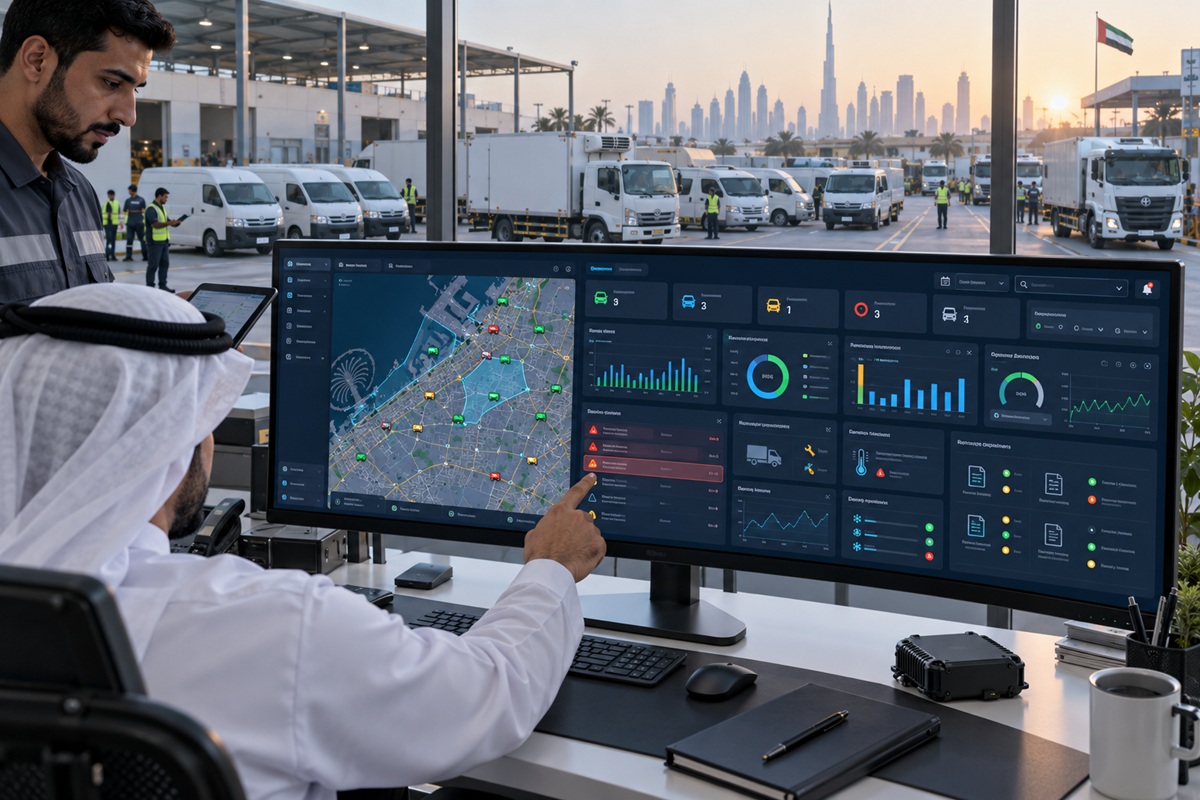
- Fleet management technology (GPS telematics, fuel card integration, vehicle fuel sensors, fleet management software) is the enabler for most of the ten strategies the technology generates the data, the automation handles the monitoring, and the fleet manager applies the management decisions and coaching conversations that produce the savings.
The 10 Fleet Cost Reduction Strategies for UAE Fleet Managers
1 | Eliminate Engine Idling | Saves 8–12% of annual fuel spend | First savings visible within 1 week Engine idling vehicles running with no movement wastes 8 to 12 percent of total fleet fuel with zero operational output. For a 50-vehicle fleet spending AED 500,000 per year on fuel, eliminating 65 percent of current idling saves AED 26,000 to AED 39,000 per year. Configure idling alerts (fire after 10 minutes of continuous engine-on with speed = 0) in the GPS fleet management platform, communicate the policy to drivers before alerts activate (the deterrence effect of known monitoring reduces idling 30 to 40 percent before the first coaching conversation), and review the weekly idling cost per vehicle report. The A/C idling policy for UAE summer requires nuance a 15-minute engine-off rule during breaks, with exceptions for locations without shade, balances fuel saving with driver welfare in 47°C ambient conditions. |
|
2 |
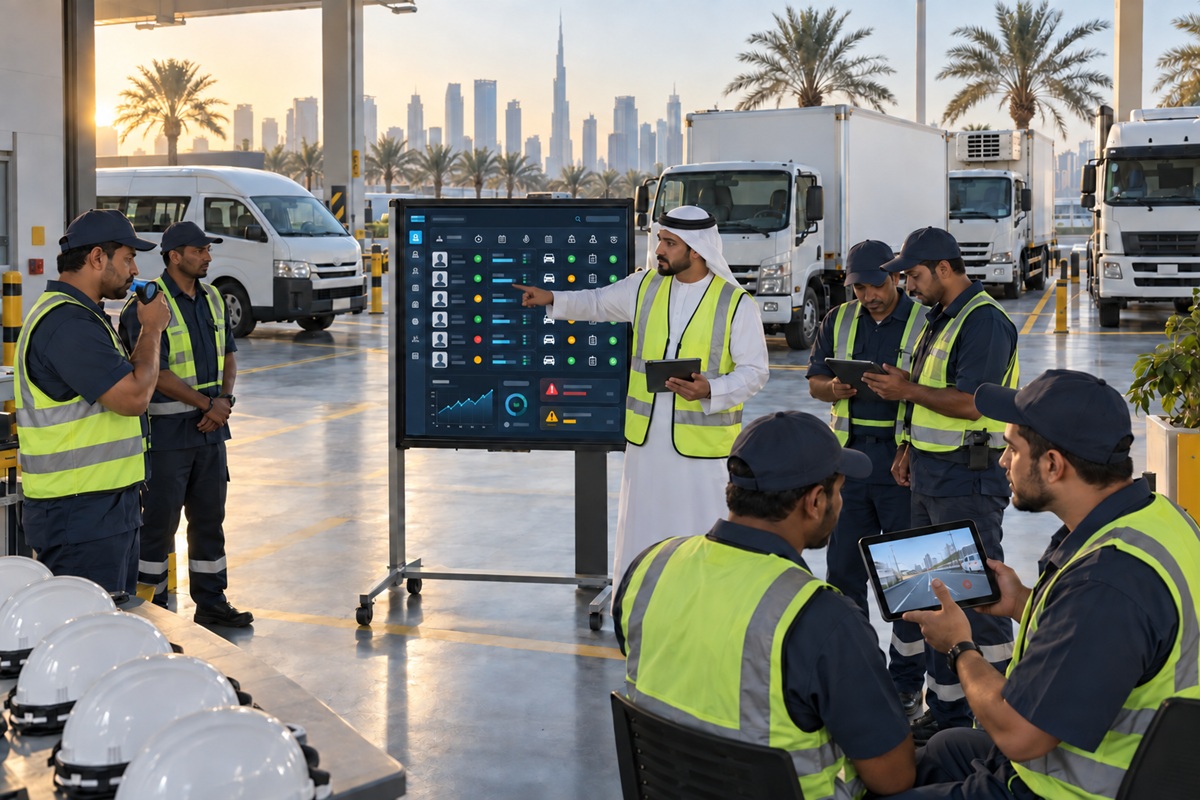
Deploy Eco-Driving Coaching Programme | Saves 15–20% of fuel; also reduces tyres and incidents | Full programme savings in 60–90 days The largest single fuel saving strategy: coaching the top 20 percent of drivers by aggressive driving frequency reduces fleet-wide fuel consumption by 15 to 20 percent within 60 to 90 days. GPS telematics identifies each driver’s weekly harsh acceleration, harsh braking, and over-speed event frequency and the specific road sections where those events occur. The coaching conversation is specific: ‘Driver Ahmed, your 8 harsh acceleration events this week were concentrated on the Al Khail Road northbound after the Umm Suqeim roundabout let’s discuss your following distance and acceleration approach on that stretch.’ Specific coaching produces 3 to 4 times more sustained behaviour change than generic ‘drive more carefully’ messages. The same behaviour change that reduces fuel consumption also reduces tyre wear, brake pad consumption, and incident risk the safety and fuel savings are generated by the same coaching programme. |
|
3 |
Eliminate Fuel Theft and Card Misuse | Recovers 8–15% of fuel budget | Deterrence effect within 1 week; full recovery within 30 days Fuel theft physical siphoning from vehicle tanks and fuel card misuse for personal vehicles typically consumes 8 to 15 percent of the annual fuel budget in UAE commercial fleets without monitoring. For a 50-vehicle fleet with AED 500,000 annual fuel spend, recovering 10 percent is AED 50,000 per year. Deploy calibrated fuel level sensors on high-risk vehicles (construction site pickups, heavy trucks parked remotely overnight) for siphoning detection, and activate fuel card-to-GPS location reconciliation for all vehicles with card access. Notify all drivers simultaneously that monitoring is active the deterrence effect of known monitoring stops most theft immediately, without requiring any formal investigation or disciplinary process for the majority of cases. Drivers who continue to steal after notification provide the evidence record for the UAE labour law HR process. |
|
4 |
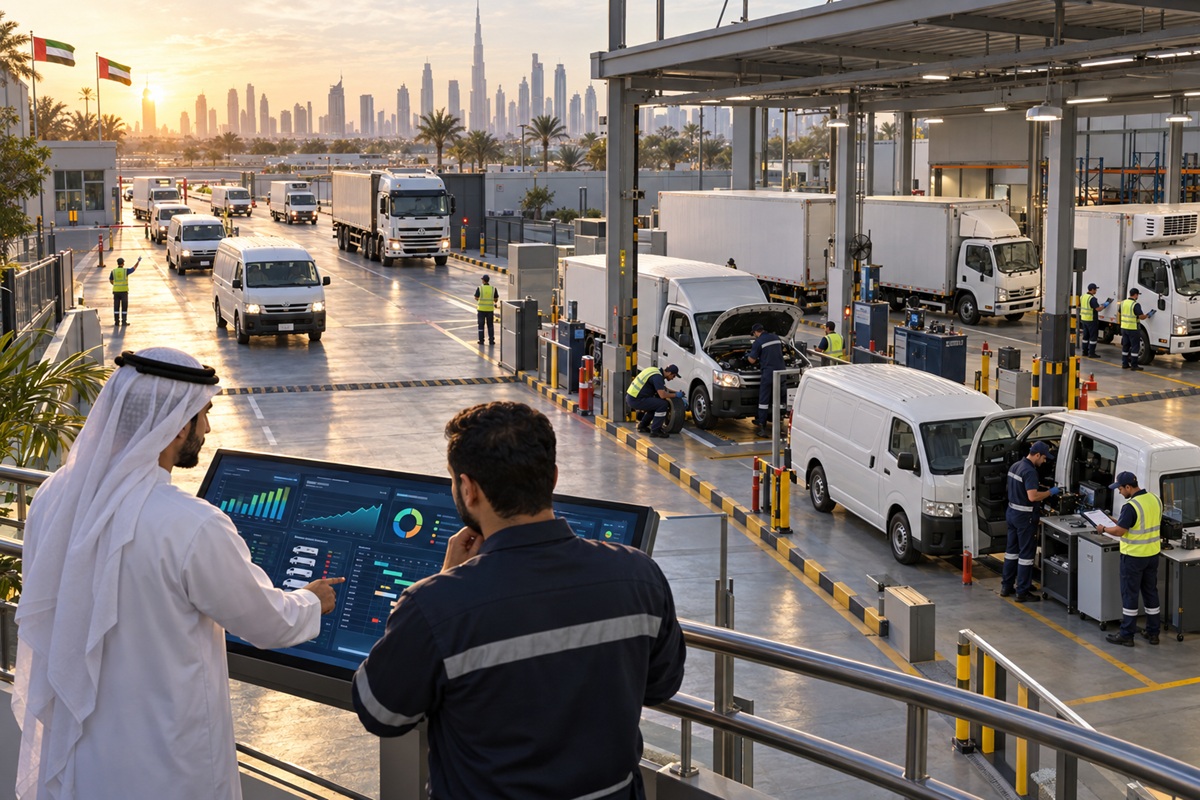
Shift Maintenance from Reactive to Predictive | Reduces total maintenance cost 20–30% | Savings visible within 3 months of full programme Unplanned breakdown repairs cost 40 to 60 percent more than the same component replaced in a planned workshop service emergency call-out labour, priority parts sourcing, replacement vehicle hire during extended repair periods, and customer SLA penalties combine to multiply the basic repair cost. Shifting from reactive (fix when broken) to predictive (fix when data indicates approaching failure) requires two capabilities: GPS mileage-triggered service alerts that fire before the service interval is exceeded (eliminating the missed services that cause between-interval breakdowns), and OBD diagnostic monitoring that detects developing engine faults before they cause roadside failures. The planned-to-unplanned maintenance ratio target for UAE fleet managers is 65 percent planned a fleet currently at 40 percent planned is accumulating AED 20,000 to AED 60,000 per year in excess emergency repair costs on a 50-vehicle fleet. |
|
5 |
Negotiate Insurance with Telematics Safety Data | Reduces fleet insurance premium 10–20% | Implemented at next renewal; 45–90 days preparation required UAE commercial vehicle insurance is priced on the actuarial average risk for the fleet’s vehicle category and driver demographics without telematics data, even a well-managed fleet pays the same premium as an average-performing fleet because the insurer has no evidence of better-than-average risk. Presenting a 12-month telematics safety data package at renewal changes the conversation from ‘average risk’ to ‘documented below-average risk’: the package includes fleet-average driver safety score trend (improving), harsh event rate per 100 km (below category average), at-fault incident rate (below category average), and coaching programme records (evidence that safety data is being actioned). First-renewal premium reduction with this data package averages 10 to 15 percent for UAE commercial fleets. For a 50-vehicle fleet paying AED 12,000 per vehicle per year in commercial motor insurance (AED 600,000 total), a 12 percent reduction saves AED 72,000 per year recurring annually as the claims history improves. |
|
6 |
Automate Compliance to Eliminate Violation Costs | Eliminates AED 500–5,000+ per violation event | Immediate once compliance tracking is configured UAE fleet compliance violations expired Mulkia (AED 500 fine + impoundment risk), missed Asateel data submission (ITC compliance notice), expired driver licence (AED 800–2,000 fine) generate both the direct fine cost and the operational disruption cost when vehicles are impounded or drivers are prohibited from operating. For a 50-vehicle fleet, preventing 5 to 10 compliance violation events per year saves AED 5,000 to AED 30,000 in direct fines, plus the operational disruption costs (replacement vehicle hire, delivery failures, ADNOC site access suspension) that far exceed the fine values. Automated compliance tracking with 30-day and 7-day advance alerts for Mulkia, insurance, vehicle inspection, and driver licence expiry and automated Asateel/IVMS data submission managed by VZone International eliminates the administrative oversight that generates these violations. |
|
7 |
Optimise Routes to Reduce Total Kilometres | Reduces fuel and tyre costs 8–12% | Initial saving within 30 days of route analysis Route inefficiency vehicles covering more kilometres than the optimal route requires directly increases fuel consumption and tyre wear in proportion to the excess distance. A 10 percent reduction in total fleet kilometres produces a direct 10 percent reduction in fuel cost and tyre cost with no behaviour change required the saving comes from better dispatch and routing decisions. GPS route data identifies which drivers consistently take longer routes than optimal (route deviation alerts can be configured for routes that exceed planned distance by more than 15 percent), which trips could be consolidated into single runs (reducing total trips and therefore total distance), and which delivery sequences are inefficient (optimised multi-drop routing reduces total distance per delivery cycle by 12 to 18 percent in UAE urban delivery operations). Route optimisation is the one fleet cost reduction strategy where the technology does most of the work the dispatch optimisation algorithm generates the savings without requiring driver behaviour change. |
|
8 |
Improve Workshop Efficiency to Reduce Vehicle Downtime | Reduces lost revenue from vehicle unavailability; lowers downtime cost | Improvement visible within 60 days of KPI implementation Vehicle downtime time vehicles are in the workshop rather than generating operational revenue costs the fleet both the direct repair cost and the opportunity cost of the vehicle’s unavailability. For a delivery van earning AED 2,500 per day in route revenue, a 4-day unplanned repair represents AED 10,000 in lost revenue on top of the repair cost. Improving workshop efficiency through three mechanisms reduces downtime: advance parts notification (GPS mileage alerts generate workshop work orders before the vehicle arrives, enabling parts to be available when the vehicle does eliminating the ‘waiting for parts’ downtime that extends repair duration by 30 to 50 percent in UAE workshops without advance notification), technician scheduling (workshop capacity planning from the maintenance alert calendar enables technician assignment before vehicles arrive), and first-time fix rate monitoring (vehicles that return for the same defect within 30 days double their downtime contribution tracking FTFR above 90 percent target eliminates this waste). |
|
9 |
Use Vehicle Utilisation Data to Defer Procurement | Defer AED 80,000–300,000+ per vehicle procurement decision | Analysis available immediately from GPS data Many UAE fleet procurement decisions are made on operational intuition (‘we always seem to need more vehicles’) rather than utilisation data. GPS telematics shows the actual utilisation rate for every vehicle in the fleet what percentage of available operating hours each vehicle is actively deployed, versus parked at depot. A fleet with 25 percent of its vehicles below 60 percent utilisation has internal capacity that better dispatch management can unlock before new vehicle procurement is justified. For a 50-vehicle fleet where utilisation analysis identifies 4 vehicles consistently below 55 percent utilisation, the correct response is dispatch optimisation and route reallocation not a new vehicle purchase that adds AED 120,000 to 200,000 per vehicle to the fleet’s fixed cost base. GPS utilisation data also identifies the vehicles that are over-utilised (above 90 percent) and genuinely require replacement capacity making the procurement business case data-driven rather than intuition-driven. |
|
10 |
Leverage Fleet Data for Vendor Renegotiation | Reduces procurement, maintenance, and fuel contract costs 5–15% | Implemented at next contract renewal Fleet managers who present accurate fleet data total annual kilometres, vehicle composition, fuel volume by brand, maintenance spend by supplier at contract renewal consistently negotiate better terms than those who negotiate without data. Fuel card programme terms (transaction rebates, network access fees, reporting API access) can be renegotiated when the fleet manager presents the annual fuel volume per card issuer, current rebate structure, and a competitive alternative. Workshop maintenance contracts can be renegotiated with the fleet’s work order history data showing volume, average cost per event, and first-time fix rate for the incumbent workshop. Tyre supplier agreements can be renegotiated with the fleet’s tyre consumption data by vehicle type and position moving from list pricing to volume-based pricing based on actual data rather than estimated volume. Each renegotiation produces 5 to 15 percent cost reduction on the contract value small individually, but compounding across all major fleet vendor relationships. |
Total Saving Summary: 50-Vehicle UAE Fleet
|
Strategy |
Cost Category |
Annual Saving (AED) |
Implementation Timeline |
Technology Required |
|
1. Idling elimination |
Fuel |
AED 26,000-39,000 |
Week 1 (alert config + communication) |
GPS telematics no additional hardware |
|
2. Eco-driving coaching |
Fuel + tyres + incidents |
AED 75,000-115,000 |
60-90 days (coaching programme) |
GPS telematics driver safety scorecard |
|
3. Fuel theft elimination |
Fuel |
AED 40,000-75,000 |
Week 1 (deterrence) + 30 days (full recovery) |
Fuel sensors + GPS card reconciliation |
|
4. Predictive maintenance |
Maintenance |
AED 40,000-80,000 |
3 months (OBD + mileage alerts programme) |
OBD integration + fleet maintenance software |
|
5. Insurance renegotiation |
Insurance |
AED 60,000-120,000 |
At next renewal (45-90 days preparation) |
GPS safety data package no new hardware |
|
6. Compliance automation |
Compliance violations |
AED 10,000-30,000 |
Immediate once configured |
Compliance tracking module |
|
7. Route optimisation |
Fuel + tyres |
AED 25,000-40,000 |
30 days (initial analysis + dispatch adjustment) |
GPS route data no additional hardware |
|
8. Workshop efficiency |
Vehicle downtime cost |
AED 20,000-60,000 |
60 days (MTTR + FTFR programme) |
Workshop integration + fleet maintenance software |
|
9. Utilisation-based procurement deferral |
Capital expenditure avoidance |
AED 0-200,000 (one-time deferral) |
Immediate (utilisation analysis from GPS data) |
GPS utilisation reports |
|
10. Vendor renegotiation |
All contract categories |
AED 20,000-50,000 |
At next contract renewal |
Fleet data reports no new hardware |
|
TOTAL ANNUAL SAVING |
AED 316,000-809,000 |
Full programme: 3-6 months |
GPS telematics + fuel sensors + fleet management software |
|
50-Vehicle UAE Fleet Cost Reduction Perspective At a conservative 25% of the total saving range, a 50-vehicle UAE fleet implementing all 10 strategies saves AED 316,000 per year against a fleet management platform cost of AED 60,000 to AED 100,000 per year. Payback: 2 to 4 months.At the full saving range (AED 809,000 per year), the same platform investment produces an 8 to 13× annual return. The wide saving range reflects fleet baseline conditions fleets with more idling, more theft, and higher insurance premiums at the outset achieve higher absolute savings from the same strategies. |
Implementation Sequence: Which Strategies to Deploy First
The ten strategies have different implementation speeds and different data requirements. Deploying them in the sequence below maximises early savings while building the data foundation that later strategies require:
|
Month |
Strategies to Deploy |
Expected Saving by Month-End |
Cumulative Annual Saving (Projected) |
|
Month 1 |
GPS telematics deployment (foundation); idling alerts configured; fuel card reconciliation activated; driver communication on monitoring |
AED 15,000-25,000 (idling + partial theft deterrence) |
AED 180,000-300,000 (annualised) |
|
Month 2 |
Eco-driving coaching programme launched (weekly driver reviews begin); fuel sensor installation on high-risk vehicles; compliance tracking configured with advance alerts |
AED 35,000-55,000 (idling + eco-driving + theft full recovery) |
AED 420,000-660,000 (annualised) |
|
Month 3 |
OBD diagnostic monitoring activated; workshop integration for work orders; MTTR and FTFR KPI tracking begins; utilisation analysis completed |
AED 55,000-80,000 (all above + early maintenance savings) |
AED 660,000-960,000 (annualised) |
|
Month 4-6 |
Insurance renewal preparation (assemble 3-month telematics data package); route optimisation analysis; vendor contract review with fleet data |
AED 70,000-100,000/month (all strategies fully operational) |
AED 840,000-1,200,000 (full annualised) |
Reduce Your UAE Fleet’s Operating Costs by 25-35% VZone International
VZone International’s fleet management platform provides all 10 cost reduction strategies in a single deployment: GPS telematics, eco-driving coaching, fuel sensor integration, fuel card reconciliation, OBD predictive maintenance, compliance automation, route optimisation, and workshop integration. 4,000+ UAE fleets managed. 20+ years UAE operations. Contact our team for a fleet cost analysis and reduction roadmap for your fleet.
Frequently Asked Questions
The three fastest fleet cost reductions for UAE fleet managers, in order of speed: idling elimination (savings visible within the first week of alert activation the deterrence effect of known monitoring reduces idling 30 to 40 percent before any coaching conversation occurs); fuel theft elimination (theft typically stops within 7 days of driver notification that fuel sensor monitoring and card reconciliation are active no investigation required for most cases); and compliance violation prevention (automated advance alerts prevent the fines that were occurring because documents expired without management awareness the first documents caught by the alert system begin saving immediately). All three require only GPS telematics already deployed and platform configuration no new hardware procurement is required for these three fastest strategies.
UAE commercial fleets consistently achieve 20 to 35 percent total operating cost reduction without reducing fleet size through the combination of fuel management, maintenance optimisation, insurance renegotiation, and compliance automation strategies described in this guide. For a 50-vehicle fleet with total annual operating costs of AED 2.5 million (fuel AED 500,000, maintenance AED 300,000, insurance AED 600,000, driver costs AED 700,000, compliance and administration AED 400,000), a 25 percent reduction saves AED 625,000 per year. The saving compounds annually as the coaching programme produces sustained behaviour change, the predictive maintenance programme extends vehicle component life, and the improving claims history continues to reduce insurance premium at each renewal.
No six of the ten strategies require only the GPS telematics and fuel card infrastructure that most UAE commercial fleets of 20 or more vehicles should already have, plus platform configuration. Idling elimination, eco-driving coaching, route optimisation, compliance automation, insurance renegotiation, and vendor contract renegotiation all require GPS data and fleet management software no new hardware. Fuel theft elimination requires fuel sensors on high-risk vehicles (approximately AED 400 to AED 800 per vehicle one-time hardware cost) in addition to GPS card reconciliation. Predictive maintenance requires OBD integration (already built into most commercial fleet GPS devices an activation rather than a hardware purchase for most fleets). Workshop efficiency improvement requires workshop management software integration. Vehicle utilisation analysis requires only the GPS data already collected. The three strategies requiring any new hardware investment (fuel sensors, workshop integration) have the fastest payback typically 4 to 8 weeks against the savings they generate.
Driver behaviour is the most influential variable in fleet operating cost that fleet managers can directly control more influential than vehicle model selection, fuel card programme terms, or maintenance supplier choice. The GPS data consistently shows that the top 20 percent of drivers by aggressive driving frequency account for 50 to 65 percent of total fuel waste events, 60 to 70 percent of tyre and brake wear beyond baseline, and a disproportionate share of at-fault incidents. Coaching that changes the behaviour of this top 20 percent produces the largest absolute fleet cost reduction per unit of management time invested more than any other single strategy. The eco-driving coaching programme (strategy 2 in this guide) is the mechanism: weekly GPS safety scorecard review identifies the specific drivers and specific behaviours that generate the most cost, and specific data-driven coaching conversations produce the behaviour change. A fleet manager who spends 15 minutes per week on weekly driver reviews with the bottom-quartile drivers will generate more fleet cost reduction from that 15 minutes than from any other single management activity.