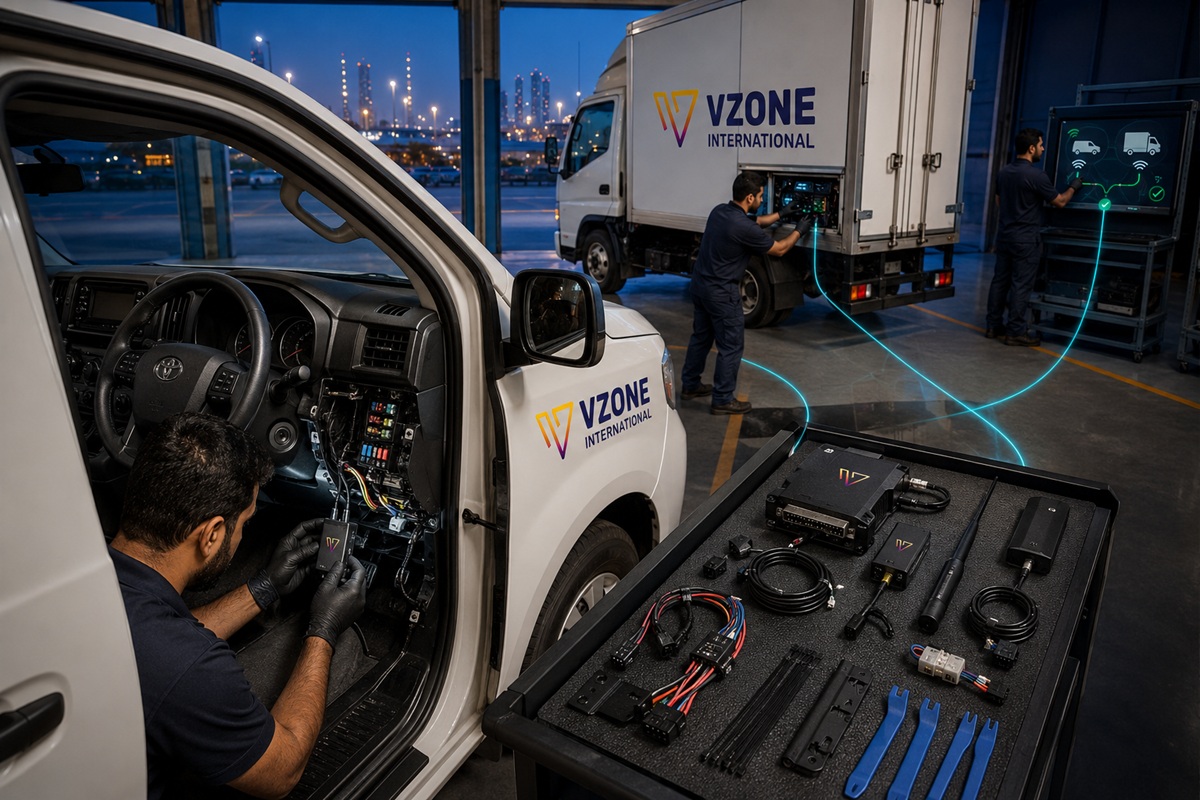
Pharmaceutical cold chain temperature monitoring in UAE operates under the most rigorous compliance framework in the logistics industry and one that is enforced from two directions simultaneously. MOHAP’s regulatory inspections assess compliance with national pharmaceutical distribution standards aligned with WHO Good Distribution Practice. International pharmaceutical manufacturer (MFR) audits assess compliance with the same guidelines from the commercial partnership side, often with requirements that are more specific and more rigorously documented than the regulatory minimum.
A pharmaceutical distributor operating in UAE who fails a MOHAP GDP inspection faces regulatory consequences: warnings, suspension, licence conditions. The same distributor who fails a manufacturer GDP audit faces commercial consequences that are often more immediate: loss of the distribution agreement for that manufacturer’s product range, which can represent a significant proportion of the distributor’s total revenue. Cold chain temperature monitoring that satisfies both audit frameworks simultaneously not just the regulatory minimum is the commercial and compliance foundation that pharmaceutical distribution businesses in UAE depend on.
This guide covers the specific temperature monitoring requirements that pharmaceutical cold chain operations in UAE must satisfy, what WHO GDP requires that generic cold chain monitoring does not provide, how to structure the alarm management and excursion documentation that both MOHAP and manufacturer audits examine, and what a pharmaceutical cold chain temperature monitoring solution looks like when it is configured correctly for UAE’s specific regulatory and operational environment.
Key Takeaways
- Pharmaceutical cold chain temperature monitoring in UAE must satisfy two simultaneous audit frameworks: MOHAP regulatory inspections and international pharmaceutical manufacturer GDP audits the latter often being more rigorous and carrying direct commercial consequences for non-compliance.
- WHO GDP requirements for pharmaceutical temperature monitoring go substantially beyond basic temperature recording: calibrated instruments with traceable certificates, GPS-paired location records, alarm management with defined response times, excursion investigation documentation, and management review evidence are all mandatory components.
- The calibration requirement is what most distinguishes pharmaceutical from food cold chain monitoring: sensors must carry current certificates from accredited calibration laboratories, traceable to national metrology standards an uncalibrated sensor’s readings cannot be used for GDP compliance documentation regardless of whether they appear accurate.
- Excursion investigation documentation the record of what happened, what caused it, what corrective action was taken, and whether stored product was affected is a specific GDP requirement that many pharmaceutical distributors underinvest in, creating audit findings that the temperature records alone would not have generated.
- UAE summer conditions ambient temperatures of 40°C to 47°C make pre-cooling verification and reefer health monitoring more critical for pharmaceutical fleets than in any comparable market; a +2°C to +8°C specification has only a 6°C margin, and UAE thermal exposure reduces this margin to near zero within minutes of door opening.
- GDP-formatted automated reports generated at each delivery trip completion without manual compilation are the documentation standard that pharmaceutical distributor quality teams and manufacturer auditors now expect as baseline capability, not premium enhancement.
What WHO GDP Requires for Pharmaceutical Temperature Monitoring
WHO Good Distribution Practice guidelines for pharmaceutical products set a specific and detailed framework for temperature monitoring that goes well beyond recording temperature readings. Understanding each component of the framework is essential for pharmaceutical fleet operators who need to distinguish between a monitoring system that is technically capable and one that is configured to actually satisfy the GDP requirements that auditors examine.
Calibrated Monitoring Instruments The Non-Negotiable Foundation
GDP requires that all temperature monitoring instruments used in pharmaceutical distribution carry current calibration certificates from accredited calibration laboratories, with traceability to national or international measurement standards. The requirement has two distinct components: calibration accuracy (the sensor must demonstrate measurement accuracy within a defined tolerance typically ±0.5°C for pharmaceutical cold chain applications) and calibration currency (the certificate must be current not expired at the time the temperature record is created).
The operational implication is that calibration is not a one-time setup activity but an ongoing management responsibility. Sensors must be recalibrated at defined intervals (typically annually, or after any repair or modification), calibration expiry dates must be tracked for every sensor in the fleet, and replacement sensors deployed during maintenance cycles must be pre-calibrated before entering service there must be no gap in the calibrated monitoring record. A temperature record produced by a sensor whose calibration certificate expired three months ago cannot be presented as a GDP compliance record, even if the sensor was functioning accurately throughout the period.
GPS-Paired Temperature Records The Location Dimension
MOHAP GDP requirements and international manufacturer audit frameworks both specify that temperature records for pharmaceutical distribution must include the vehicle’s location at each monitoring point not just a temperature reading with a timestamp. This requirement exists because a complete GDP compliance record must demonstrate that monitoring covered the full journey, including any stops, unexpected route deviations, and border crossing delays not just the origin and destination.
A temperature record that shows satisfactory readings at departure and arrival but has no GPS location data for the five-hour transit period cannot confirm that the cargo was not exposed to adverse conditions during a 90-minute delivery stop at an intermediate location, a border crossing queue, or an unscheduled stop at a roadside rest area. GPS-paired monitoring closes this documentation gap and simultaneously provides the incident investigation context that excursion events require.
Alarm Management Defined Response Times and Documentation
GDP alarm management requirements specify not just that alarms must be generated when temperature thresholds are exceeded, but that alarms must be investigated, responded to within defined timeframes, and documented with the investigation findings and corrective actions. MOHAP’s GDP framework and most international pharmaceutical manufacturer audit frameworks specify maximum response times between alarm activation and investigation initiation typically 30 minutes to 2 hours depending on the alarm severity and the operating context.
The documentation requirement is what most pharmaceutical distributors underinvest in. Every alarm event including pre-alerts that were investigated and found to be transient, as well as confirmed excursions should generate an investigation record that includes: the alarm timestamp and GPS location; the temperature reading and trend at the time of alarm; the investigation findings (probable cause); the corrective action taken; and an assessment of whether stored product was affected. These records become the primary evidence of GDP alarm management compliance during both MOHAP inspections and manufacturer audits.
Excursion Investigation and Product Impact Assessment
When a pharmaceutical temperature excursion occurs the temperature crosses the regulatory limit for a defined period GDP requires a formal excursion investigation that includes an assessment of whether the stored product was affected and whether it remains suitable for distribution. The investigation must reference: the excursion duration and magnitude; the product’s stability data (does the product’s approved stability support the conclusion that the excursion did not affect its quality?); the corrective action taken to prevent recurrence; and the decision on whether the affected product was quarantined or released.
For most pharmaceutical products, the stability data that supports excursion impact assessment is available in the product’s registered specification or in manufacturer-provided excursion guidance documents. Distributors must maintain access to this data for each product they distribute and the excursion investigation record must reference it explicitly to satisfy auditor examination. A temperature record that shows an excursion with no corresponding investigation documentation is an audit finding regardless of whether the product was ultimately unaffected.
UAE-Specific Challenges for Pharmaceutical Cold Chain Monitoring
While WHO GDP guidelines are global standards, the UAE operating environment creates specific implementation challenges that make pharmaceutical cold chain temperature monitoring here more demanding than in the European or North American contexts where most pharmaceutical distribution standards were developed.
The +2°C to +8°C Range Under UAE Thermal Pressure
The pharmaceutical cold chain range of +2°C to +8°C is a 6°C-wide specification that was calibrated against logistics environments where ambient temperatures rarely exceed 30°C. In UAE, where vehicle interiors can reach 70°C in summer, loading docks operate at 45°C, and delivery stops expose the compartment to full summer heat, the 6°C specification margin is under continuous and severe thermal pressure. The time-to-excursion from a door-open event in UAE summer conditions can be under 10 minutes for a vehicle whose pre-cooling was not fully completed before loading.
Pharmaceutical fleet operators in UAE need monitoring configured with tighter operational margins than the GDP regulatory minimum. A pre-alert configured at +6.5°C (rather than at the regulatory limit of +8°C) provides a 1.5°C operational buffer and an alert response window that reflects UAE thermal exposure rates not the slower temperature rise rates that European distribution environments produce. The UAE-specific pre-alert configuration is not a regulatory requirement but an operational necessity given the thermal dynamics that UAE summer conditions create.
Multi-Stop Urban Delivery Routes Cumulative Thermal Load
Pharmaceutical last-mile delivery in UAE typically involves 15 to 40 delivery stops per route across Dubai, Abu Dhabi, or Sharjah hospitals, clinics, pharmacies, and distribution sub-depots. Each delivery stop involves a door-open event that introduces ambient heat into the compartment. The cumulative thermal load from 20 door-open events in UAE summer conditions is substantially greater than the same number of stops in a cooler environment, and a vehicle that managed its temperature adequately for the first 15 stops may approach its specification limit on stops 16 to 20 as the compartment’s thermal buffer is progressively depleted.
Fleet temperature monitoring that tracks the compartment temperature trend throughout a multi-stop route not just monitoring for threshold crossings enables route managers to identify routes where the cumulative thermal load is creating end-of-route compliance risk. Route redesign (redistributing high-stop-frequency routes across more vehicles), vehicle specification review (increasing insulation rating or reefer unit capacity), and stop timing management (scheduling high-stop routes for cooler morning hours rather than afternoon peak heat) are the operational interventions that this monitoring data enables.
Cross-Border UAE-GCC Pharmaceutical Logistics
UAE pharmaceutical distributors frequently manage cross-border supply chains supplying hospital groups in Saudi Arabia, Oman, Bahrain, and Qatar from UAE-based distribution centres. These cross-border routes add complexity to pharmaceutical GDP monitoring: border crossing waiting times can add one to three hours to delivery journeys in unpredictable ways, Saudi Arabia’s and Oman’s pharmaceutical distribution standards have their own GDP requirements that may differ in specific documentation details from UAE’s MOHAP framework, and the route profiles for GCC cross-border pharmaceutical logistics include remote desert segments where cellular coverage for GPS data transmission is intermittent.
Cross-border pharmaceutical cold chain monitoring requires hardware with satellite fallback capability for desert route segments, platform capability to generate Saudi and Oman GDP-equivalent documentation alongside MOHAP-format records, and alert routing configured for the extended response times that cross-border routes involve. A 90-minute alarm response time specified for urban UAE routes may be operationally impossible on a cross-border desert route the alarm management documentation must reflect the actual operational response capability for each route type.
What a GDP-Compliant Pharmaceutical Temperature Monitoring Solution Looks Like
A pharmaceutical cold chain temperature monitoring solution that satisfies both MOHAP regulatory requirements and international manufacturer GDP audit standards has specific, verifiable components. The following specification represents the minimum that should be verified when evaluating any pharmaceutical cold chain monitoring system for UAE operations.
| GDP Requirement | What the Monitoring Solution Must Provide | How VZone Addresses It |
| Calibrated monitoring instruments | Sensors with current calibration certificates traceable to national standards; ±0.5°C or better accuracy | Calibrated sensors with UAE NMI-traceable certs; calibration renewal tracking and pre-calibrated replacement sensors |
| GPS-paired location records | Temperature reading linked to vehicle GPS coordinates at each monitoring interval | Wialon platform co-transmits GPS + temperature every 2–5 minutes as paired data record |
| Alarm management documentation | Alarm event logs with timestamp, GPS location, temperature reading, investigation record, corrective action, product impact assessment | Automated alarm event log with investigation documentation fields; management review report generation |
| Pre-alert before threshold breach | Notification before regulatory limit is crossed to enable preventive intervention | Configurable pre-alert at 80–90% of limit (e.g. +6.5°C for +8°C limit) |
| Reefer unit health monitoring | Compressor status, reefer fuel, return air temperature early failure detection | Reefer status monitoring alongside cargo temperature on unified dashboard |
| Vehicle qualification documentation | Formal temperature mapping study demonstrating vehicle maintains specification under operating conditions | VZone provides qualification study support; qualification document in GDP-accepted format |
| Multi-zone monitoring | Independent sensors at warmest and coldest zones in compartment | Multi-probe configurations with minimum two zones per compartment for pharma vehicles |
| Automated GDP report generation | Trip reports in GDP format at each delivery completion; no manual compilation | GDP-formatted reports generated automatically at trip end; available within minutes of delivery |
| Calibration management service | Expiry tracking, renewal scheduling, certificate records for all sensors in fleet | VZone manages calibration cycle; renewal alerts; certificate record management |
| Offline data buffering | Continuous monitoring record maintained during cellular connectivity gaps | Platform buffers data locally and uploads on connectivity restoration; no record gaps |
Managing Pharmaceutical Manufacturer GDP Audits
International pharmaceutical manufacturers who supply UAE distributors treat GDP compliance audits as a standard supply chain qualification activity conducted initially before a distribution agreement is granted and periodically thereafter, often annually or following any significant operational change. These manufacturer audits are typically more detailed and more consistently applied than MOHAP inspections, because manufacturers have both the technical expertise and the commercial leverage to enforce rigorous compliance standards.
What Manufacturer Auditors Examine in Cold Chain Monitoring
Pharmaceutical manufacturer GDP auditors focus their cold chain monitoring examination on five specific areas that together determine whether the distributor’s monitoring system is genuinely GDP-compliant or only superficially so. First, calibration: they will examine actual calibration certificates for multiple sensors, check the traceability chain to national standards, and verify that certificates are current. Second, vehicle qualification: they examine qualification study reports for representative vehicles, check the qualification date against the required requalification schedule, and look for any post-qualification modifications that would require requalification.
Third, alarm management records: they review a sample of historical alarm events both pre-alerts and confirmed excursions examining whether each event was investigated within the defined response time, whether investigation records are complete and reference stability data for the product affected, and whether corrective actions were implemented and verified. Fourth, management review: they look for evidence that senior management reviews cold chain monitoring data at defined intervals and that this review drives corrective action rather than being a passive documentation exercise. Fifth, system validation: for regulated pharmaceutical products, the monitoring system itself may require validation documentation demonstrating that the software produces accurate and reliable records a requirement that enterprise platforms like Wialon satisfy through IQ/OQ validation protocols that VZone can support.
Preparing for a Manufacturer GDP Audit Documentation Checklist
Pharmaceutical distributors preparing for a manufacturer GDP audit should verify the following cold chain monitoring documentation is complete, current, and readily accessible:
- Calibration certificates for all temperature monitoring sensors current, traceable, accurate to ±0.5°C or better
- Vehicle qualification reports for all pharmaceutical distribution vehicles current (within annual review period), mapping study methodology documented, worst-case zone sensor placement confirmed
- Alarm event log for the preceding 12 months all events logged, investigation records complete for every event, response times within specified limits
- Excursion investigation records formal investigation reports for every confirmed excursion, including product impact assessment referencing stability data
- Corrective action and preventive action (CAPA) records evidence that excursion root causes were investigated and systemic corrections implemented
- Management review records evidence of periodic senior management review of cold chain monitoring KPIs
- Training records evidence that operations staff, drivers, and quality personnel have been trained on cold chain monitoring procedures and alarm response protocols
- Standard operating procedures documented SOPs for pre-cooling verification, alarm response, excursion investigation, and vehicle qualification
Conclusion: Pharmaceutical Cold Chain Monitoring in UAE Is a Commercial Necessity, Not Just a Regulatory Obligation
The regulatory compliance dimension of pharmaceutical cold chain monitoring satisfying MOHAP GDP inspections sets the minimum bar. The commercial dimension satisfying international pharmaceutical manufacturer GDP audits that determine whether distribution agreements are maintained sets the bar that actually governs most UAE pharmaceutical distributors’ technology investment decisions.
A monitoring system that generates temperature records without GPS location data, uses sensors whose calibration certificates have expired, lacks alarm investigation documentation, and requires manual report compilation for audit purposes does not satisfy manufacturer GDP audit standards regardless of whether it satisfies the regulatory minimum. The gap between ‘technically monitoring temperature’ and ‘operating a GDP-compliant pharmaceutical cold chain monitoring system is large enough that many UAE distributors only discover it during their first manufacturer audit rather than during routine MOHAP inspections.
The seven capability requirements calibrated sensors, GPS-paired records, UAE-appropriate pre-alerts, reefer health monitoring, automated GDP reports, vehicle qualification support, and alarm event logging define a specific and verifiable standard for pharmaceutical cold chain monitoring in UAE. Providers who satisfy all seven are genuinely positioned to support pharmaceutical GDP compliance at both the regulatory and manufacturer audit level. Those who satisfy some but not others create compliance gaps that show up at the worst possible time: during a manufacturer audit where the commercial stakes are the distribution agreement itself.
Pharmaceutical cold chain compliance starts with the right monitoring system.
VZone International provides complete pharmaceutical cold chain temperature monitoring for UAE distributors calibrated sensors with certificate management, GPS-paired records, automated GDP audit trails, vehicle qualification support, and alarm event documentation. Book a pharmaceutical cold chain assessment and we will show you exactly where your current system has GDP compliance gaps.
Frequently Asked Questions
WHO GDP cold chain requirements for UAE pharmaceutical fleets, as enforced by MOHAP, include: calibrated temperature monitoring instruments with current certificates traceable to national standards; GPS-paired temperature records showing vehicle location at each monitoring interval; alarm management with defined response times and documented investigation records for every alarm event; excursion investigation documentation including product impact assessment referencing stability data; vehicle qualification documentation demonstrating temperature performance; and management review evidence showing that cold chain data drives corrective action. All of these components are mandatory a monitoring system that satisfies some but not all of these requirements is non-compliant.
When pharmaceutical cold chain fails and medicines are exposed to temperatures outside their specification, several outcomes are possible depending on the product, the excursion duration, and the magnitude. Active pharmaceutical ingredients may degrade through temperature-accelerated chemical reactions, reducing potency or generating degradation products. Biological products such as vaccines and proteins may be irreversibly denatured. Solid dosage forms may experience physical changes including dissolution, recrystallisation, or formulation separation. Packaging integrity may be compromised. Most pharmaceutical products cannot be tested to determine whether a temperature excursion has affected quality the standard regulatory position is that product exposed to excursion conditions must be treated as potentially affected unless stability data specifically supports continued use.
GDP cold chain excursion documentation requires a formal investigation record that includes: the exact timestamp and duration of the excursion; the GPS location of the vehicle at each point during the excursion; the temperature readings throughout the excursion period; the probable cause of the excursion; the immediate corrective action taken (driver notification, route redirection, cargo transfer to a compliant vehicle); a product impact assessment referencing the affected product's stability data and the regulatory conclusion on product disposition; a corrective and preventive action (CAPA) plan addressing the root cause; and evidence that the CAPA was implemented. This record must be created promptly after the excursion GDP auditors examine investigation initiation timing as part of the alarm management assessment.
Pharmaceutical vehicle qualification is a documented study demonstrating that a refrigerated vehicle maintains temperature within the required specification (+2°C to +8°C) under representative operating conditions including UAE summer ambient temperatures, typical cargo loads, and realistic delivery route profiles including door-open events. It is required for pharmaceutical cold chain vehicles under MOHAP WHO GDP guidelines and is examined by pharmaceutical manufacturer GDP auditors as a standard qualification point. Vehicles must be requalified annually and after significant modifications. Without current qualification documentation, a vehicle's temperature records cannot be used for GDP compliance purposes regardless of their content.
Choosing a pharmaceutical cold chain temperature monitoring solution for UAE operations requires verifying seven specific capabilities: (1) calibrated sensors with certificate management service; (2) GPS-paired temperature records with location data at each monitoring interval; (3) configurable pre-alert thresholds appropriate for UAE thermal dynamics; (4) reefer unit health monitoring alongside cargo temperature; (5) automated GDP-formatted report generation at trip completion; (6) vehicle qualification study support; (7) alarm event logging with investigation documentation fields and management review reporting. Providers who cannot demonstrate all seven capabilities are offering compliance documentation tools rather than a genuine pharmaceutical GDP cold chain monitoring solution.