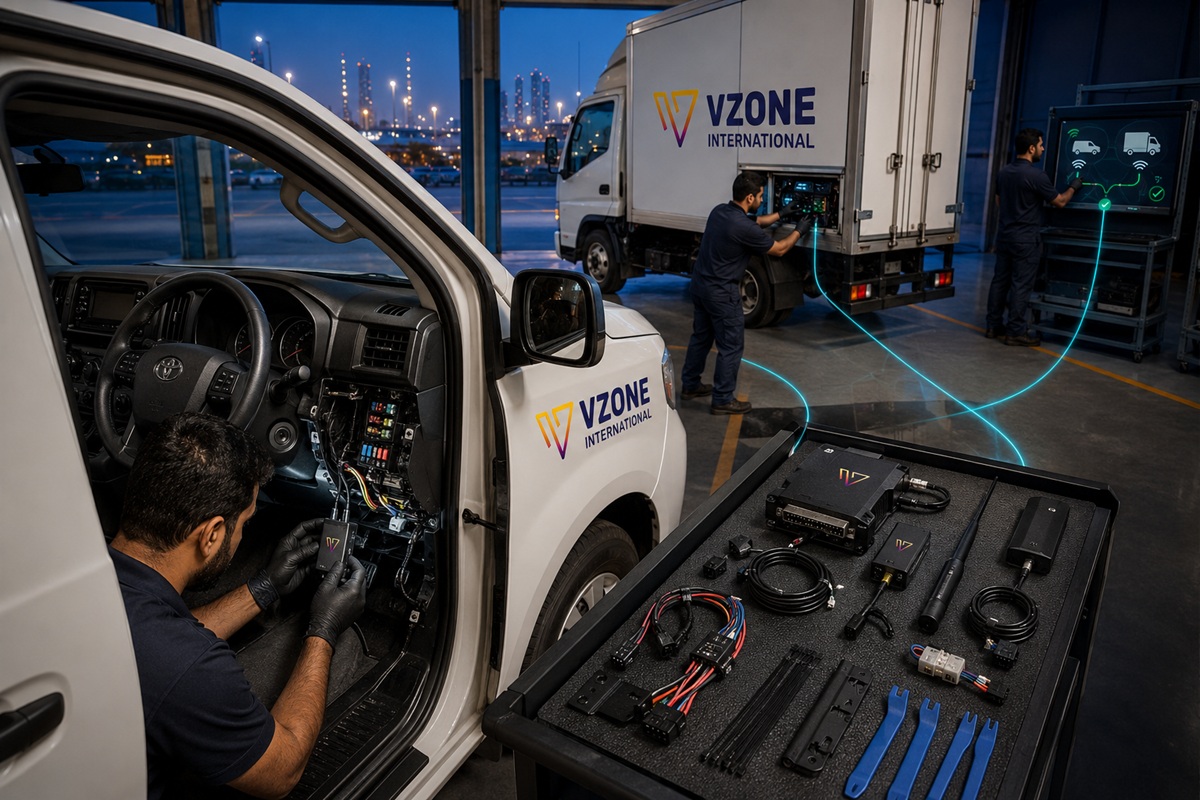
Running a licensed security company in Dubai involves compliance obligations that extend well beyond guard licensing and uniform standards. The Security Industry Regulatory Agency SIRA requires security firms to maintain accountable, trackable operations, and GPS tracking of patrol vehicles and field personnel is a central part of that accountability framework.
For many security company operators, the SIRA GPS requirement is not something they encounter during initial licensing it surfaces when a client demands tracking evidence, during a SIRA audit cycle, or when a competitor’s pitch to a client includes live GPS monitoring that their own operation cannot match. At that point, the question shifts from whether to invest in SIRA-approved GPS tracking to how quickly it can be deployed and which provider meets SIRA’s approval criteria.
This guide covers what SIRA requires, which operations are affected, what SIRA-approved GPS tracking actually looks like in practice, and what operational value security companies gain beyond the compliance baseline.
Key Takeaways
- SIRA (Security Industry Regulatory Agency) is Dubai’s government regulator for all licensed security companies including guarding, patrol, and cash-in-transit operations.
- SIRA-licensed security firms are required to use approved GPS tracking solutions for patrol vehicles, creating an accountable and auditable record of fleet movement and deployment.
- Guard tracking using mobile GPS apps for foot patrols is recommended by SIRA as part of operational accountability, and increasingly required by clients as a condition of contract.
- VZone International holds SIRA approval in Dubai, making it one of a limited number of GPS providers authorised to deliver compliant tracking solutions for licensed security companies.
- Beyond compliance, GPS-enabled security operations deliver measurable improvements in patrol coverage accountability, incident response time, and client reporting quality.
- SIRA GPS requirements are separate from RTA SecurePath and ITC Asateel a security company must satisfy SIRA’s specific approved solution criteria, not general UAE GPS compliance programmes.
What Is SIRA? (Security Industry Regulatory Agency)
SIRA the Security Industry Regulatory Agency is the Dubai government authority responsible for licensing, regulating, and auditing private security companies operating in Dubai. Established under the Dubai Police’s regulatory framework, SIRA oversees all aspects of private security industry operations: company licensing, individual guard licensing and training standards, equipment requirements, and operational accountability mechanisms.
SIRA’s regulatory scope covers a broad range of security operations manned guarding at commercial and residential sites, mobile patrol services, cash-in-transit and valuables logistics, event security, and static post assignments. Any company providing these services commercially in Dubai must hold a valid SIRA licence, and the licence conditions include operational standards that determine how the company tracks, manages, and reports on its deployed workforce.
SIRA’s Role in Regulating Security Companies in Dubai
SIRA conducts periodic audits of licensed security companies to verify that their operational practices meet the licensing standards. These audits cover workforce credentials, equipment compliance, client contract documentation, and increasingly, the technology systems used to manage and account for deployed personnel and vehicles. A security company that cannot demonstrate auditable, real-time visibility over its patrol fleet and field staff is exposed to SIRA audit findings that carry licence consequences.
The GPS tracking requirement sits within SIRA’s broader operational accountability mandate: clients who contract security services have a legitimate interest in knowing that the service they are paying for is actually being delivered that the patrol vehicle did complete its route, that the guard did check in at every post, that response times to incidents were within contracted parameters. GPS tracking creates the evidence layer that makes this accountability demonstrable rather than asserted.
GPS Tracking as Part of SIRA Licensing Requirements
SIRA’s licensing conditions require security companies to use approved GPS tracking solutions for their operational vehicles. The approved solution requirement means that not every GPS product on the UAE market satisfies SIRA’s criteria providers must meet SIRA’s technical and operational standards to appear on the approved list. Security companies that deploy non-approved hardware, or that operate patrol vehicles without active GPS tracking, risk licence-level consequences during audit review.
This is the critical distinction between SIRA GPS requirements and other UAE GPS compliance programmes: SIRA approval is sector-specific, covering the security industry context with its particular accountability and operational transparency demands. An RTA SecurePath-approved device or an ITC Asateel-certified device may not be on SIRA’s approved list and a device approved by SIRA for security company operations is authorised for that specific context, not as a substitute for other compliance programmes.
SIRA-Approved GPS Requirements for Security Fleets
Which Vehicles and Operations Require SIRA-Approved GPS
The primary scope of SIRA’s GPS requirement covers patrol vehicles cars, SUVs, and motorcycles used for mobile patrol services across client sites in Dubai. All such vehicles operated by a SIRA-licensed company must carry approved GPS hardware with active real-time tracking. Cash-in-transit and valuables transport vehicles, given their elevated security risk profile, require GPS tracking as a minimum standard and often incorporate additional layers AI dashcams, panic button systems, and armoured vehicle-specific monitoring configurations.
Static guard deployments personnel assigned to fixed posts at a single site are managed through mobile GPS applications and check-in systems rather than vehicle tracking. The accountability mechanism is different: instead of tracking a vehicle’s route, the system records guard check-ins at designated patrol points throughout a shift, with timestamps and GPS coordinates creating a verifiable attendance and coverage record.
Approved Device Specifications for SIRA Compliance
SIRA-approved GPS devices for security vehicle tracking must meet the agency’s technical standards for real-time data transmission, location accuracy, and platform integration. Enterprise-grade hardwired GPS devices with 4G LTE connectivity, accurate GNSS positioning, and integration capability with security operations centre (SOC) dashboards are the standard specification. The device must maintain continuous tracking intermittent connectivity or devices that power off between ignition cycles are not acceptable in a security fleet monitoring context where the location of every vehicle at every moment is a safety and accountability requirement.
Additional hardware capabilities that SIRA-approved solutions for security operations typically include are emergency SOS alert buttons allowing drivers to trigger an immediate distress notification to the SOC and in higher-risk operations, AI dashcam integration that provides video evidence alongside GPS location data for incident documentation.
Data Reporting Requirements for SIRA-Licensed Companies
SIRA-licensed security companies need to be able to produce operational records that demonstrate compliance with patrol schedules, contract commitments, and incident response protocols. GPS platform reporting for SIRA compliance purposes should include: patrol route completion records showing that vehicles completed assigned routes within scheduled windows; checkpoint visit logs for guard foot patrols; incident response time records showing time from alarm activation to patrol vehicle arrival; and exception reports flagging deviations from contracted patrol schedules.
These reports serve a dual purpose: SIRA audit evidence and client reporting. Security clients particularly corporate and retail clients in Dubai’s competitive security services market increasingly request regular GPS-backed operational reports as part of their contract deliverable. Security companies whose GPS platform generates these reports automatically are in a meaningfully stronger commercial position than those who cannot produce accountability documentation on demand.
How to Track Security Guards and Patrol Vehicles in UAE
Effective security operation monitoring in the UAE context requires two parallel tracking capabilities: vehicle GPS for patrol cars and mobile units, and personnel tracking for foot patrols and static post assignments. These operate on different hardware but should feed a single unified operations dashboard for the security operations centre.
| Tracking Type | Method | Key Platform Features | SIRA Relevance |
| Patrol vehicles (cars, SUVs) | Hardwired GPS device 4G LTE | Real-time location, route replay, geofencing, SOS alert, AI dashcam option | Required SIRA-approved hardware mandatory |
| Security guard foot patrols | Mobile app with GPS on guard’s smartphone | Check-in at patrol points, route tracking, timestamp records, panic button | Recommended provides auditable coverage records |
| Armoured / cash-in-transit vehicles | Enterprise GPS + AI dashcam + panic button | Video + location + SOS + route lock for high-value cargo operations | Required + enhanced security specification |
| Static post supervisors | Mobile app with task management module | Site attendance confirmation, task verification, shift handover documentation | Recommended — client reporting and SIRA operational records |
| Rapid response vehicles | GPS + priority alert routing | Instant dispatch, ETA to incident, response time recording | Best practice contractual SLA evidence |
Vehicle GPS Tracking for Patrol Cars and Armoured Vehicles
Patrol vehicle GPS tracking provides the security operations centre with continuous real-time visibility over every mobile unit in the field. A correctly configured security fleet platform shows each vehicle’s current position on a live map, its speed, and its status en route, on-site, stationary. Geofence alerts trigger when a vehicle enters or leaves a client site boundary, creating automatic arrival and departure records that feed client patrol reports without manual logging.
For armoured and cash-in-transit vehicles, the GPS platform serves both operational and safety purposes. Live location visibility enables the SOC to monitor route adherence a vehicle that deviates from its authorised route triggers an immediate alert. Emergency SOS buttons on the device allow the driver to signal a distress situation without voice communication, triggering an immediate response protocol. AI dashcam integration on armoured vehicles provides video evidence that supplements GPS location data for incident investigation and insurance purposes.
Guard Tracking Mobile GPS for Field Personnel
Security guard tracking for foot patrol operations uses a mobile app on each guard’s smartphone or a dedicated rugged device. Guards are assigned patrol checkpoints defined GPS coordinates within a client site and the app records each checkpoint visit with a timestamp and GPS confirmation that the guard was physically present at the correct location. Missed checkpoints, late arrivals at checkpoints, and guards who go out of contact for extended periods all generate automated alerts to the SOC supervisor.
The guard tracking mobile app also typically includes a panic button that sends an immediate distress alert with the guard’s GPS location to the SOC a non-negotiable safety feature for guards on lone-worker shifts at high-risk locations. The same app can support shift handover documentation, incident reporting with photo capture, and communication with the SOC without requiring the guard to use a separate communication device.
Task Management Assigning and Verifying Security Posts
Task management integration within the GPS platform allows security operations managers to assign posts and patrol routes to specific guards and vehicles, track assignment completion in real time, and generate end-of-shift compliance reports showing which tasks were completed on schedule and which were missed or delayed. This closes the operational loop between scheduling and execution the gap where most accountability failures occur in security operations that rely on manual supervisory checks rather than automated completion verification.
For security companies managing multi-site client portfolios in Dubai, task management visibility across the full deployed workforce from a single dashboard is the capability that separates operationally mature companies from those relying on manual supervisory reporting chains. Clients who audit their security service providers increasingly examine task completion records as a measure of service quality GPS-verified task completion data is substantially more defensible than supervisor sign-off sheets.
How VZone International’s SIRA-Approved Solution Works
VZone International holds SIRA approval for GPS tracking solutions in Dubai one of a limited number of providers authorised to deliver compliant tracking systems to SIRA-licensed security companies. VZone’s security fleet platform combines SIRA-certified vehicle GPS hardware, a guard tracking mobile application, and a security operations centre dashboard on the enterprise Wialon platform.
SIRA-Compliant GPS Hardware Installation
VZone installs SIRA-approved GPS hardware on all patrol and operational vehicles within a security company’s fleet, with certified technicians managing the full installation process hardwired power connection, antenna placement, SIM activation, and platform registration. For armoured and cash-in-transit vehicles, VZone configures enhanced hardware specifications including emergency SOS buttons, AI dashcam integration, and route-lock geofencing. Post-installation, each device is verified for continuous data transmission before the vehicle returns to operational status.
Real-Time Dashboard for Security Operations Centres
VZone’s platform provides the security operations centre with a live operational dashboard showing every patrol vehicle and field personnel unit simultaneously current location, movement status, last checkpoint, and any active alerts. The interface is configurable for SOC use: supervisors see their assigned client sites and personnel; senior managers see the full fleet across all client accounts; the duty controller sees only active incidents and alerts. Role-based access ensures that each user sees the operational picture relevant to their responsibilities without information overload.
Patrol history replay allows SOC supervisors to review any vehicle’s route or guard’s patrol path retrospectively confirming that contracted patrol schedules were executed, investigating incidents by reviewing movements in the minutes before an event, and generating client-facing patrol compliance reports from the platform’s automated report module.
Incident Reporting and Emergency SOS Alerts
When an emergency SOS alert is triggered by a driver pressing a panic button on the vehicle GPS device, or a guard activating the panic function on the mobile app the SOC dashboard immediately highlights the alert with the precise GPS location and the alerting unit’s recent movement history. The platform logs the alert timestamp, the response time of the nearest available unit, and the outcome of the dispatch. This complete incident record is both a SIRA audit-ready operational document and evidence of appropriate emergency response for insurance and client accountability purposes.
Operational Benefits Beyond SIRA Compliance
SIRA compliance creates the baseline investment in GPS tracking infrastructure. The operational returns available from that infrastructure, when the platform is actively used for security operations management rather than compliance-only monitoring, go substantially further.
Faster Incident Response Times
When an alarm activation occurs at a client site, a GPS-enabled SOC can identify the nearest available patrol vehicle in real time and dispatch it with precise navigation to the incident location. Without GPS visibility, the SOC controller relies on radio contact to establish vehicle locations and estimate response times. The difference in response time GPS-dispatched versus radio-queried dispatch is measurable in minutes, and in the security operations context, response time is the primary performance metric that client contracts specify and clients monitor.
Reduced Ghost-Shift and No-Show Incidents
One of the persistent operational challenges in the security services industry is guards who do not complete their assigned patrols either by shortcutting routes, missing checkpoints, or in the most egregious cases, leaving the post during a shift. GPS-verified checkpoint attendance eliminates the ambiguity: either the GPS record confirms the guard was at the checkpoint at the scheduled time, or it does not. This accountability mechanism typically produces immediate improvement in patrol completion rates when introduced the monitoring effect alone reduces non-compliance before any disciplinary process is applied.
Stronger Client Retention Through Transparent Reporting
Security clients in Dubai’s corporate and retail sectors are becoming more sophisticated in how they evaluate service quality. Periodic GPS-backed patrol reports showing checkpoint completion rates, response time performance, and any missed assignments transform the client relationship from one based on assertions (‘our guards completed all patrols’) to one based on evidence (‘here is the GPS record of every patrol completed this month’). Security companies that provide this transparency consistently report lower client attrition than those whose service accountability rests on verbal assurances.
Insurance Cost Management
Security patrol vehicles are involved in a higher-than-average rate of road traffic incidents relative to general commercial fleets the nature of the work involves night driving, rapid response driving, and high annual mileage in urban traffic conditions. GPS tracking that records driver behavior (speed events, harsh braking) alongside location provides the evidential record that supports insurance claims management and creates the safety data basis for premium discussions. Security companies with documented GPS monitoring programmes and clean driver behavior records have a credible basis for insurance premium negotiation that companies without behavioral monitoring data cannot establish.
Conclusion: SIRA GPS Compliance Is Both a Regulatory Floor and a Commercial Asset
SIRA’s GPS tracking requirement for Dubai-licensed security companies defines the compliance baseline. But security companies that treat GPS tracking as purely a compliance exercise installing approved hardware and stopping there leave significant operational and commercial value uncollected.
GPS-verified patrol records, guard checkpoint attendance data, and incident response time documentation are the same datasets that retain clients, win competitive tenders, and provide the evidence base for performance-based contract discussions. Security companies that generate these records automatically and present them proactively to clients operate at a materially different service quality standard than those relying on manual supervisory reporting.
The selection decision is straightforward: choose a SIRA-approved provider whose platform covers both vehicle GPS and guard mobile tracking in a unified dashboard, generates client-facing patrol compliance reports automatically, and supports the SOS and incident management functions that a security operations centre requires. The SIRA approval is the entry requirement the platform capability above that baseline is what determines operational value.
SIRA-licensed security company in Dubai?
VZone International provides SIRA-approved GPS tracking for security fleets and guard monitoring — certified patrol vehicle hardware, guard mobile check-in app, security operations centre dashboard, and automated client reporting. Contact our Dubai team for a compliance review and platform demonstration tailored to your security operation.
Frequently Asked Questions
VZone International is a SIRA-approved GPS tracking provider in Dubai, offering certified hardware and platform solutions for security company fleet monitoring. SIRA approval means the hardware and solution meet the Security Industry Regulatory Agency's technical and operational standards for security company vehicle tracking. Other SIRA-approved providers exist, but the approved list is limited always verify SIRA approval status with documentation before committing to a provider.
Yes. SIRA licensing requirements include GPS tracking for operational patrol vehicles as part of the operational accountability standards for licensed security companies in Dubai. Operating patrol vehicles without SIRA-approved GPS tracking is a licence condition non-compliance that is subject to audit findings and licence consequences. The requirement covers patrol vehicles; guard mobile tracking is recommended practice and increasingly required by security clients, but the vehicle tracking requirement is the primary SIRA mandate.
SIRA GPS requirements are specific to licensed security companies in Dubai they apply to security patrol vehicles and are enforced by the Security Industry Regulatory Agency. SecurePath is the RTA Dubai programme for rental cars, taxis, and public transport. Asateel is the ITC Abu Dhabi programme for commercial fleet vehicles. These are entirely separate regulatory programmes from different authorities. A security company's patrol vehicles must meet SIRA's GPS requirements specifically not SecurePath or Asateel compliance, which govern different vehicle categories under different regulators.
Yes. VZone International's SIRA-approved platform includes enhanced GPS monitoring configurations for armoured and cash-in-transit vehicles incorporating emergency SOS buttons, AI dashcam integration, route-lock geofencing, and real-time SOC alert protocols designed for the elevated security requirements of high-value cargo operations. Armoured vehicle monitoring specifications are configurable to the client's specific operational protocols and SIRA licence conditions.
Guard tracking creates verifiable patrol records GPS-confirmed checkpoint attendance with timestamps that security companies can present to clients as patrol compliance evidence. Clients in Dubai's corporate and retail sectors increasingly request this documentation as a contract deliverable. Security companies that provide transparent, GPS-backed performance reports retain clients at higher rates than those whose service quality is reported verbally. In competitive tender situations, demonstrating live GPS monitoring capability and automated client reporting is a differentiating factor that influences award decisions.
Yes. Enterprise GPS platforms such as VZone's Wialon-based system support unlimited client site configurations each site can be configured as a geofenced zone with its own patrol schedule, checkpoint assignments, and alert parameters. Operations managers see the full multi-site deployment on a single dashboard, with role-based access allowing site supervisors to see only their assigned locations. This architecture is appropriate for security companies managing 10 client sites or 500, with no practical limit on site or personnel count.