Not every temperature sensor is a cold chain monitoring system. A standalone data logger records temperature on a chip that someone downloads at the destination. A basic probe thermometer measures the temperature at the moment of reading. Neither provides real-time alerts, neither generates automated compliance reports, and neither tells the operations manager what the temperature was at 2am when the reefer unit failed quietly on a highway the event that determined whether the cargo was still safe when it arrived.
A cold chain monitoring system is a different category of technology entirely. It combines hardware calibrated IoT sensors installed in vehicles, cold rooms, and containers with cellular or satellite connectivity, a cloud processing platform, and automated reporting to create continuous, real-time visibility over the temperature conditions experienced by temperature-sensitive cargo from the moment it leaves the cold store to the moment it is delivered. The distinction matters operationally, commercially, and for regulatory compliance: a data logger tells you what happened; a cold chain monitoring system lets you intervene before it does.
This guide explains what a cold chain monitoring system is, how its components work together, what separates basic data logging from enterprise cold chain monitoring, what features to look for when evaluating systems for UAE fleet or facility applications, and how to understand the cost and ROI of different system configurations.
Key Takeaways
- A cold chain monitoring system is defined by three core capabilities: continuous real-time temperature recording, immediate alert transmission when thresholds are exceeded, and automated compliance report generation none of which standalone data loggers provide.
- GPS integration transforms a temperature monitoring system into a cold chain operations tool: pairing location with temperature data enables incident response, route analysis, and the location-stamped documentation that MOHAP GDP pharmaceutical audits specifically require.
- The difference between a data logger and a real-time monitoring system is not just technology it is the difference between discovering a temperature excursion at delivery and preventing it while the vehicle is still in transit.
- Multi-zone sensor configurations independent sensors at the warmest and coldest points in a compartment are the minimum appropriate standard for pharmaceutical and premium food cargo; single-sensor systems miss the temperature gradients that create compliance exposure.
- Fleet monitoring systems and facility monitoring systems address different operational contexts but should ideally share a unified platform so operations managers have a single dashboard view of temperature conditions across vehicles, cold rooms, and storage facilities simultaneously.
- System cost should be evaluated as cost per compliance event prevented, not as hardware cost per vehicle the ROI calculation changes completely when measured against cargo loss avoidance rather than equipment spend.
Cold Chain Monitoring System
A cold chain monitoring system is an integrated technology platform that continuously measures, records, transmits, and analyses temperature data from refrigerated environments vehicles, warehouses, cold rooms, containers, and fixed storage units and provides real-time visibility, alerting, and automated documentation to the operators and quality managers responsible for maintaining temperature-sensitive product integrity.
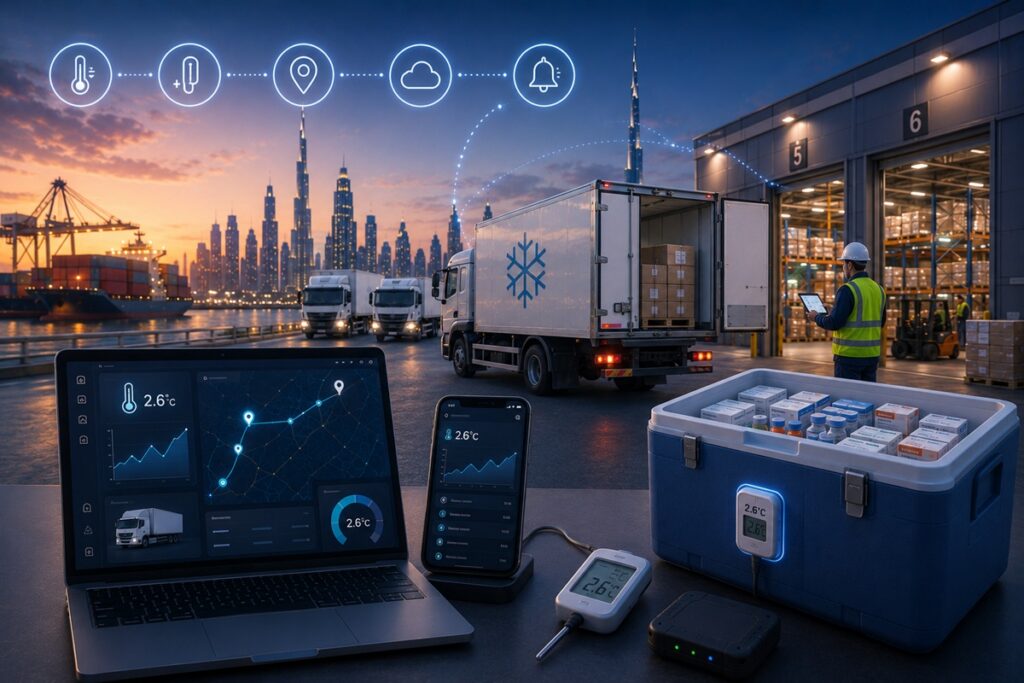
The word ‘system’ is the key distinction from simpler temperature recording tools. A system has interdependent components that work together to deliver a capability greater than any individual component: the sensor measures; the communication layer transmits; the cloud platform processes and stores; the alert engine evaluates and notifies; the reporting module generates documentation. Each component is necessary, and the failure of any one creates a gap that undermines the others.
Cold Chain Monitoring System vs. Data Logger Critical Differences
The data logger is the most commonly deployed basic temperature recording tool in cold chain logistics a small electronic device that records temperature at set intervals and stores the data locally for download when the shipment reaches its destination. Data loggers are inexpensive, portable, and produce a clear temperature record for any shipment they travel with. They are also fundamentally reactive: they record what happened, with no ability to alert anyone while it is happening or to trigger an intervention that prevents cargo loss.
| Capability | Data Logger (Basic) | Cold Chain Monitoring System |
| Continuous temperature recording | Yes stored locally | Yes transmitted to cloud in real time |
| Real-time temperature alert during transit | No | Yes immediate push notification / SMS |
| GPS location at time of temperature event | No | Yes paired with every reading |
| Pre-alert before threshold is crossed | No | Yes configurable at 80–90% of limit |
| Reefer unit status monitoring | No | Yes compressor, fuel, return air temp |
| Multi-zone independent sensor support | Limited usually 1 probe | Yes up to 4+ zones per vehicle |
| Automated HACCP/GDP compliance reports | No manual compilation required | Yes generated automatically at trip end |
| Operations manager dashboard | No | Yes live fleet temperature map |
| Historical trend analysis | Manual must download device | Yes cloud-based, instant access |
| Excursion investigation documentation | Post-hoc manual | Yes automated event log with GPS coords |
| Calibration certificate management | Manual tracking | Yes automated reminder and record |
| Regulatory audit readiness | Low manual compilation | High automated, timestamped, tamper-resistant |
How a Cold Chain Monitoring System Works
The operational architecture of a cold chain monitoring system has four functional layers, each performing a specific role in converting physical temperature measurements into actionable operational intelligence.
Layer 1 Sensing: IoT Temperature and Humidity Sensors
IoT temperature sensors are the physical measurement layer probe devices installed inside refrigerated compartments, cold rooms, containers, or product packaging that measure temperature at configured intervals (typically every one to five minutes for active monitoring). Modern sensors also capture humidity, which is relevant for cargo categories sensitive to moisture pharmaceutical raw materials, certain food categories, and electronics that can be damaged by condensation forming when humidity and temperature interact.
Sensor accuracy specification matters significantly for regulated cargo. Pharmaceutical cold chain applications require sensors with measurement accuracy of ±0.3°C to ±0.5°C across the monitored range. Food cold chain applications are typically satisfied with ±1.0°C accuracy. Sensors deployed for UAE cold chain applications must additionally be rated for the ambient operating environment: a sensor installed in a vehicle that parked in direct sun will experience ambient temperatures of 65°C to 75°C before the refrigeration system cools the compartment sensors not rated for this thermal range fail progressively in UAE conditions regardless of compartment temperature.
Layer 2 Transmission: Cellular and Satellite Communication
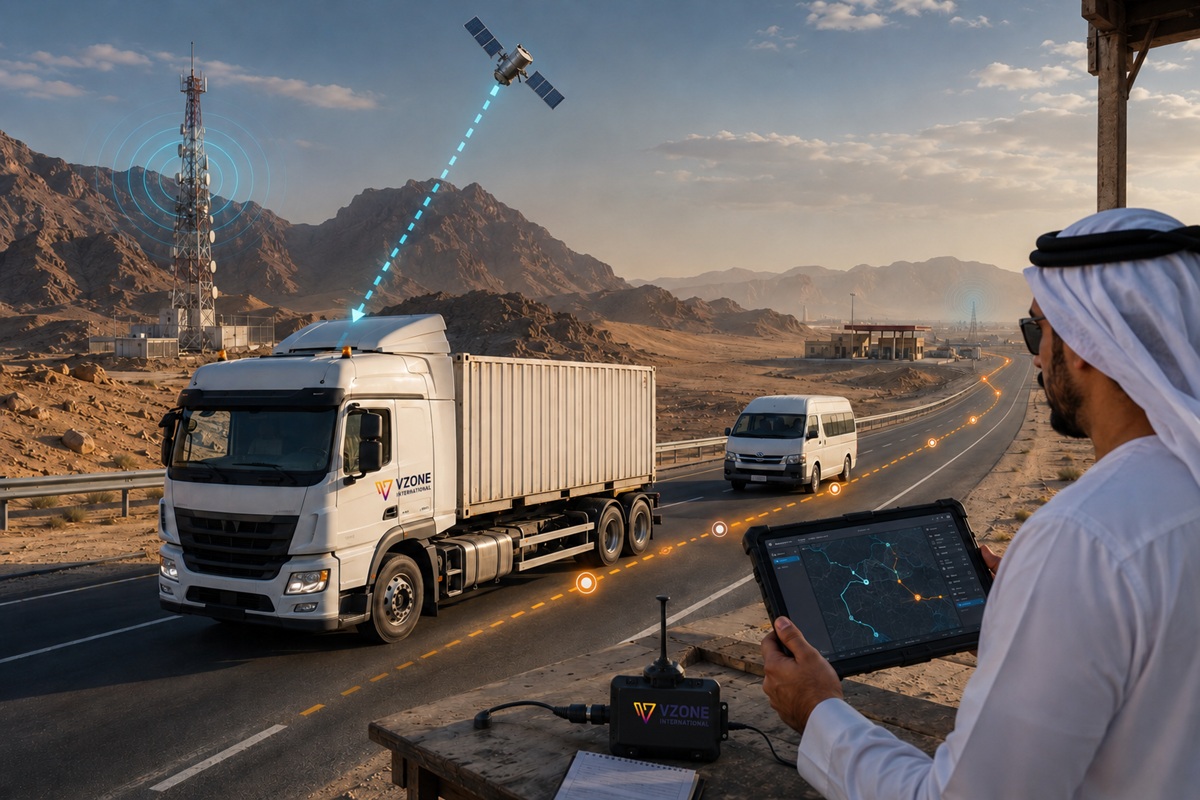
Once a temperature reading is taken, the sensor data is transmitted to the cloud platform via a cellular data connection typically through the GPS telematics device installed in the vehicle, which collects temperature sensor readings alongside GPS position data and transmits the combined package at each GPS update interval. This pairing of temperature and location data in a single transmission is what creates the GPS-temperature integration that distinguishes a cold chain monitoring system from standalone temperature tracking.
For UAE cross-border operations into Saudi Arabia, Oman, or more remote desert logistics routes, cellular coverage can be intermittent. Professional cold chain monitoring systems handle this through two mechanisms: offline buffering (the device stores readings locally when connectivity is absent and uploads them when connectivity is restored, maintaining a complete record without gaps) and satellite fallback (devices with satellite modem capability transmit via Iridium or similar networks when cellular coverage is absent, maintaining real-time alerting even in coverage gaps).
Layer 3 Processing: Cloud Platform and Alert Engine
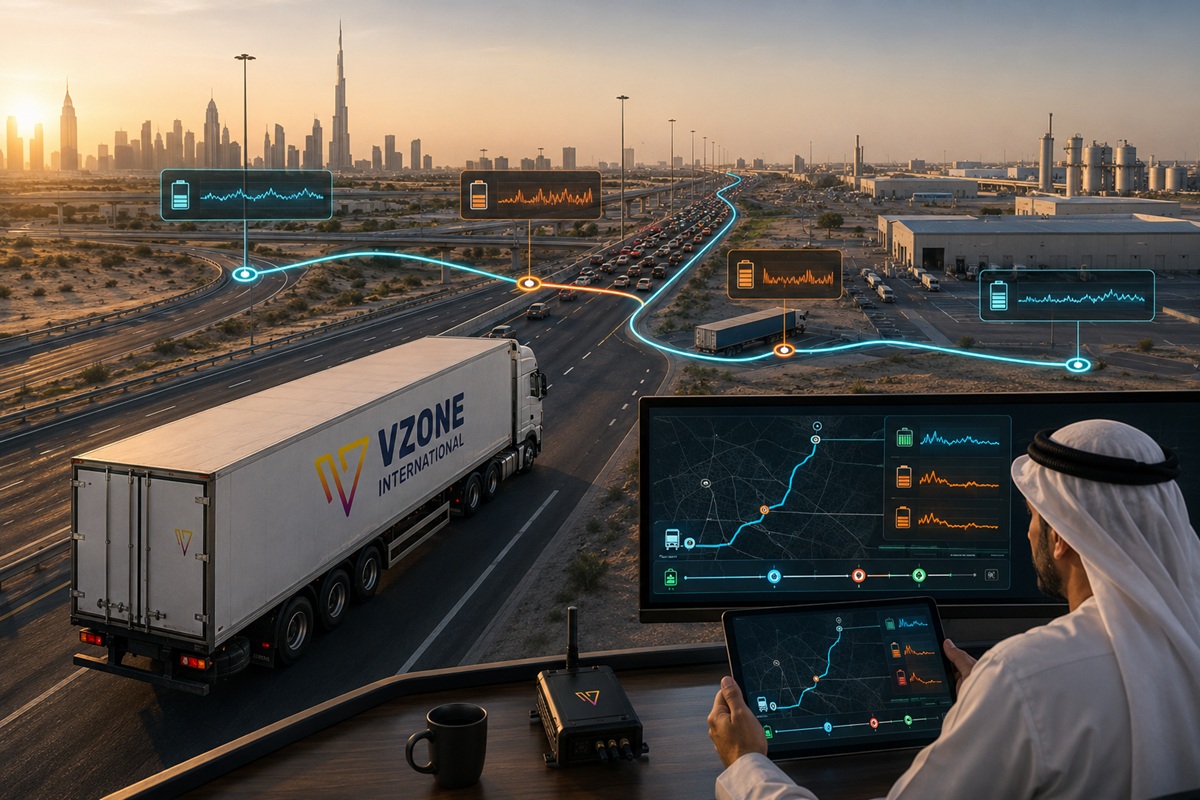
The cloud platform receives the combined GPS-temperature data stream from all monitored vehicles and facilities simultaneously, processes each reading against configured alert thresholds, updates the live dashboard, and stores the full historical record. The alert engine evaluates each reading against two threshold tiers: a pre-alert threshold (typically 80 to 90 percent of the allowable temperature range) that fires before a compliance event occurs, and a confirmed excursion alert that fires when the regulatory threshold is crossed.
The pre-alert is the intervention window that prevents cargo loss from becoming cargo destruction. When the compartment temperature of a pharmaceutical delivery vehicle rises from +4°C to +6.5°C while the vehicle is 25 minutes from the nearest cold storage facility, a pre-alert at +6.8°C (85 percent of the +8°C limit) gives the dispatcher 10 to 15 minutes to redirect the vehicle before the limit is crossed potentially saving the entire load. An alert that fires only when the temperature reaches +8°C provides no actionable response window, just documentation of the compliance failure.
Layer 4 Reporting: Automated Compliance Documentation
The reporting layer converts stored temperature and GPS data into the compliance documentation that regulators, customers, and quality auditors require. Automated reporting generates structured temperature journey reports at trip completion without manual data extraction, compilation, or formatting in the specific formats that different regulatory frameworks specify.
For food cold chain: HACCP-compatible journey reports showing temperature at configured intervals, the CCP threshold status throughout the journey, and any excursion events with timestamps, GPS coordinates, and duration. For pharmaceutical cold chain: GDP-formatted reports including sensor calibration certificate references, alarm event records with investigation documentation fields, and the location-stamped temperature record that MOHAP and international pharmaceutical manufacturer audits require. The difference between a platform that generates these reports automatically and one that requires manual compilation is not cosmetic it is the difference between a sustainable compliance programme and one that accumulates documentation debt until an audit reveals the gap.
Fleet Monitoring System vs Facility Monitoring Understanding the Difference
Cold chain monitoring systems address two distinct operational environments that have different hardware requirements, different connectivity challenges, and different monitoring priorities but should ideally share a unified cloud platform that provides a single visibility layer across both.
Fleet Monitoring Systems In-Transit Vehicle Temperature
A fleet cold chain monitoring system monitors temperature conditions inside refrigerated vehicles during transit. Its primary operational function is detecting temperature excursions caused by door-open events, reefer unit failures, and route-related thermal exposure and providing the real-time alerting that enables intervention before cargo is irreversibly compromised. Fleet monitoring systems must handle the connectivity challenges of mobile operation: varying cellular coverage, vehicle vibration, and the wide ambient temperature range that vehicles experience between air-conditioned depot environments and exposed highway running.
Fleet monitoring systems are typically configured around the vehicle’s GPS telematics device temperature sensor data feeds into the same telematics unit that provides location tracking, so GPS and temperature are co-transmitted and co-processed on the platform. This integration means fleet cold chain monitoring requires no separate platform subscription or separate hardware installation process it is added as a sensor configuration layer on top of the existing GPS telematics infrastructure.
Facility Monitoring Systems Cold Rooms, Freezers, and Warehouses
Facility cold chain monitoring covers fixed storage environments: cold rooms, walk-in freezers, pharmaceutical refrigerators, laboratory specimen storage, and distribution warehouse cold zones. Unlike vehicle monitoring, facility systems do not require GPS positioning the location is fixed and known. But they have different operational challenges: continuous power supply requirements, fixed network connectivity, door access monitoring to detect unauthorized entry, and in pharmaceutical applications, the temperature mapping requirements that define sensor placement to demonstrate adequate coverage of the full storage volume.
Facility monitoring systems use wireless IoT sensors (Bluetooth, Wi-Fi, or cellular) transmitting to fixed gateway devices that connect to the cloud platform over the facility’s network infrastructure. For pharmaceutical cold storage, sensors must have backup battery power to maintain monitoring during power outages and the monitoring system must generate an alarm during power failures, as power outages are one of the most common causes of pharmaceutical cold storage excursions in UAE facilities.
Why a Unified Platform Matters
The operational value of monitoring vehicles and facilities on the same platform rather than using separate systems for fleet temperature monitoring and cold room monitoring is the unified visibility layer it creates for operations and quality managers. A quality manager reviewing temperature compliance for a pharmaceutical distribution operation needs to see both the vehicle journey temperature records (was the cargo maintained during transit?) and the warehouse storage records (was the cargo maintained during holding before dispatch?) in a single integrated view.
Separate systems create data silos that force manual cross-referencing during audit investigations, compliance reviews, and excursion investigations. A unified platform presents the full temperature history of a product consignment warehouse holding temperature, dispatch loading temperature, transit temperature, and delivery arrival temperature as a single continuous record without requiring the user to navigate between multiple systems and reconcile different data formats.
Key Features to Look For in a Cold Chain Monitoring System
When evaluating cold chain monitoring systems for UAE fleet or facility applications, the following features distinguish enterprise-grade platforms from basic temperature logging tools.
1. Real-Time Alerts with GPS Location Context
Any cold chain monitoring system must provide real-time alerts but the GPS location context that transforms an alert from a notification into actionable intelligence is what separates a genuine cold chain monitoring system from a connected data logger. The alert must tell the operations manager not just that a temperature event is occurring but where the vehicle is at that moment, whether it is moving or stationary, and what the temperature trend direction is. These three data points together determine the most likely cause and the most appropriate response.
2. Multi-Zone Independent Sensor Support
Single-sensor monitoring records the temperature at one point in the compartment typically near the evaporator unit, where conditions are most favourable. Cargo stored near the door seal or at the extremes of a large compartment can be several degrees warmer. For pharmaceutical cargo where the acceptable range is only 6°C wide (+2°C to +8°C), a 4°C differential between the sensor location and the cargo could place product outside the acceptable range while the monitored reading shows compliance. Multi-zone configurations at minimum two sensors covering the warmest and coldest zones eliminate this compliance blind spot.
3. Pre-Alert Threshold Configuration
A monitoring system that only alerts when the temperature crosses the regulatory threshold provides no intervention window it documents compliance failures rather than enabling their prevention. Pre-alert configuration at 80 to 90 percent of the allowable limit gives the operations team an intervention window of 10 to 30 minutes depending on the cargo category and ambient conditions. This is the feature most frequently overlooked in basic system configurations and most frequently responsible for the difference between a prevented excursion and a documented one.
4. Reefer Unit Health Monitoring
Beyond cargo temperature, reefer unit operational status compressor running status, fuel level in the reefer’s dedicated tank, return air temperature, and power draw is a critical monitoring layer for fleet cold chain systems. A reefer unit that has failed but whose cargo compartment still reads within temperature due to thermal mass creates a false-compliance window: the temperature is currently compliant, but it will not remain so for long without the refrigeration system operating. Reefer status monitoring detects the failure before the cargo temperature reflects it.
5. Automated Compliance Report Generation
The reporting capability of a cold chain monitoring system is where regulatory value is primarily generated. Systems that require manual data extraction and report compilation create administrative overhead that compounds with fleet size and trip frequency and create the documentation gap risk that makes cold chain compliance audits stressful rather than routine. Automated report generation HACCP-compatible for food, GDP-formatted for pharmaceutical with no manual steps between trip completion and report availability is the standard that UAE regulatory enforcement and customer documentation requirements are progressively moving toward.
6. Calibration Management for Pharmaceutical Applications
Monitoring instruments used in pharmaceutical cold chain must carry current calibration certificates traceable to national metrology standards. Managing calibration schedules across a fleet of sensors tracking expiry dates, scheduling recalibration, ensuring replacement sensors are pre-calibrated before deployment, maintaining the calibration history record is an administrative requirement that enterprise monitoring platforms can automate. A system that tracks calibration status per sensor and generates alerts when certificates approach expiry eliminates the manual tracking overhead that causes calibration lapses in large pharmaceutical fleet deployments.
Cold Chain Monitoring System Cost What to Expect in UAE
Cold chain monitoring system cost in UAE has three components: sensor hardware, GPS integration hardware (if not already deployed), and platform subscription. Understanding the full cost picture prevents underestimating the investment and allows accurate ROI calculation.
| Cost Component | Typical Range (AED) | Notes |
| IoT temperature sensor (single probe) | 300 – 600 per sensor | Higher end for pharmaceutical-grade calibrated sensors |
| Multi-zone sensor kit (2–4 probes per vehicle) | 800 – 2,000 per vehicle | Includes receiver and wiring; varies with probe count |
| GPS telematics device (if not installed) | 350 – 600 per vehicle | Standard GPS device with temperature sensor integration port |
| Platform subscription cold chain monitoring only | 100 – 200 per vehicle/month | Temperature monitoring + GPS integration + automated reporting |
| Platform subscription full fleet management + cold chain | 150 – 250 per vehicle/month | Adds driver behaviour, fuel monitoring, maintenance scheduling |
| Facility cold room sensor kit (single room) | 500 – 1,500 per room | Varies with room size and number of monitoring points required |
| Pharmaceutical GDP calibration service | 500 – 1,500 per sensor/year | Initial calibration + annual recalibration + certificate issuance |
For most UAE fleet cold chain deployments, the all-in investment for multi-zone vehicle monitoring sensors, installation, and 12-month platform subscription ranges from AED 2,500 to AED 5,000 per vehicle. Against the AED 15,000 to AED 150,000 cargo value typically at risk on a single refrigerated vehicle route in UAE pharmaceutical or premium food logistics, the monitoring investment represents 2 to 10 percent of the cargo value it protects. On this basis, a single cargo loss prevention event in the first year recovers the monitoring investment for multiple vehicles.
VZone International’s Cold Chain Monitoring System
VZone International provides GPS-integrated cold chain monitoring for UAE fleet operators and facility managers combining calibrated IoT temperature sensors, reefer unit health monitoring, multi-zone configuration, and automated HACCP and GDP compliance reporting on the Wialon enterprise platform. VZone’s cold chain monitoring system serves pharmaceutical distributors, food logistics operators, catering supply chains, hospital logistics providers, and e-commerce grocery fleets across UAE and GCC.
Hardware Calibrated Sensors and GPS Integration
VZone deploys IoT temperature sensors rated for UAE operating conditions accuracy of ±0.3°C to ±0.5°C within the monitored temperature range, operating temperature rated to 70°C+ ambient, and IP67 protection for vehicle installation environments. Multi-zone configurations are available for vehicles carrying mixed cargo categories or large compartments requiring zone coverage. For pharmaceutical clients, VZone provides calibration certificate management as part of the monitoring service sensors are deployed with traceable calibration certificates, and renewal scheduling is tracked automatically to ensure no sensor operates beyond its certified period without recalibration.
Platform Unified Fleet and Facility Monitoring Dashboard
VZone’s Wialon-based platform presents vehicle temperature monitoring alongside facility cold room monitoring in a unified operational dashboard giving quality managers and operations teams a single view of temperature conditions across the entire cold chain without switching between separate systems. Pre-alert configurations at 80 to 85 percent of the allowable limit, reefer unit status indicators, and real-time GPS-paired temperature readings are standard platform features. Automated compliance reports HACCP format for food distribution, GDP format for pharmaceutical delivery are generated at trip completion and available immediately without manual data processing.
Conclusion: A Cold Chain Monitoring System Is a Prevention Tool, Not a Documentation Tool
The fundamental distinction between a cold chain monitoring system and simpler temperature recording tools is not technological sophistication it is operational function. A data logger documents what happened to cargo after delivery. A cold chain monitoring system provides the real-time visibility that allows operations teams to prevent damage before it occurs, respond to developing excursions before they become compliance events, and generate the automated documentation that regulators and customers require without the manual overhead that makes rigorous cold chain compliance impractical at scale.
For UAE fleet and facility operators managing temperature-sensitive cargo, the investment decision is straightforward when measured against the right denominator. Not hardware cost per vehicle, but cost per compliance event prevented. Not monthly subscription versus manual logging, but the value of the cargo, contract, and regulatory standing that the monitoring system protects. On that basis, the ROI case for enterprise cold chain monitoring closes quickly typically within the first quarter of operation for fleets handling pharmaceutical or premium food cargo.
Understanding what a cold chain monitoring system actually includes real-time alerts, GPS integration, multi-zone sensors, reefer health monitoring, automated compliance reporting, and calibration management is the starting point for evaluating whether any specific system being considered actually meets this standard or is a data logger with connectivity added and a ‘monitoring system’ label applied.
See what a real cold chain monitoring system looks like for your UAE fleet or facility.
VZone International provides GPS-integrated cold chain monitoring with multi-zone IoT sensors, automated HACCP and GDP compliance reports, reefer unit health monitoring, and pharmaceutical calibration management on a unified platform that covers both vehicles and cold storage facilities. Get a free demo and cold chain gap assessment today .
Frequently Asked Questions
A cold chain monitoring system is an integrated platform combining IoT temperature sensors, GPS tracking, cellular communication, and cloud software that continuously records and transmits temperature data from refrigerated vehicles, cold rooms, and containers in real time. Unlike data loggers that store readings locally for post-delivery download, a cold chain monitoring system provides immediate alerts when temperatures approach or exceed safe limits, GPS-paired location data at each temperature reading, and automated compliance reports for HACCP, WHO GDP, and food safety regulatory requirements.
IoT temperature sensors installed in refrigerated vehicles or cold storage rooms measure temperature every one to five minutes and transmit readings to a GPS telematics device that pairs each reading with the vehicle's location. The combined data is transmitted to a cloud platform that evaluates readings against configured alert thresholds, updates a live monitoring dashboard, and stores the complete temperature and location history. When temperature approaches a threshold, a pre-alert fires to the operations team. When it crosses the limit, a confirmed excursion alert fires simultaneously to the driver and the operations manager. At trip completion, automated compliance reports are generated without manual data extraction.
A data logger records temperature readings locally on a chip and requires manual download at the destination to access the data. It provides no real-time alerts, no GPS location context, no automated reporting, and no ability to trigger an intervention while an excursion is developing. A cold chain monitoring system transmits data in real time to a cloud platform, generates immediate alerts with GPS location context when temperatures deviate from safe ranges, provides a pre-alert before the limit is crossed, and generates automated compliance reports. The operational difference is the ability to prevent cargo loss versus documenting it after it has occurred.
An effective cold chain monitoring system for UAE operations should include: real-time temperature alerts with GPS location context; pre-alert configuration at 80 to 90 percent of the allowable limit; multi-zone sensor support (minimum two probes per compartment); reefer unit operational status monitoring (compressor, fuel, return air temperature); automated HACCP-compatible reports for food and GDP-formatted reports for pharmaceutical cargo; offline data buffering for cellular dead zones; calibration certificate management for pharmaceutical applications; and a unified dashboard covering both vehicle and facility monitoring. Cost should be evaluated as investment per cargo loss prevented, not hardware cost per vehicle.
A complete cold chain monitoring system for a single UAE refrigerated vehicle multi-zone sensors, GPS integration, and 12-month platform subscription typically costs AED 2,500 to AED 5,000 all-in. Pharmaceutical-grade configurations with calibrated sensors and GDP compliance features are at the higher end. For most UAE pharmaceutical or premium food logistics operations where a single vehicle route carries AED 15,000 to AED 150,000 in cargo value, the monitoring investment represents 2 to 10 percent of the cargo value it protects recoverable from a single prevented cargo loss event. VZone International provides tailored cost assessments based on fleet size, cargo category, and compliance requirements.