When a receiver rejects a load or a customer files a spoilage claim, the argument almost always comes down to a single question: can you prove the cargo stayed in range? Paper logs and handwritten checks rarely can. They leave gaps, they are easy to dispute, and they carry little weight when money and reputation are on the line.
Digital temperature logs change the terms of that argument. Continuous, timestamped, and tied to GPS location, they turn “we think it was fine” into a defensible record of exactly what happened on every leg of the journey. For UAE operators moving pharmaceuticals, fresh produce, and frozen goods through extreme heat, that shift is the difference between absorbing a loss and defeating an unfounded claim.
Key Takeaways
- Most reefer claims and rejections hinge on documentation and paper logs are full of gaps.
- Digital logs capture continuous, timestamped, GPS-linked data plus door and reefer-status context.
- Tamper-resistant records prove in-range transit end to end, or pinpoint exactly where an excursion occurred.
- Sharing a live record at handoff prevents rejections; real-time alerts stop excursions before delivery.
- Well-documented claims resolve faster and more fairly with insurers and receivers.
Why Reefer Claims and Rejections Happen
The Documentation Gap in Paper Logs
A driver recording the reefer display every few hours produces a record full of holes. The readings between checks are simply missing and those are exactly the moments when an excursion is most likely to occur. Paper is also slow to compile, easy to mis-transcribe, and easy for the other side to question. When a claim hinges on documentation, a log with visible gaps is a weak defence.
He-Said-She-Said: Disputes Without Evidence
Many reefer disputes are really interface disputes. Was the trailer pre-cooled before product went in? Did the facility hold the doors open too long at loading? Did the problem occur in transit, or after handoff at the receiver? Without a continuous, location-stamped record, each party tells its own version and liability falls to whoever documented the least. Digital logs replace that stand-off with facts.
What a Digital Temperature Log Actually Captures
Continuous Timestamped Readings
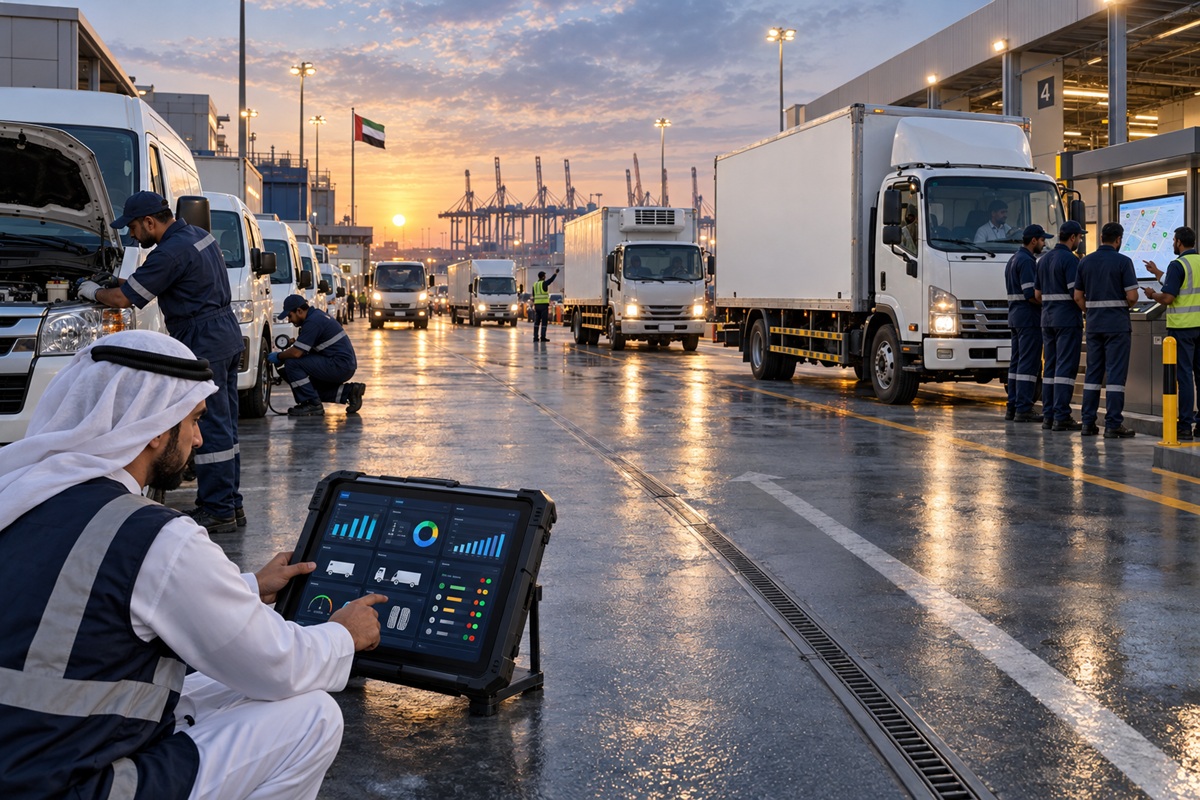
Instead of a handful of spot checks, a digital log records temperature at short, regular intervals for the entire trip. Every reading carries a timestamp, so the record shows not just that an excursion happened but precisely when it started, how far it went, and when the unit recovered.
GPS Location Tied to Every Reading
Linking each reading to GPS location is what makes the data actionable. A spike tied to a specific loading bay, border crossing, or stretch of road tells you the cause at a glance and lets you show a receiver or insurer exactly where responsibility lies.
Door Events, Reefer On/Off, and Set-Point Changes
A complete log captures more than temperature. Door openings, reefer run status, and set-point changes give the full context behind any deviation, so a warm reading at a delivery stop reads as a two-minute door opening rather than an unexplained failure.
Tamper-Proof, Audit-Ready Records
Because the data is captured automatically and stored centrally, it cannot be quietly edited after the fact. That integrity is what gives digital logs their evidentiary weight and what lets you produce a full, credible record for any trip on demand.
Paper Logs vs Digital Temperature Logs
| Factor | Paper / Manual Logs | Digital GPS-Linked Logs |
|---|---|---|
| Reading frequency | Every few hours | Continuous, short intervals |
| Location context | None | GPS-tagged |
| Tamper resistance | Low | High |
| Dispute defence | Weak, contestable | Evidence-grade |
| Audit prep | Hours of reconstruction | One-click export |
| Rejection prevention | Reactive | Proactive, shareable live |
How Digital Logs Win (or Prevent) Disputes
Proving In-Range Transit End to End
The strongest defence against a spoilage claim is a clean, continuous record showing the cargo never left its safe range. When your log demonstrates the trailer held set-point for the entire journey, it can prove the issue arose after delivery not during transport and shift liability accordingly.
Pinpointing Where and Why an Excursion Occurred
When an excursion did happen, precise data works in your favour too. A record showing a brief warm-air spike during a facility-controlled loading window tells a very different story than an in-transit unit failure. Location and door context let you assign the deviation to the right party instead of absorbing it by default.
Faster, Fairer Claim Resolution with Insurers
Insurers and adjusters resolve well-documented claims faster. Timestamped sensor exports tied to a specific shipment are standard components of a strong claim file and because they include the spikes and recoveries a summary might omit, they let everyone reach a fair outcome on the facts rather than on assumptions.
Reducing Load Rejections at the Dock
Sharing Live Records with Receivers
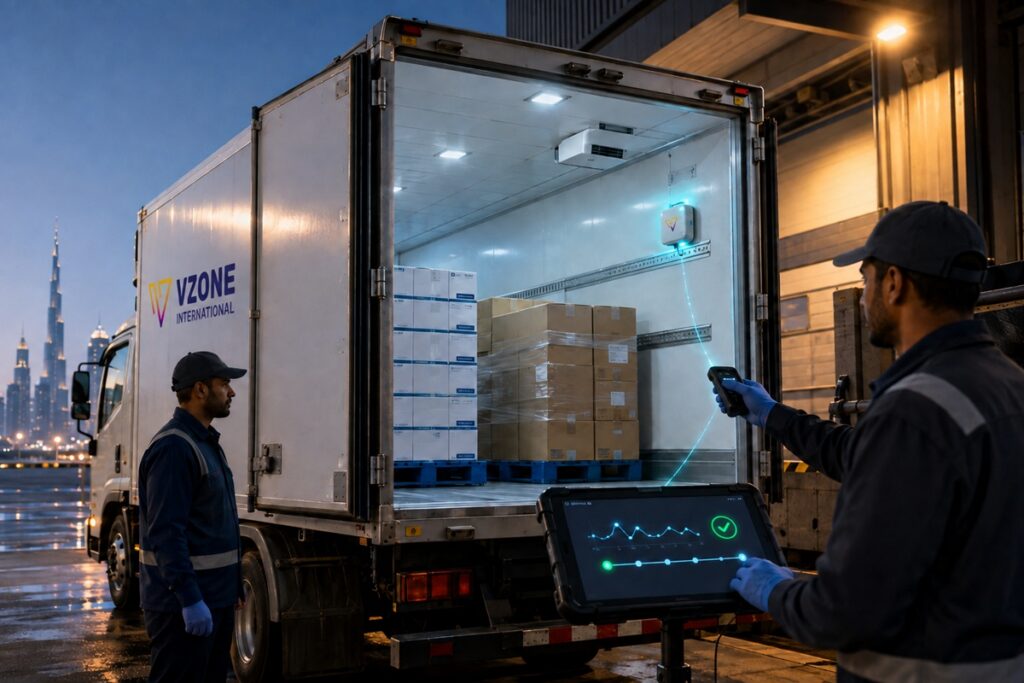
Rejections often happen because a receiver has no visibility and errs on the side of caution. Being able to show a live, in-range record at handoff removes the doubt the receiver sees proof of proper handling and accepts the load instead of turning it away.
Catching Issues Before Delivery, Not After
The best rejection is the one that never happens. Real-time alerts let a driver or dispatcher correct a drift mid-route, so the load arrives in spec. Digital logging is not only a defence after the fact; it is an early-warning system that keeps cargo acceptable in the first place.
VZone International’s Digital Reefer Logging
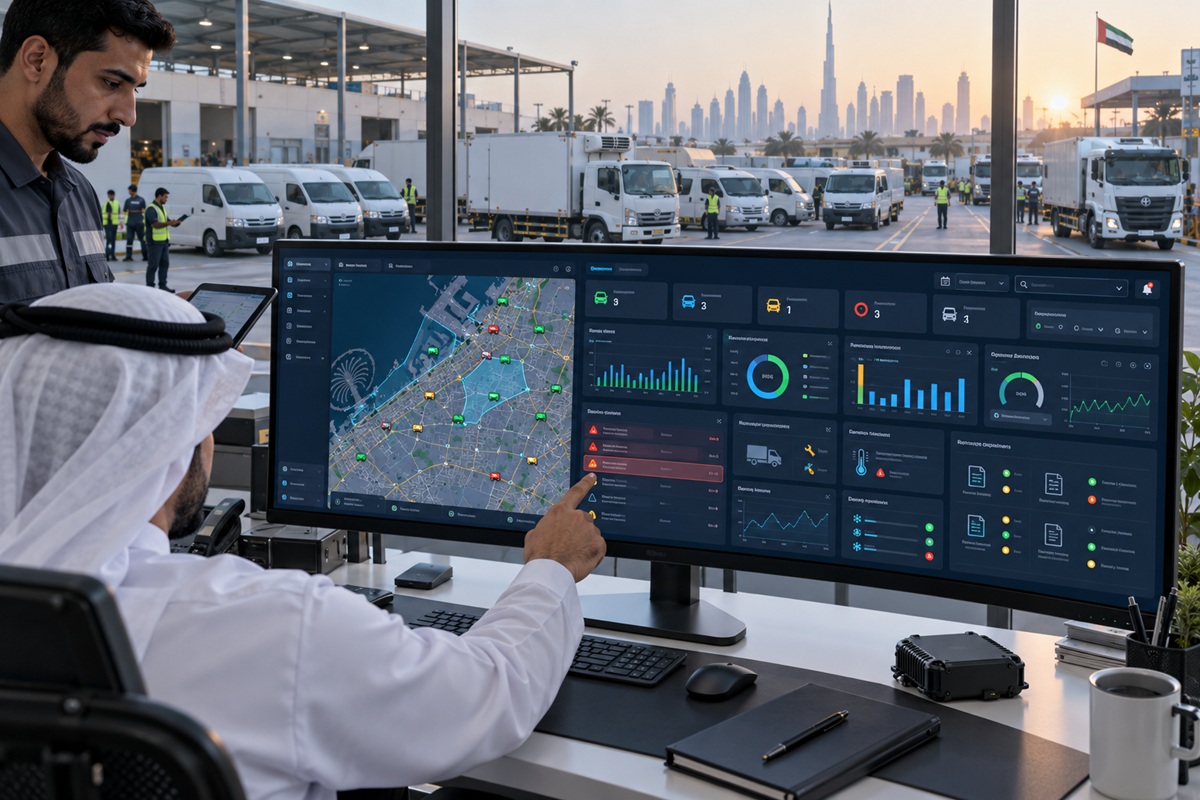
VZone International’s cold chain platform captures continuous, timestamped temperature data alongside GPS location, door events, and reefer status on a single system. Every trip becomes a tamper-resistant record that fleet managers can export in one click for a receiver, an insurer, or a MOHAP or municipal audit.
Built on more than twenty years of operating in UAE and MENA conditions and refined across over 300 million kilometres of regional driving data, the platform integrates natively with ERP systems such as SAP, Odoo, Oracle, and Zoho. It is trusted in demanding cold chain operations across the UAE, including deployments with organisations such as RAK Ports, NRTC, and Al Ain Farms where proof of cold chain integrity is not optional.
Turn every reefer trip into an evidence-grade record.
VZone International’s digital temperature logs help UAE fleets defeat unfounded claims and cut load rejections. Request a demo of GPS-linked reefer logging and see proof of cold chain integrity for every trip.
Frequently Asked Questions
Yes. Continuous, timestamped, GPS-linked logs provide a defensible record of transit conditions. Because the data is tamper-resistant and shows exactly when and where any excursion happened, insurers and receivers can resolve disputes on facts rather than assumptions.
Short, regular intervals are standard for cold chain frequent enough to capture spikes and recoveries in full. Continuous logging avoids the gaps that weaken paper records and can undermine a claim file.
Often, yes. A clean record showing the trailer held set-point for the whole journey demonstrates the cargo was in range at handoff, indicating any spoilage arose downstream. That can shift liability away from the carrier.
Yes. Automated, tamper-resistant records formatted for compliance let you answer a MOHAP or Dubai Municipality request in minutes, with a complete per-trip history rather than reconstructed paperwork.