Fresh produce is the least forgiving reefer cargo of all. Unlike frozen goods, it lives in a narrow band where a couple of degrees decides shelf life and unlike a set-and-forget frozen load, it keeps generating its own heat as it respires. In UAE conditions, every door opening invites a rush of 45°C air, and every poorly stacked pallet risks a warm zone the driver never sees.
Managing warm zones and door events is the core discipline of produce cold chain, and it is exactly where GPS-integrated monitoring earns its keep. This guide explains why produce is uniquely vulnerable, how warm zones and door openings break the chain, and what a monitoring setup needs to keep leafy greens, berries, and soft fruit sellable from farm gate to store shelf.
Key Takeaways
- Produce lives in a narrow range and generates its own respiration heat, so it is far less forgiving than frozen cargo.
- Set-point, box temperature, and product temperature differ monitoring the unit display alone misses the gap that spoils produce.
- Warm zones form where cold air cannot pass through the load; multi-zone sensors expose them before delivery.
- Door openings cause the biggest deviations on multi-stop runs; door sensors and geofenced alerts keep them visible.
- Commodity-specific thresholds and last-mile door discipline keep produce sellable from farm gate to shelf.
Why Fresh Produce Is Uniquely Vulnerable
Narrow Safe Ranges and Respiration Heat
Produce ranges are tight often just a few degrees wide and living produce respires, giving off heat and moisture throughout the journey. That means the reefer is not simply holding a static load cold; it is continuously removing heat the cargo itself generates. Miss that, and the box drifts warm even when the unit appears to be running normally.
Set-Point, Box Temperature, and Product Temperature Are Not the Same
A common produce mistake is trusting the set-point alone. The set-point is the target for the air the unit supplies; the box temperature is the actual air inside the trailer; and the product temperature is what the cargo is really experiencing. Door openings, airflow, stacking, and ambient heat pull these apart. Monitoring that only reads the unit display misses the gap that spoils produce.
How UAE Ambient Heat Accelerates Spoilage
At Gulf summer temperatures, the margin for error collapses. A brief lapse that produce might survive in a temperate climate can push it past its safe range in minutes here. Every weakness a warm zone, a long door opening, a blocked air chute is amplified by the ambient conditions VZone International has operated in for more than twenty years across the UAE and MENA.
Managing Warm Zones Inside the Reefer
What Causes Warm Zones Airflow, Stacking, and Load Height
Warm zones form where cold air cannot reach. For produce, cooled air must pass through the load, not merely around it so blocked floor channels, overhanging pallets, or cargo stacked to the ceiling all create pockets that run warm while the unit reads fine at the front. A warm zone at the rear doors is the classic cause of a rejected “last three pallets” while the nose stays cold.
Multi-Zone Sensors: Front, Middle, Rear, and Return Air
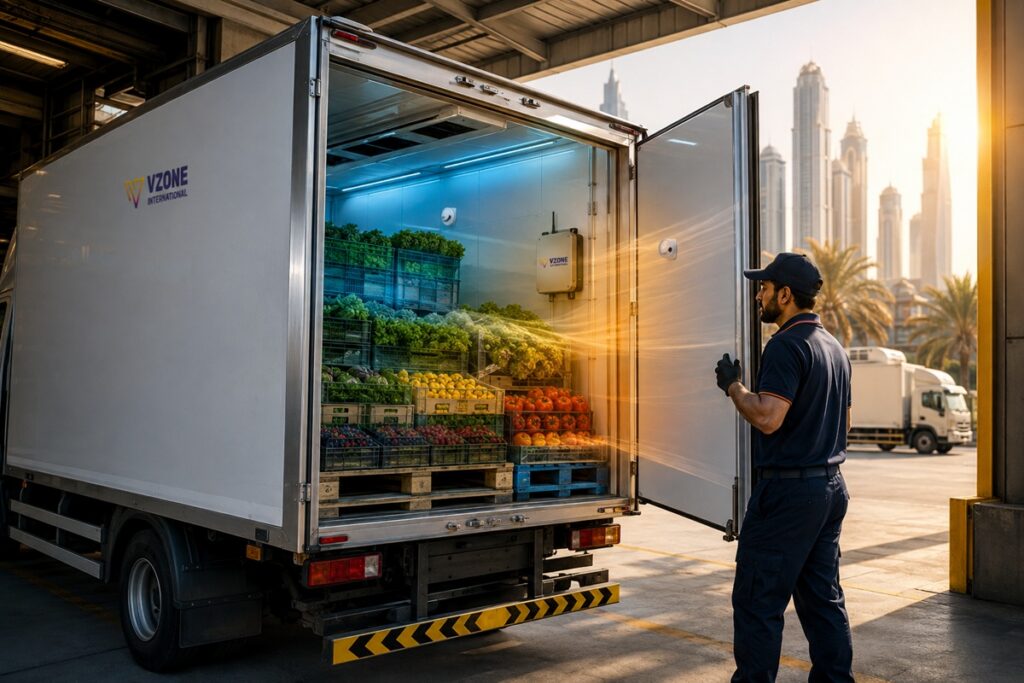
A single sensor near the unit cannot see a warm zone building elsewhere. Multi-zone sensors placed front, middle, rear, and at the return air give a true picture of the whole trailer, so an uneven load surfaces in the data before it surfaces as spoiled produce at delivery.
Reading the Data to Spot a Warm Zone Early
The tell is divergence: when one zone drifts warmer than the others while the set-point holds, a warm zone is forming. Continuous multi-zone data makes that divergence visible in real time, so a driver can adjust airflow or a dispatcher can flag a stacking problem long before the load is compromised.
Controlling Door Openings and Warm-Air Ingress
The Real Cost of a 60-Second Door Opening
Infiltration warm ambient air rushing in when the doors open is the single biggest cause of temperature deviation on multi-stop produce runs. In UAE heat a single extended opening can undo an hour of cooling and force the unit into a long recovery it may not win before the next stop.
Door Sensors + Geofenced Stop Alerts
Tracking temperature without door events leaves you guessing at causes. Door sensors paired with geofenced stop detection time-stamp every opening against a location, so a warm reading reads clearly as a two-minute delivery opening rather than an unexplained fault and long or unscheduled openings raise an alert while there is still time to act.
Practical Defences: Strip Curtains, Dock Seals, and Continuous Run
Monitoring works best alongside good practice. Strip curtains at the rear opening cut warm-air infiltration substantially during loading and unloading; tight dock seals close the side gaps; and running the unit in continuous mode with proper venting keeps fresh, cool air moving through the load. Monitoring then confirms these measures are actually holding the box in range.
Fresh Produce Temperature Guide (Typical Ranges)
Always confirm the specific commodity and customer specification before loading. The ranges below are widely used reference points for tuning alert thresholds.
| Produce Type | Typical Range | Key Risk | Monitoring Focus |
|---|---|---|---|
| Leafy greens | 0–4°C | Wilting, warm zones | Rear / return-air sensor |
| Berries | 0–2°C | Rapid spoilage | Tight alert band |
| Bananas | 13–15°C | Chill damage | Low-limit alerts |
| Tomatoes | 10–13°C | Over-ripening | Door-event control |
| Citrus | 4–8°C | Decay | Multi-zone average |
Building a Produce-Safe Monitoring Workflow
Pre-Cool, Load Fast, Verify by Zone
Produce should be loaded at temperature into a pre-cooled trailer, then verified across zones once the doors are sealed. Because a reefer maintains temperature rather than pulling warm cargo down, confirming each zone has reached range early prevents the load from starting its journey already behind.
Alert Thresholds Tuned to the Commodity
Generic thresholds do not suit produce. Berries need a tighter band than citrus; bananas need low-limit alerts to avoid chill damage. Setting commodity-specific thresholds with a safety margin means a warning fires while there is still time to react, not after quality is lost.
Last-Mile Door Discipline
The final legs multi-drop deliveries with repeated openings are where produce is most exposed. Door-event alerts and route context keep that discipline visible, so the tenth stop gets the same care as the first.
VZone International’s Produce Cold Chain Monitoring
VZone International’s platform combines multi-zone IoT temperature sensors with GPS tracking and door-event detection, so produce fleets see box conditions across the whole trailer not just the unit display with instant alerts when any zone or door threatens the load. Thresholds are tuned per commodity, and every trip generates an audit-ready record.
Refined across more than 300 million kilometres of regional driving data and more than twenty years of UAE and MENA operation, the platform integrates natively with ERP systems such as SAP, Odoo, Oracle, and Zoho. It is trusted in demanding food and agriculture cold chains across the UAE, including deployments with organisations such as Al Ain Farms, NRTC, and RAK Ports.
Keep fresh produce in range from farm gate to store shelf.
VZone International’s multi-zone reefer monitoring manages warm zones and door events across the UAE. Book a produce cold chain demo and see your whole trailer in real time.
Frequently Asked Questions
Each opening lets warm ambient air in, creating warm zones near the doors and forcing the unit to work harder to recover. In UAE heat this can push produce out of range within minutes. Door sensors with geofenced alerts flag long or unscheduled openings so drivers act before spoilage sets in.
Warm zones form where cooled air cannot reach the cargo typically from blocked floor channels, overhanging pallets, or cargo stacked too high. Because air must pass through a produce load rather than around it, poor stacking creates warm pockets even when the unit reads correctly at the front.
The set-point is only the target for supplied air. Actual box and product temperatures diverge from it due to door openings, airflow, stacking, and ambient heat. Multi-zone monitoring reads the real conditions the produce experiences, not just the unit target.
It depends on the commodity leafy greens around 0–4°C, berries 0–2°C, bananas 13–15°C to avoid chill damage. Always confirm the customer specification and set commodity-specific alert thresholds with a safety margin.