Reefer shipping in the UAE runs on a razor-thin margin for error. Ambient temperatures climb past 45°C in summer, inter-emirate hauls stretch for hours, and much of the cargo vaccines, fresh produce, seafood, dairy spoils within minutes of drifting out of range. Yet when a load is lost, the cause is rarely a dramatic equipment failure. It is almost always one of a handful of avoidable monitoring mistakes that quietly break the cold chain long before anyone notices at the receiving dock.
This guide breaks down the ten costliest reefer temperature monitoring mistakes we see across UAE fleets and the exact fix for each. Every fix comes back to the same principle: continuous, GPS-linked temperature data that alerts you the moment something drifts, rather than paperwork that confirms the loss after it has happened.
Key Takeaways
- Most reefer losses trace back to avoidable monitoring mistakes, not equipment failure.
- Manual logs and logged-only systems create blind spots; continuous, real-time monitoring closes them.
- Door-event tracking and multi-zone sensors catch the warm-air and warm-zone problems UAE heat makes critical.
- GPS context turns a temperature spike into an explained, defensible event.
- Audit-ready reporting makes MOHAP and municipal compliance a by-product, not a scramble.
Why Small Monitoring Gaps Cause Big Reefer Losses
The True Cost of a Single Temperature Excursion
A temperature excursion rarely costs only the value of the cargo. For a rejected pharmaceutical load it can mean a regulatory investigation and mandatory disposal; for a food consignment it can mean a seized shipment, a lost contract, and a spoilage claim that dwarfs the invoice value of the trip. When cargo is delivered at the wrong temperature, the downstream cost penalties, replacement, reputation routinely exceeds the freight charge many times over.
Why UAE Heat Amplifies Every Monitoring Weakness
In cooler climates a lapse in monitoring might be forgiving. In the Gulf it is not. A reefer door left open for sixty seconds at a loading bay in July admits a wall of 45°C air, and a unit that trips offline mid-route has almost no thermal buffer before frozen cargo begins to soften. Every weakness in a monitoring setup is magnified by the ambient conditions VZone International has operated in for more than twenty years across the UAE and wider MENA region.
The 10 Reefer Temperature Monitoring Mistakes
1. Relying on Manual Temperature Logs
A driver noting the reefer display every few hours cannot capture what happens between readings and excursions love those gaps. Manual logs are also slow to compile, easy to mis-transcribe, and weak as evidence in a dispute. Fix: continuous automated logging that records temperature at short intervals, with no dependence on someone remembering to write it down.
2. Ignoring Door-Open and Load/Unload Events
Most warm-air ingress happens during loading, unloading, and multi-drop stops. If your system tracks temperature but not door events, you lose the single biggest clue to why a spike occurred. Fix: pair door sensors with geofenced stop detection so every opening is time-stamped against a location, and long or unscheduled openings raise an alert.
3. Setting Alert Thresholds Too Loose (or None at All)
An alert band set far outside the safe range or left at a generic default means the system only warns you once the cargo is already compromised. Fix: configure product-specific thresholds with a safety margin, so a warning fires while there is still time to react, not after the excursion is complete.
4. Skipping Pre-Cooling Before Loading
Loading chilled cargo into a warm trailer forces the reefer to fight the trailer mass and the cargo heat at once, and the load can spend its first hour out of range. Fix: make pre-cooling a verified step confirm the box has reached set-point on the dashboard before product goes in.
5. Single-Zone Monitoring on Multi-Temperature Loads
One sensor near the unit tells you nothing about a warm zone building at the rear doors or in a poorly stacked section. Fix: use multi-zone sensor arrays (front, middle, rear, return air) so hidden warm spots surface in the data before they surface in spoiled cargo.
6. No Real-Time Alerts Finding Out at Delivery
Logged-only monitoring is a black box until the trip ends. By the time the report is reviewed, the load is already at the receiver. Fix: real-time alerting via SMS, email, and push, so a drift becomes an action within seconds rather than a post-mortem finding.
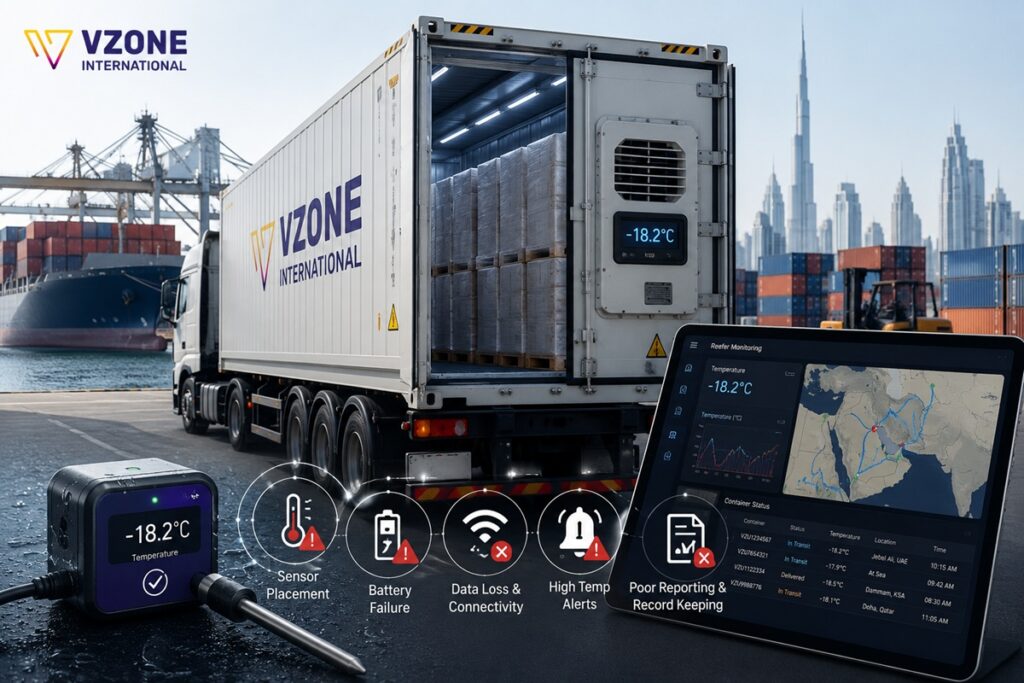
7. Poor Sensor Placement and Calibration
A sensor in the wrong spot or one that has drifted out of calibration produces confident, wrong numbers. Fix: place sensors to represent the cargo (including return-air and the warmest expected zone) and keep them on a calibration schedule so the data you trust is data you can defend.
8. No GPS Context Behind a Temperature Spike
A temperature graph on its own cannot tell you whether a spike came from a long border wait, a depot door left open, or a unit fault. Fix: link every reading to GPS location, so each event answers three questions at once what happened, where, and when.
9. Missing or Non-Audit-Ready Records
When MOHAP, Dubai Municipality, or a customer asks for proof of cold chain integrity, scattered spreadsheets and handwritten sheets rarely stand up. Fix: automated, tamper-resistant reports you can produce for any trip in one click, formatted for compliance rather than reconstructed under pressure.
10. No Driver Accountability Workflow
Even the best data does nothing if no one is responsible for acting on an alert. Fix: build a simple workflow alert routed to the driver, escalation to a supervisor if unacknowledged, and a logged response so every excursion has an owner and a record of what was done.
Reefer Mistake → Fix Reference
Use this table as a quick audit of your own operation. If any row on the left describes your fleet today, the right-hand column is the direct remedy.
| # | Mistake | Business Risk | GPS-Integrated Fix |
|---|---|---|---|
| 1 | Manual logs | Gaps, human error | Continuous automated logging |
| 2 | Ignored door events | Warm-air ingress | Door sensor + geofence alerts |
| 3 | Loose thresholds | Late detection | Product-specific alert bands |
| 4 | No pre-cooling | First-hour excursion | Verified pre-cool step |
| 5 | Single-zone sensing | Hidden warm zones | Multi-zone sensor arrays |
| 9 | No audit records | Failed compliance | One-click compliance reports |
VZone International’s Reefer Monitoring Solution
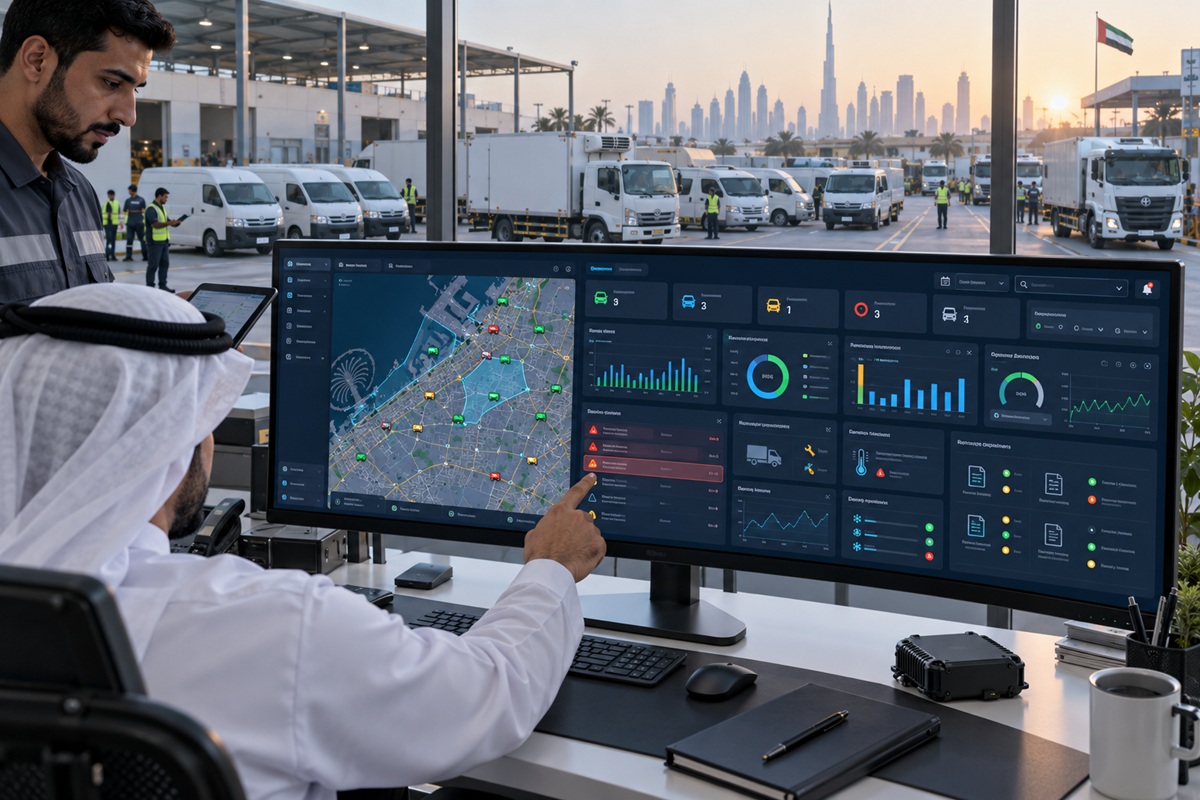
VZone International has spent more than two decades keeping temperature-sensitive cargo safe in some of the harshest conditions on the planet. Our reefer monitoring combines multi-zone IoT temperature sensors with GPS tracking on a single platform, so fleet managers see both where the cargo is and what temperature it is in real time, with instant excursion alerts.
The same platform generates compliance-ready reports for MOHAP and municipal audits, integrates natively with ERP systems such as SAP, Odoo, Oracle, and Zoho, and draws on analytics refined across more than 300 million kilometres of regional driving data. It is trusted in demanding cold chain and logistics operations across the UAE, including deployments with organisations such as RAK Ports, NRTC, and Al Ain Farms.
Stop losing loads to avoidable monitoring gaps.
VZone International’s GPS-integrated reefer monitoring gives UAE fleets continuous temperature data, instant excursion alerts, and compliance-ready reports. Book a reefer monitoring demo and see your cold chain in real time.
Frequently Asked Questions
Relying on manual temperature logs. Manual checks miss excursions that occur between readings especially during door openings and traffic delays. Continuous sensor logging paired with GPS location closes those gaps and builds an audit-ready record automatically.
GPS ties every temperature reading to a location and time. That context reveals whether a spike came from a long stop, a door opening, or a unit fault making root-cause analysis fast and giving you defensible evidence in a claim or audit.
Thresholds should be tuned to the specific commodity, with a safety margin so a warning fires before the cargo leaves its safe range. Generic defaults tend to alert only after an excursion is already complete.
Yes. Continuous, timestamped, GPS-linked records show that cargo stayed in range throughout transit or pinpoint exactly where and why any excursion occurred allowing disputes to be resolved on facts.