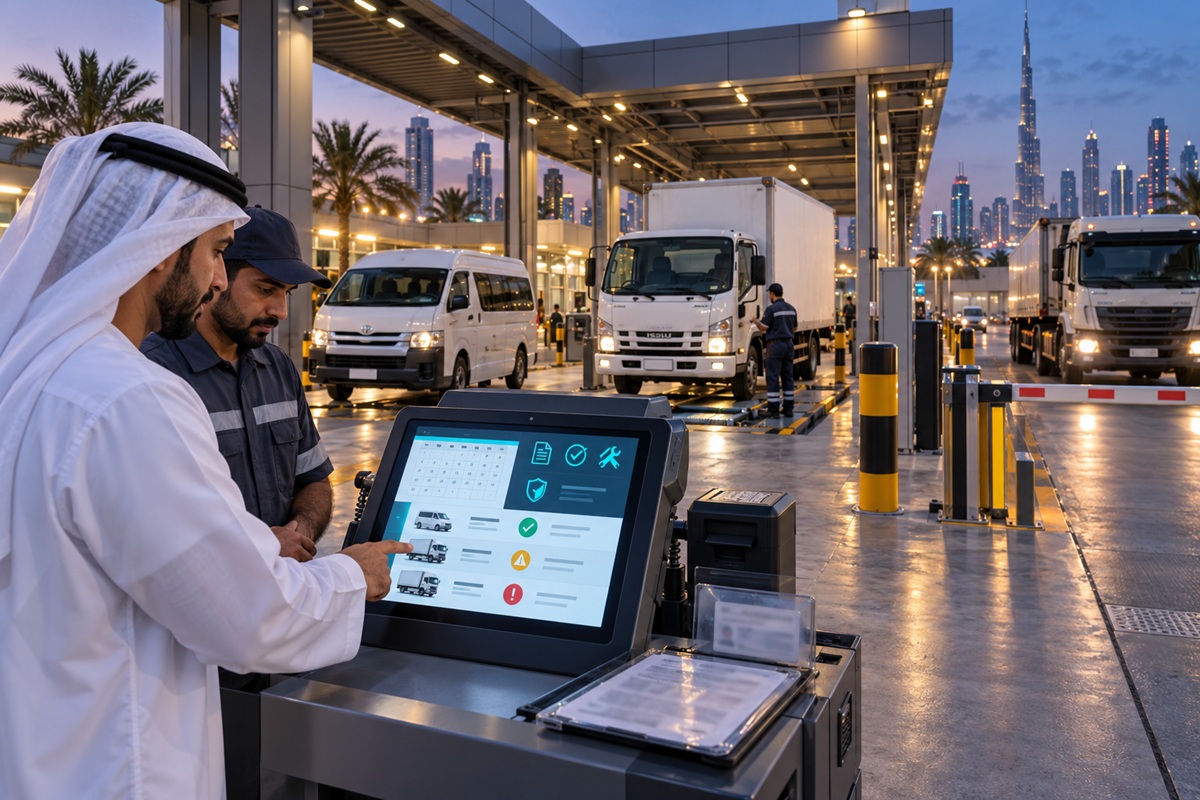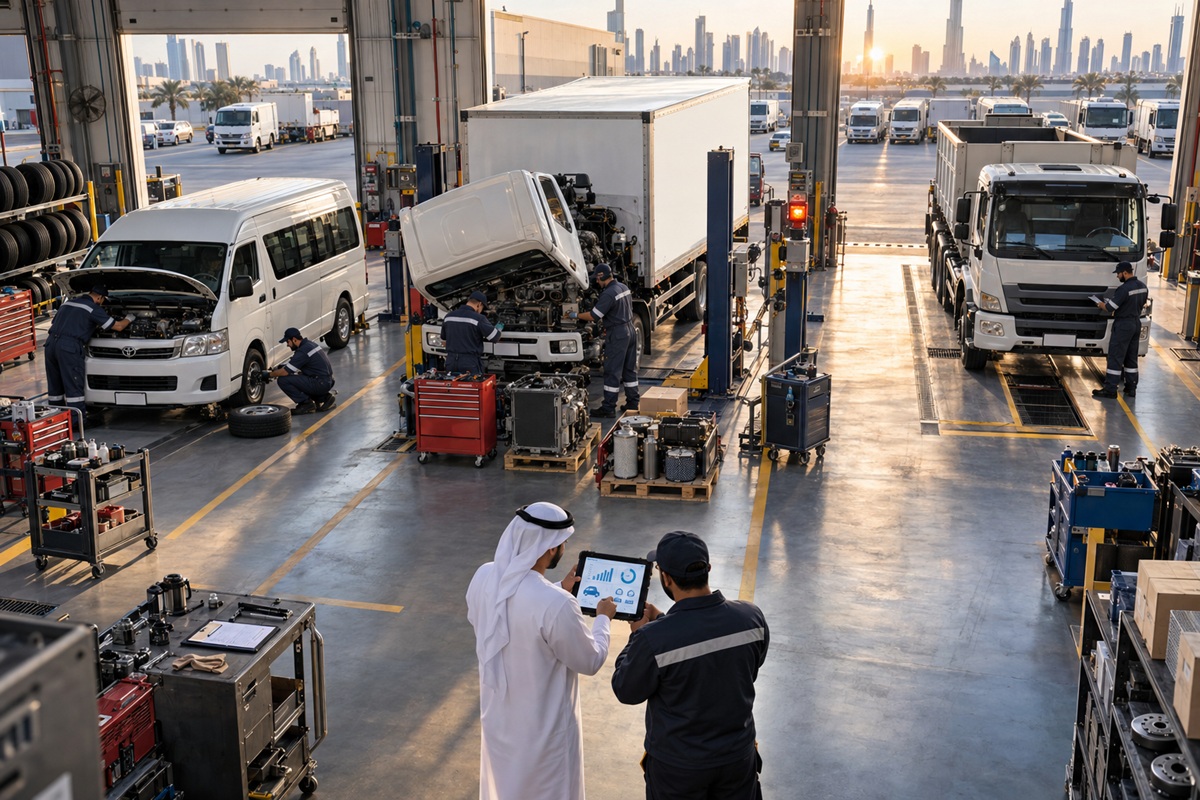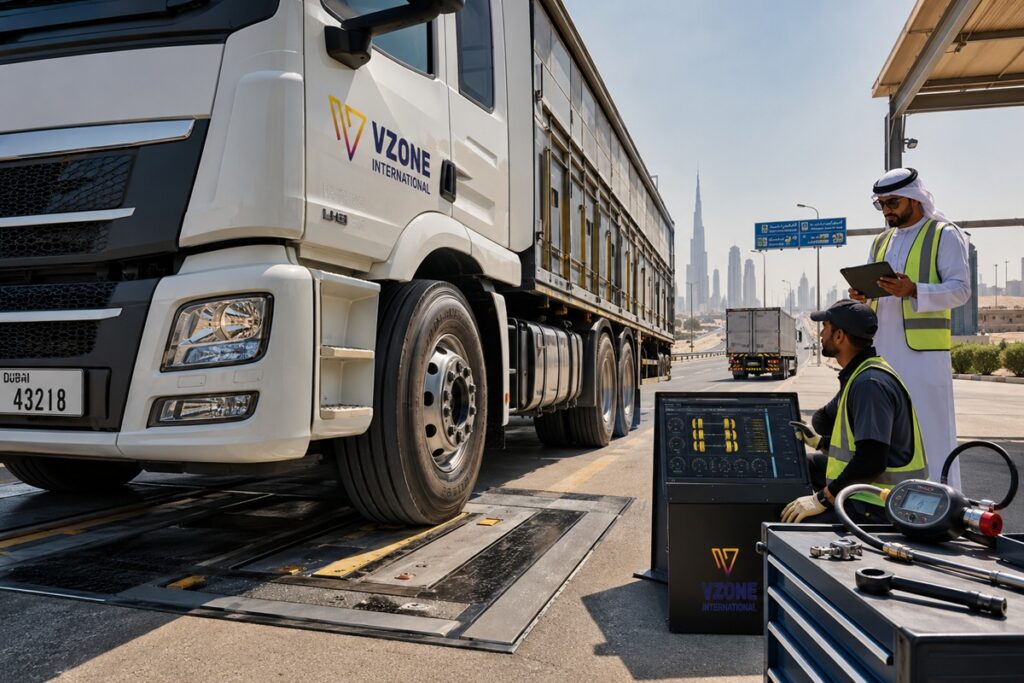
Tyre blowouts are the single most common cause of commercial vehicle roadside breakdowns in UAE during summer accounting for a disproportionate share of the vehicle incidents that occur on federal highways, construction site access roads, and inter-city logistics routes between June and September. The physics of why UAE summer produces more tyre failures than temperate markets are well-understood: high ambient temperatures raise tyre pressure above the safe operating range, soften the rubber compound and accelerate wear on hot asphalt, and create thermal cycling stress on the tyre sidewall that propagates micro-cracks through repeated heating and cooling cycles. A commercial vehicle tyre that would provide 60,000 km of service in a European climate may deliver 40,000 km in UAE summer conditions and may fail catastrophically before reaching replacement threshold if pressure is not managed throughout the season.
Tire management software for UAE fleet vehicles addresses this risk systematically: real-time tyre pressure monitoring (TPMS) alerts that fire when any tyre’s pressure deviates from its safe operating range, tread depth tracking that schedules rotation and replacement before wear reaches the legal minimum, tyre lifecycle and cost recording that identifies which vehicle positions consume tyres fastest, and fleet-wide tyre inventory management that prevents the stock-out that leaves a fleet manager scrambling for emergency tyre replacement at retail rates when a vehicle needs an unplanned change. This guide explains how each capability works in UAE conditions and what the ROI of systematic tyre management looks like for a UAE commercial fleet.
Key Takeaways
- UAE summer heat raises tyre pressure by 8 to 12 PSI above the cold-inflation specification a tyre inflated to specification at 6:00 AM may be significantly over-inflated by 2:00 PM after 6 hours of operation on hot UAE asphalt. Tire management software with TPMS integration monitors pressure throughout operation and alerts when pressure deviates from the safe operating range, enabling driver response before the over-inflation creates blowout risk.
- Tyre cost is the third-largest fleet maintenance cost category for most UAE commercial fleets after engine/drivetrain service and bodywork and also the most variable, because tyre lifespan is directly influenced by driver behaviour (acceleration and braking patterns), wheel alignment maintenance, and tyre pressure management. Systematic tyre management typically reduces tyre cost per kilometre by 15 to 25 percent through optimised rotation schedules and driver coaching for tyre-damaging behaviour.
- Tread depth is the safety-critical tyre metric: UAE traffic law mandates a minimum tread depth of 1.6mm; fleet best practice replaces tyres at 2mm for commercial vehicles to maintain safe stopping distance margin, particularly for heavy vehicles on UAE highways where emergency stopping distance is critical. Tyre management software tracks each tyre’s tread depth from installation measurement through to replacement, calculating the replacement timeline based on the observed wear rate.
- TPMS sensors in commercial vehicle tyres monitor both pressure and temperature temperature monitoring provides the early warning of thermal stress that pressure monitoring alone does not, since tyres can be at correct pressure but at excessive temperature from hard braking, high-speed operation on hot asphalt, or inadequate tyre-to-road contact from misalignment.
- Tyre inventory management tracking which tyres are installed on which vehicle position, when they were installed, their current tread depth, and their accumulated mileage enables forward tyre procurement planning that prevents emergency retail purchases and enables volume purchasing agreements with suppliers that reduce per-tyre cost by 10 to 20 percent.
Why UAE Summer Makes Tyre Management Critical?
The relationship between ambient temperature and tyre behaviour creates a specific risk profile for UAE fleet vehicles that requires active management rather than the periodic inspection approach that is adequate in temperate markets. Three physical mechanisms drive UAE’s elevated tyre failure risk:
Pressure Increase with Temperature
Tyre pressure increases by approximately 1 PSI for every 5°C rise in temperature a physical law (Gay-Lussac’s Law for gas pressure and temperature) that has direct operational implications for UAE fleet vehicles. A commercial van tyre correctly inflated to 80 PSI cold at 25°C will reach approximately 91 to 95 PSI after sustained operation in 47°C UAE summer ambient conditions 14 to 19 percent above specification. At this pressure, the tyre’s load-bearing characteristics, contact patch size, and heat dissipation behaviour all change, increasing the risk of heat-related failure. The pre-departure tyre pressure check that is standard practice in temperate markets check cold, inflate to specification is still correct for UAE but must be supplemented by in-operation TPMS monitoring that alerts when running pressure (which will be higher than cold pressure) exceeds the safe operational range.
Rubber Degradation in Sustained Heat
Tyre rubber compound is engineered to operate within a temperature range most commercial vehicle tyres are designed for a maximum sustained operating temperature of approximately 90°C at the tread surface. UAE summer operation on hot asphalt (asphalt surface temperatures can exceed 65°C in UAE July), combined with the heat generated by the tyre’s own flexing during operation, creates surface temperatures at the tread that approach or exceed this limit during sustained operation. Sustained operation near the temperature limit accelerates rubber oxidation, creates heat checks (small surface cracks in the tread), and can cause tread separation the catastrophic failure mode where the tread layer detaches from the tyre carcass at speed. Fleet managers who allow tyres to operate in UAE summer beyond their tread depth replacement threshold relying on tyres to 1.6mm or below are operating with heat-degraded rubber that has reduced safety margin at the point when replacement is already overdue.
Sidewall Stress from Thermal Cycling
Commercial vehicle tyres experience repeated thermal cycling on UAE routes heating from extended operation in summer conditions and cooling overnight or during parked periods in air-conditioned facilities. This thermal cycling creates stress in the tyre sidewall that propagates micro-cracks over time, reducing the sidewall’s structural integrity in a way that is not visible during normal external inspection. TPMS temperature monitoring can detect tyres that are running consistently above normal operating temperature a pattern that indicates either alignment issues (creating localised heating from abnormal contact), over/under-inflation, or tyre compound degradation approaching the failure threshold. Fleet tyre management that replaces tyres based on a combination of tread depth measurement and cumulative mileage rather than tread depth alone accounts for thermal cycle degradation that tread measurement does not capture.
Tire Management Software Features for UAE Fleets
TPMS Integration Real-Time Pressure and Temperature Monitoring
Tyre Pressure Monitoring Systems (TPMS) in commercial fleet vehicles use battery-powered sensors mounted on the wheel valve stem or inside the tyre that transmit pressure and temperature data wirelessly to a receiver unit in the vehicle cab. Tire management software integrates with these TPMS sensors to display real-time pressure and temperature for all monitored wheels in the fleet management platform alongside GPS position, speed, and other vehicle data. When any tyre’s pressure drops below the minimum threshold (under-inflation alert) or rises above the maximum threshold (over-inflation alert from heat), or when any tyre’s temperature exceeds the maximum operating threshold (heat alert), the fleet platform fires an alert to the driver (in-cab display or audio) and to the fleet manager (mobile push notification).
The distinction between under-inflation and over-inflation alerts is operationally important: under-inflation indicates either a leak (slow puncture) or a tyre that was not correctly inflated at the last check, and requires attention within hours or risk progression to a flat tyre or blowout; over-inflation in UAE summer is often a temperature-driven effect on a correctly cold-inflated tyre, and requires assessment of whether the running pressure is within the operational range for the ambient conditions rather than automatic deflation to cold-specification pressure.
Tread Depth Tracking and Rotation Scheduling
Tread depth tracking in tire management software records the tread depth measurement for each tyre at installation and at each inspection, tracking wear progression over accumulated mileage to calculate the projected date and mileage at which the tyre will reach the replacement threshold. This projection enables forward planning: a tyre measured at 5mm with 30,000 km remaining before reaching 2mm replacement threshold can be scheduled for replacement at the next major service appointment, enabling parts availability preparation and avoidance of the unplanned mid-route replacement that costs both the tyre retail price and the operational disruption.
Rotation scheduling moving tyres between wheel positions to equalise wear across the axles extends tyre lifespan by ensuring that the differential wear patterns between drive axle positions (higher traction and braking load) and steering axle positions (higher cornering and alignment-related wear) are distributed across all tyres rather than concentrated on the same tyres throughout their life. A fleet without a tyre rotation schedule typically replaces drive axle tyres at 30,000 to 40,000 km while front steering tyres still have significant remaining life wasting the wear capacity of the steering tyres by replacing the entire set at the drive axle’s replacement threshold. Tire management software calculates the optimal rotation schedule for each vehicle based on observed wear rates at each position, generating rotation recommendations that maximise mileage from each tyre set.
Tyre Lifecycle and Cost Tracking
Each tyre in the fleet identified by its position (vehicle, axle, side), brand, model, size, and installation date has a lifecycle record in the tire management software that accumulates: installation mileage, tread depth measurements at each inspection, pressure and temperature history from TPMS data, any defect events (punctures, sidewall damage, irregular wear flags), and removal details (mileage at removal, reason for removal, tread depth at removal). This lifecycle record enables per-tyre cost analysis: the total cost of each tyre (purchase price plus any mid-life repair costs such as puncture repair) divided by its service mileage gives the cost per kilometre for that tyre the metric that enables brand and model comparison across the fleet’s actual UAE operating conditions rather than manufacturer claims.
UAE-Specific Tyre Management Considerations
| Tyre Management Issue | UAE-Specific Factor | Management Software Response |
| Pressure increase in summer heat | 8-12 PSI increase from cold-inflation spec at UAE summer ambient temperatures over-inflation risk on correctly inflated tyres | TPMS running pressure monitoring with UAE-temperature-adjusted alert thresholds; not standard cold-pressure thresholds |
| Tyre wear acceleration on hot asphalt | UAE asphalt surface temperatures >65°C soften rubber and increase wear rate by 20-30% vs European road temperatures | Reduced tread depth replacement threshold for UAE (2mm vs 1.6mm legal minimum); accelerated rotation schedule frequency |
| Construction site tyre damage (debris) | Nails, rebar fragments, and construction debris on access roads cause punctures and sidewall damage at higher rates than paved roads | TPMS slow-leak detection (gradual pressure loss vs rapid loss); tyre damage logging per vehicle position to identify high-risk routes |
| Desert sand abrasion | Fine sand on desert routes creates additional tread wear beyond normal road friction particularly on vehicles accessing Western Region and construction sites | Mileage-based tread depth inspection intervals shorter than UAE paved road schedule; sand-rated tyre specifications for off-road access vehicles |
| Heavy vehicle tyre cost in UAE | Super single and wide-base tyres for UAE heavy trucks cost AED 1,200-2,500 per tyre; 10-18 tyres per truck; tyre cost is 3rd largest truck operating cost | Volume procurement tracking; per-position wear rate analysis to identify highest cost positions for preventive tyre pressure and alignment focus |
| Tyre brand performance variability in UAE heat | Not all commercial tyre brands tested for UAE’s sustained 47°C+ ambient conditions European-spec tyres underperform in UAE heat vs heat-rated GCC market alternatives | Brand and model performance tracking from lifecycle records compare CPK by brand across UAE operating conditions; identify best-performing brands for fleet standardisation |
Tyre Management Software ROI for UAE Fleets
Blowout Prevention Value
A commercial vehicle tyre blowout on a UAE highway creates a cascade of costs that far exceeds the tyre replacement cost: roadside emergency tyre change service (AED 500 to AED 1,500 depending on vehicle type and location), towing if the vehicle is immobilised or damaged (AED 800 to AED 3,500), vehicle damage from the blowout event (rim damage, mudguard damage, occasionally bodywork damage if the blowout causes loss of vehicle control AED 2,000 to AED 15,000+), and lost productivity from route disruption and vehicle downtime (AED 500 to AED 3,000 for an urban delivery van; significantly more for a heavy truck with time-sensitive cargo). For a fleet of 50 commercial vehicles in UAE summer, preventing 5 to 8 blowout events per year through TPMS monitoring and rotation scheduling saves AED 25,000 to AED 100,000 in avoidable incident costs.
Tyre Cost Reduction from Optimised Management
Systematic tyre rotation and tread depth monitoring extends average tyre lifespan in UAE commercial fleet vehicles by 15 to 20 percent the equivalent of reducing the annual tyre procurement budget by the same percentage for the same fleet size and mileage. For a 50-vehicle fleet spending AED 180,000 per year on tyre procurement and replacement, a 17 percent lifespan extension saves AED 30,600 per year in tyre cost reduction alone. Volume procurement planning enabled by tire management software’s lifecycle tracking knowing how many tyres the fleet will need in each quarter based on projected wear rates enables supplier negotiations for volume pricing that reduce per-tyre cost by an additional 10 to 15 percent versus emergency reactive procurement at standard retail rates.
Driver Behaviour Coaching for Tyre Preservation
Driving behaviour is the most controllable factor in commercial tyre lifespan aggressive acceleration from traffic stops, hard braking events, and sharp cornering all accelerate tread wear beyond the expected rate for the vehicle’s route and load conditions. GPS driver behaviour data integrated with tyre wear rate data enables the fleet manager to correlate each driver’s harsh event frequency with the wear rate of tyres on their assigned vehicle identifying drivers whose behaviour is consuming tyres 20 to 30 percent faster than fleet average and targeting tyre-focused coaching conversations (softer acceleration, earlier braking, smoother cornering on roundabouts) that extend tyre life from the driving behaviour side rather than only from the maintenance programme side.
TPMS Options for UAE Fleet Vehicles
| TPMS Type | How It Works | Vehicle Coverage | Data Available | UAE Suitability |
| OBD-II TPMS (factory-fitted) | Factory TPMS sensors transmit to vehicle’s ECU; OBD-II integration reads the ECU TPMS data | All passenger vehicles and most light vans with factory TPMS (UAE market vehicles typically factory-fitted from 2015+) | Pressure per wheel; temperature from ECU where available; TPMS warning status | Good for passenger vehicles and light vans; limited data richness for fleet management vs aftermarket systems |
| Aftermarket valve-stem TPMS sensors | Battery-powered sensors replace standard valve stems; transmit to cab-mounted receiver/gateway linked to GPS device | All commercial vehicles; retrofittable to any vehicle with standard valve stems | Pressure ± 0.1 PSI; temperature ± 1°C; rapid leak detection; sensor battery life 3-5 years | Best option for UAE commercial fleet TPMS aftermarket systems provide richer data and fleet management platform integration |
| Banded/internal TPMS sensors | Sensors banded around wheel rim inside tyre no valve stem dependency; suitable for heavy vehicles with regular tyre removal | Heavy trucks, buses, construction equipment with large-diameter tyres | Pressure and temperature; more robust than valve-stem for heavy vehicle applications | Preferred for heavy truck and equipment where valve-stem sensors are vulnerable to damage |
| Indirect TPMS (ABS-based) | Uses ABS wheel speed sensors to detect pressure loss from the rotational speed difference of an under-inflated tyre vs a correctly inflated tyre | Vehicles with ABS (most modern vehicles) | Relative pressure comparison detects significant under-inflation but not precise pressure or temperature | Not recommended for fleet management insufficient data precision; does not provide temperature monitoring |
Tire Management Software for UAE Fleet Vehicles VZone International
VZone International integrates TPMS sensor data, tread depth tracking, tyre lifecycle records, and driver behaviour correlation in the Wialon fleet management platform providing real-time pressure and temperature alerts, optimised rotation scheduling, and tyre cost analytics for UAE commercial fleets of all sizes and vehicle types. Contact our team for a tyre management assessment for your UAE fleet.
Frequently Asked Questions
Tire management software prevents blowouts in UAE commercial fleet vehicles through three mechanisms. TPMS pressure monitoring alerts fleet managers and drivers when any tyre's pressure deviates outside the safe operating range catching both slow leaks (gradual pressure loss indicating a puncture) and heat-driven over-inflation (pressure increase from UAE summer ambient temperatures that can reach the blowout risk range by midday on a correctly cold-inflated tyre). TPMS temperature monitoring identifies tyres running above normal operating temperature a sign of alignment issues, chronic under-inflation creating excessive tyre flexing, or rubber degradation approaching failure threshold. Tread depth tracking and replacement scheduling prevents the use of worn tyres with reduced heat resistance and stopping distance worn tyres are significantly more vulnerable to heat-related failure than tyres within the safe tread depth range.
The correct UAE summer tyre pressure approach requires understanding the difference between cold inflation pressure and running pressure. Cold inflation pressure the pressure at which tyres should be inflated before a vehicle's first trip of the day, when tyres are at ambient temperature is specified by the vehicle manufacturer and should be followed exactly. Running pressure the pressure during vehicle operation in UAE summer, after heat from the road surface, friction, and ambient temperature have increased it will be 8 to 12 PSI higher than cold inflation pressure and is normal as long as it remains within the TPMS alert thresholds. Fleet managers should never deflate hot tyres to reach cold-specification pressure during operation; this creates dangerous under-inflation when the tyre cools. TPMS alert thresholds for UAE summer operation should be set to reflect realistic running pressures typically cold specification plus 15 PSI maximum before the over-inflation alert fires, not cold specification plus 3 PSI which would generate constant false alerts.
Fleet tyre pressures should be checked as cold readings (before the first trip of the day) at least weekly for all commercial fleet vehicles in UAE, and daily during summer months (June through September) for heavy vehicles and high-mileage urban delivery vans where heat and load create the highest blowout risk. The pre-trip driver inspection app (as described in Cat-34) should include a tyre pressure check with a gauge as a mandatory daily item visual inspection alone does not detect the 10 to 15 PSI under-inflation that can develop from a slow puncture or valve leak overnight. TPMS monitoring provides the continuous pressure monitoring during operation that weekly cold checks cannot replace a tyre with correct morning cold pressure can develop a slow puncture mid-route that reaches dangerous under-inflation levels by afternoon without any warning other than the TPMS alert.
Yes tire management software is particularly valuable for UAE heavy trucks because heavy truck tyres are the single most expensive consumable in truck fleet operations (AED 1,200 to AED 2,500 per tyre × 10 to 18 tyres per truck), and because heavy truck tyre blowouts at highway speed create significantly more severe incident risk than light vehicle blowouts. Heavy truck TPMS uses banded or valve-stem sensors appropriate for the large-diameter, high-load tyres used on commercial trucks, with alert thresholds configured for the higher operating pressures (85 to 120 PSI for steer axle tyres; 100 to 120 PSI for drive and trailer axle tyres on many heavy truck configurations). Tyre rotation scheduling for heavy trucks is particularly important because the significant differential wear between steer, drive, and trailer positions each with different load, traction, and turning stress profiles requires planned rotation to equalise wear and maximise the lifespan of the premium tyres that heavy truck operation demands.