The paper defect book the standard pre-trip vehicle inspection record for most UAE commercial fleets has three systematic failure modes. Drivers fill it in at the desk before going to the vehicle rather than while conducting the actual walkaround. Completed forms accumulate in a folder in the depot office and are reviewed only when a specific incident makes retrospective inspection relevant. Defects flagged by drivers are not routed to the workshop in real time the paper form sits in the folder until the weekly maintenance review, by which point the defect has either been resolved by the driver independently or become a breakdown.
A vehicle inspection app eliminates all three failure modes simultaneously: the driver completes the inspection on their phone while physically at the vehicle (GPS location verification confirms they were at the vehicle, not at the desk); completed inspections are submitted to the fleet management solution immediately and visible to the fleet manager and workshop in real time; and defects flagged by drivers generate immediate maintenance alerts to the workshop creating a documented defect-to-resolution workflow that paper books cannot replicate. For UAE commercial fleets, this shift from paper to digital inspection also provides the pre-trip inspection record that ADNOC IVMS journey management documentation requires and that insurance carriers increasingly cite as evidence of vehicle condition due diligence.
Key Takeaways
- A vehicle inspection app enables drivers to complete structured pre-trip checks on their smartphone with pass/fail responses per item, photo capture for defects, and GPS-verified location confirmation that the check was conducted at the vehicle rather than from the depot office eliminating the paper defect book’s primary failure mode.
- Digital pre-trip inspections create a real-time defect alert stream to the fleet manager and workshop defects flagged by drivers are visible immediately rather than discovered at the weekly paper review, enabling faster defect resolution and preventing vehicles with known defects from continuing in service.
- For ADNOC IVMS compliance, daily vehicle inspections are part of the journey management documentation requirement a digital inspection record with GPS location, timestamp, and driver identity is more auditable than a paper defect book and satisfies the documentation standard that ADNOC HSE audits apply to contractor fleet management programmes.
- The pre-trip inspection app serves dual purposes as both a safety management tool (catching defects before they cause accidents) and an asset protection tool (documenting vehicle condition before each driver takes it, enabling attribution of damage that occurs during a driver’s shift rather than absorbing all damage as general fleet cost).
- UAE-specific inspection items include: tyre pressure verification (UAE summer heat causes significant tyre pressure increase standard pressure check before driving prevents blowout risk), A/C functional check (driver welfare and cargo protection both require functional A/C in UAE summer), and sand/debris inspection for vehicles returning from desert or construction site routes.
Why Paper Defect Books Fail UAE Fleet Operations
Paper defect books fail UAE fleet operations for reasons that are structural rather than behavioural the paper medium cannot solve the problems that arise from its physical limitations, regardless of how well-intentioned the drivers and fleet managers using it are. The three structural failures are:
Failure 1 The Check is Completed Away from the Vehicle
A driver who completes a paper defect book at the depot office before going to collect the vehicle keys has not conducted a pre-trip inspection they have completed a form. The distinction matters because the purpose of a pre-trip inspection is to identify vehicle defects before the vehicle is driven, not to produce a form that assumes no defects. The paper book enables the driver to record a pass on every item without ever approaching the vehicle, and the fleet manager has no way to distinguish a genuine walkaround from a desk-completed form. In UAE fleet operations where drivers work long shifts in extreme heat and the pre-trip inspection adds 5 to 10 minutes to a shift that is already beginning in 40°C pre-dawn temperatures, the incentive to complete the form quickly at the desk rather than thoroughly at the vehicle is significant.
Failure 2 Defects Are Not Routed to the Workshop in Real Time
A paper defect book that records a brake light failure at 6:00 AM on Monday, sits in a folder until the fleet manager’s weekly review on Friday, and reaches the workshop for scheduling on the following Monday means the vehicle operated with a known brake light defect for 8 operational days before the defect was actioned. The UAE Traffic Law requires vehicles to have functioning lights as a road safety requirement; operating with a known defect creates both a safety risk and a compliance exposure for the fleet operator. A digital inspection app that routes the brake light defect to the workshop supervisor’s dashboard at 6:01 AM Monday with the driver’s photo of the failed light and the vehicle’s GPS location enables same-day repair scheduling rather than 8-day exposure.
Failure 3 The Record Cannot Be Searched or Analysed
A folder of paper defect books provides no searchable history, no defect frequency analysis, and no pattern detection. If the same vehicle’s tyres are flagged at low pressure in 6 of the last 8 pre-trip inspections, the paper record does not surface that pattern unless someone manually reviews every form. A digital inspection app that stores all inspection records in the fleet management platform enables the fleet manager to see in seconds: which vehicles have recurring defect flags, which defect categories are most frequently reported across the fleet, which drivers flag defects most and least frequently (a driver who never flags defects may not be conducting genuine inspections), and which vehicle condition trends require preventive maintenance attention before they become breakdown events.
What a Vehicle Inspection App Does
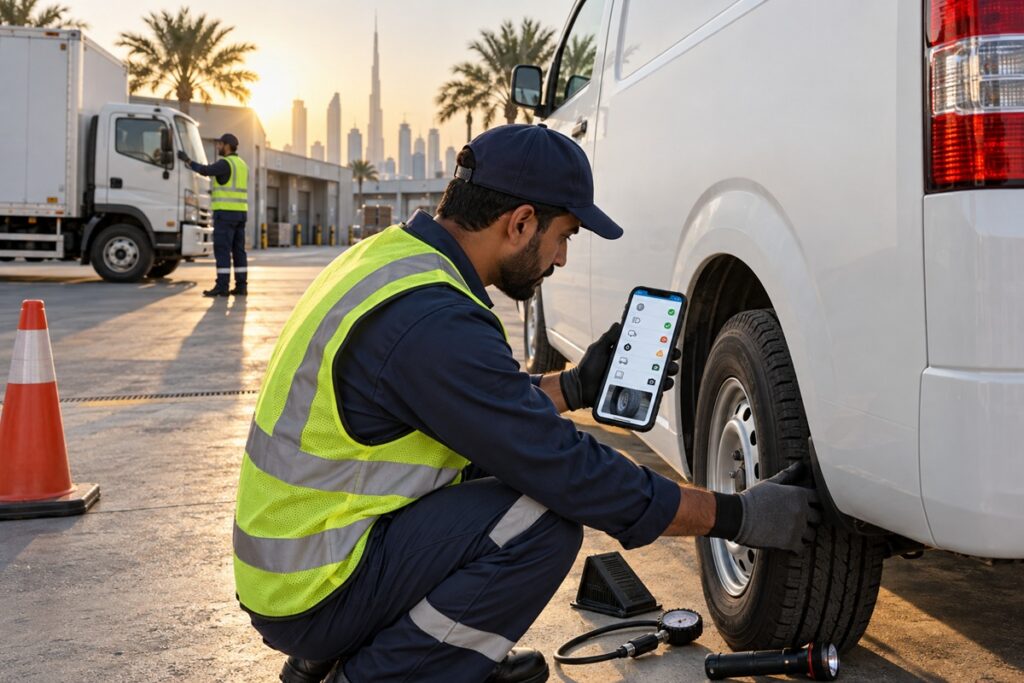
A vehicle inspection app provides drivers with a structured digital checklist on their smartphone, completed during the pre-trip walkaround at the vehicle. Each checklist item is presented as a simple pass/fail question the driver taps pass (item is in acceptable condition) or fail (item has a defect that should be noted). Items flagged as fail prompt the driver to add a comment describing the defect and, where the app supports it, photograph the defect directly through the phone camera. When the inspection is complete, the driver submits it and the record is immediately available in the fleet management platform.
GPS Location Verification
Vehicle inspection apps with GPS verification record the driver’s GPS coordinates at the time the inspection is submitted confirming that the driver was at or near the vehicle’s location when the check was completed. A submission from inside the depot office rather than from the vehicle’s parking position is flagged as a location anomaly, enabling the fleet manager to identify inspections that were likely completed away from the vehicle. For ADNOC journey management documentation, GPS-verified pre-trip inspections provide a higher standard of audit evidence than unverified paper records.
Photo Capture for Defects
Photo capture at defect flagging provides the documented evidence that transforms a text defect report into actionable workshop instruction and legally relevant vehicle condition record. A driver who flags ‘front left tyre low pressure’ with a photo showing the visually deflated tyre provides the workshop with clear instruction (which tyre, what condition) and provides the fleet manager with documented evidence of the vehicle’s condition at inspection time. The photo is timestamped and GPS-tagged, creating an evidence record that can be used for insurance claims (vehicle condition documented before an incident), damage attribution (condition before driver handover), and workshop job prioritisation (severity of defect visible from photo rather than requiring workshop assessment before prioritisation).
Real-Time Defect Alert to Fleet Manager and Workshop
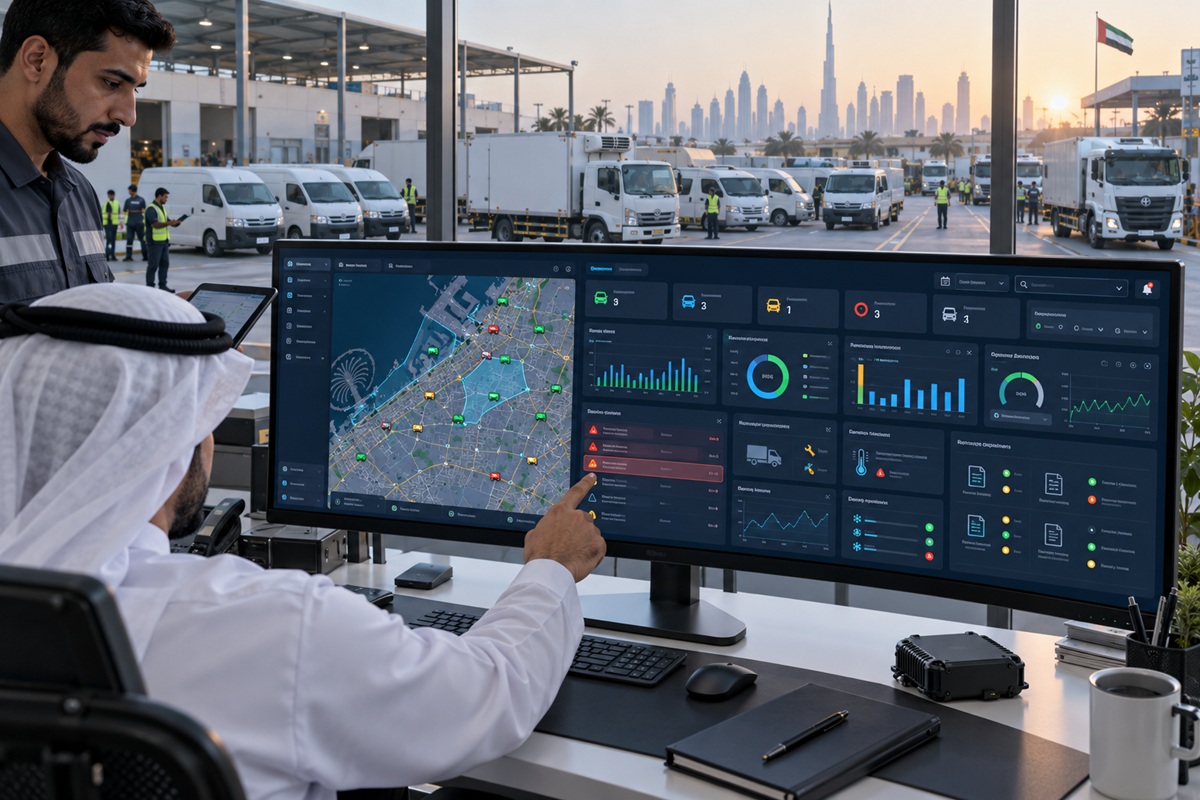
When a driver flags a defect and submits the inspection, the fleet management platform immediately generates a defect alert visible on the fleet manager’s dashboard and, if configured, as a push notification to the workshop supervisor’s mobile device. The alert includes: which vehicle, which defect, driver’s description, photo (if captured), GPS location of the vehicle, and timestamp. The workshop supervisor can accept the defect, assign it to a technician, or mark it as deferred (defect noted but not requiring immediate repair) creating a tracked defect-to-resolution workflow with a complete audit trail from initial driver report to workshop resolution confirmation.
UAE Pre-Trip Inspection Checklist: What to Include
The following checklist covers the standard pre-trip inspection items for UAE commercial fleet vehicles. The UAE-specific items (marked with *) address conditions that are more significant in UAE than in temperate-market fleet inspection programmes.
EXTERIOR INSPECTION Before Entering the Vehicle ☐ Tyres: visual condition no visible cuts, bulges, or sidewall damage on all four tyres ☐ Tyres: pressure check with gauge all tyres within manufacturer specification (UAE summer heat increases tyre pressure; check cold before driving) * ☐ Tyre tread depth minimum 1.6mm remaining (UAE commercial fleet standard); flag for replacement below 2mm ☐ Lights: front headlights (low and high beam), indicators, hazard lights all functioning ☐ Lights: rear brake lights, reverse lights, number plate lights all functioning ☐ Mirrors: wing mirrors and interior rear-view mirror clean, properly adjusted, no cracking ☐ Windscreen: no cracks obstructing driver’s view; wiper blades in functional condition ☐ Bodywork: note any new damage (dents, scratches, collision marks) since last inspection photograph any new damage ☐ Fuel / charge level: adequate for planned route; note if refuelling required before departure ☐ Load security: any cargo or equipment properly secured and within vehicle’s load capacity |
INTERIOR AND SYSTEMS CHECK In-Cab Pre-Departure ☐ Engine oil level check dipstick; flag if below minimum ☐ Coolant level check expansion tank; flag if below minimum; do not open radiator cap on hot engine * ☐ Brake fluid level check reservoir; flag if below minimum ☐ Windscreen washer fluid adequate for route ☐ A/C functional check cooling confirmed operational before departure in UAE summer conditions * ☐ Brakes: press pedal with engine running firm pedal, no sponginess; vehicle stops straight under light test application ☐ Steering: no excessive play, no unusual noise on full lock * ☐ Seat belt: driver and all passenger belts function correctly and retract properly ☐ Horn: functional ☐ Dashboard warning lights: no uncleared warning lights present at engine start; note any that appear during warm-up |
UAE-SPECIFIC ADDITIONAL CHECKS ☐ Sand/dust accumulation on air filter indicator (where visible) flag if filter load indicator shows restriction * ☐ Vehicle cleanliness ADNOC site vehicles must meet site cleanliness standards; check before accessing ADNOC facility * ☐ Driver documents: UAE driving licence (valid, correct category for vehicle), vehicle Mulkia (in vehicle and not expired), insurance certificate ☐ GPS device: confirm GPS device is powered and showing on fleet dashboard before departure (relevant for Asateel compliance vehicles) ☐ Personal Protective Equipment (PPE): hard hat, safety vest, safety footwear present and accessible (for vehicles accessing ADNOC and construction sites) * ☐ Emergency equipment: first aid kit, fire extinguisher, warning triangle, reflective vest all present and accessible |
Best Practices for Vehicle Inspection App Implementation in UAE
Configuring the Checklist for Vehicle Category
A single checklist applied across all vehicle types in a mixed fleet is less effective than checklists configured per vehicle category. A light van’s pre-trip check includes different items from a refrigerated truck’s (add: refrigeration unit operational, target temperature reached, door seals intact) or a construction site vehicle’s (add: underbody protection condition, hydraulic system check, safety frame/rollover protection condition). VZone International’s driver app supports multiple configurable checklist templates fleet managers configure a checklist per vehicle group, and drivers see the checklist appropriate to the vehicle they are operating rather than a generic universal form.
Setting Inspection Completion as a Trip Departure Prerequisite
For maximum inspection programme compliance, configure the fleet management system to require a completed pre-trip inspection before the vehicle’s GPS trip can be marked as active. If the driver has not submitted a pre-trip inspection in the app, the driver app shows the inspection as the required first action before trip start preventing drivers from departing without completing the check. For ADNOC IVMS journey management compliance, this gate function ensures that every trip record in the platform has an associated pre-trip inspection, satisfying the ADNOC documentation requirement without requiring a separate manual submission process.
Defect Severity Classification
Not all defects require the same response a minor scratch on the bodywork does not prevent vehicle operation; a brake light failure creates both a safety risk and a UAE traffic law violation; a cracked windscreen in the driver’s line of sight is grounds for taking the vehicle out of service immediately. Configuring defect severity classifications in the inspection app minor (note and repair at next scheduled service), moderate (repair within 48 hours, vehicle remains in service), major (vehicle out of service until repaired) enables the fleet manager and workshop to prioritise defect responses appropriately. Major defects should generate immediate push notification to the fleet manager and depot manager, not just a daily report review.
Driver Training and Adoption
Vehicle inspection app adoption in UAE fleet driver populations requires training in Arabic and English on both the inspection purpose (safety and asset protection, not surveillance) and the app operation (checklist navigation, pass/fail selection, photo capture, submission). For drivers accustomed to the paper defect book, the app provides a faster and simpler experience once they are comfortable with it but the first week requires active supervision and positive reinforcement. Compliance rate monitoring (percentage of trips with a completed pre-trip inspection in the app) provides the metric that fleet managers use to identify drivers who require additional training or support.
How Digital Inspections Improve Fleet Maintenance Outcomes
| Maintenance Outcome | Paper Defect Book | Digital Vehicle Inspection App |
| Defect detection rate | Depends entirely on driver diligence and honesty; no verification | GPS location verification increases genuine walkaround completion; photo evidence confirms defect reality |
| Time from defect to workshop alert | Hours to days dependent on paper review cycle | Seconds real-time push notification to workshop on inspection submission |
| Recurring defect pattern detection | Requires manual review of multiple paper forms rarely done | Platform analytics surface recurring defects per vehicle automatically visible in maintenance dashboard |
| Damage attribution on vehicle handover | Driver disputes previous damage no objective record | GPS-timestamped photo at inspection creates objective pre-shift condition record attribution is fact-based |
| ADNOC journey management documentation | Paper form limited audit quality | GPS-verified digital record satisfies ADNOC HSE documentation standard |
| Insurance incident evidence | Paper defect book may or may not document relevant pre-incident condition | Digital inspection record with timestamp and GPS provides objective vehicle condition evidence for claims |
| Maintenance cost trend analysis | Not possible from paper records | Defect frequency by category drives maintenance schedule optimisation reduces both over-servicing and missed faults |
Digital Vehicle Inspections for UAE Fleet Drivers VZone International Driver App
VZone International’s driver app includes configurable pre-trip inspection checklists with GPS location verification, photo capture for defects, real-time defect alerts to the fleet manager and workshop, and direct integration with the fleet maintenance software for defect-to-resolution tracking. Checklists are available in Arabic and English. Contact our team to configure digital pre-trip inspections for your UAE fleet.
Frequently Asked Questions
A vehicle inspection app for fleet drivers is a mobile application that replaces paper pre-trip vehicle defect books with a digital inspection checklist completed on the driver's smartphone before each shift. The app guides the driver through a structured sequence of inspection items tyres, lights, fluid levels, brakes, A/C, bodywork, documents with pass/fail responses per item and photo capture for any defects. The completed inspection is submitted to the fleet management platform immediately, creating a GPS-verified, timestamped inspection record that alerts the fleet manager and workshop to any flagged defects in real time. For UAE fleet operations, the digital inspection record satisfies ADNOC journey management documentation requirements and provides the evidence-based vehicle condition record that paper defect books cannot replicate.
A UAE fleet pre-trip inspection checklist should cover exterior items (all four tyres visual condition and pressure check, lights, mirrors, windscreen, bodywork damage), in-cab systems (oil level, coolant level, brake fluid, A/C function, brakes, steering, seatbelts, warning lights), and UAE-specific items that are more significant locally than in temperate markets tyre pressure with UAE summer heat adjustment noted (heat increases pressure; check cold before driving), A/C functional confirmation before departure (driver welfare and cargo protection), sand/dust filter condition for vehicles on desert or construction site routes, driver document check (UAE licence, Mulkia, insurance), PPE for site-access vehicles, and GPS device operational confirmation for Asateel compliance vehicles. For ADNOC contractor vehicles, vehicle cleanliness to ADNOC site standards is an additional required check before facility access.
A vehicle inspection app prevents accidents in UAE fleets through three mechanisms. First, defect detection before departure: a brake light failure, tyre with dangerous pressure, or crack in the windscreen detected during the pre-trip inspection is repaired before the vehicle enters traffic eliminating the accident risk that the defect would have created during the shift. Second, real-time defect routing: defects flagged in the app reach the workshop immediately rather than after a weekly paper review, reducing the time that known defects go unaddressed and the risk that a driver operates a vehicle with a known safety defect through the next shift and the shift after that. Third, GPS-verified inspection completion: location verification that the driver was physically at the vehicle during inspection increases the rate of genuine walkaround completion drivers who actually walk around the vehicle catch defects that desk-completed forms miss.
Yes VZone International's vehicle inspection app integrates directly with the fleet maintenance software module in the Wialon platform. Defects flagged in the driver's pre-trip inspection automatically create maintenance tasks in the workshop scheduling system, with the defect description, photo, vehicle identity, and GPS location pre-populated in the work order. The maintenance team can prioritise, assign, and track resolution of each defect from the same platform where the inspection was submitted creating a complete defect-to-resolution audit trail from driver report through workshop action to fleet manager confirmation of resolution. Completed defect repairs update the vehicle's maintenance history record, and the next inspection form for the same vehicle shows the repaired defect's resolution status as confirmation that the issue was addressed.