Category: Fleet Management

Top 10 Fleet Management Challenges in UAE (And How to Solve Them)

Top 10 Fleet Management Challenges in UAE (And How to Solve Them)

The 10 most common fleet management challenges in UAE are: fuel theft and card misuse (costs 8–15% of fuel budget undetected), regulatory compliance complexity (Asateel, IVMS, SecurePath, Mulkia, driver licences), driver behaviour in a multicultural workforce, extreme summer maintenance demands, vehicle downtime from reactive rather than predictive maintenance, fuel cost visibility without per-vehicle data, information fragmentation across disconnected systems, driver retention in a competitive UAE labour market, fleet cost reporting to finance and senior management, and fleet scaling without losing operational control. Each challenge is addressable with GPS fleet management technology and structured management processes the fleets that consistently outperform their peers have solved all ten, not just the most visible ones.

Read More »
How to Manage a Fleet of 100+ Vehicles Without Burning Out

How to Manage a Fleet of 100+ Vehicles Without Burning Out

Managing a fleet of 100 or more vehicles in UAE requires three structural changes from managing a 20-vehicle fleet: a team structure with clear delegation (fleet manager + depot supervisors + safety officer + workshop coordinator, each with defined data access and accountability), technology automation that eliminates information gathering from the fleet manager’s day (alerts replace phone calls; automated reports replace manual compilation; automated compliance monitoring replaces calendar chasing), and exception-based management discipline (the fleet manager reviews exceptions and makes decisions; the system monitors continuously and flags only what requires human judgment). The fleet manager who tries to personally monitor 100 vehicles the way they monitored 20 will fail not from incompetence but from a management model that does not scale.

Read More »
Fleet Expansion Planning: Adding Vehicles Without Losing Control

Fleet Expansion Planning: Adding Vehicles Without Losing Control

Fleet expansion planning for UAE commercial fleets involves four sequential decisions: whether expansion is genuinely needed (utilisation analysis to verify current fleet is above 80% utilised before adding vehicles), what to procure (vehicle specification matched to operational requirements, UAE summer operating temperature rating, compliance certification requirements), how to onboard new vehicles efficiently (GPS device installation, Asateel and IVMS registration, insurance, Mulkia, driver assignment, and fleet platform configuration a 5 to 7 day process per vehicle batch), and how to maintain management control as the fleet grows (team structure scaling, alert routing configuration for new vehicles, compliance calendar expansion). The most common fleet expansion mistake in UAE is adding vehicles in response to operational pressure without first verifying that current vehicles are fully utilised GPS utilisation data consistently reveals 20 to 30 percent underutilised capacity in fleets that believe they are at operational limits.

Read More »
Fleet Accident Management: From Incident to Report in 24 Hours

Fleet Accident Management: From Incident to Report in 24 Hours

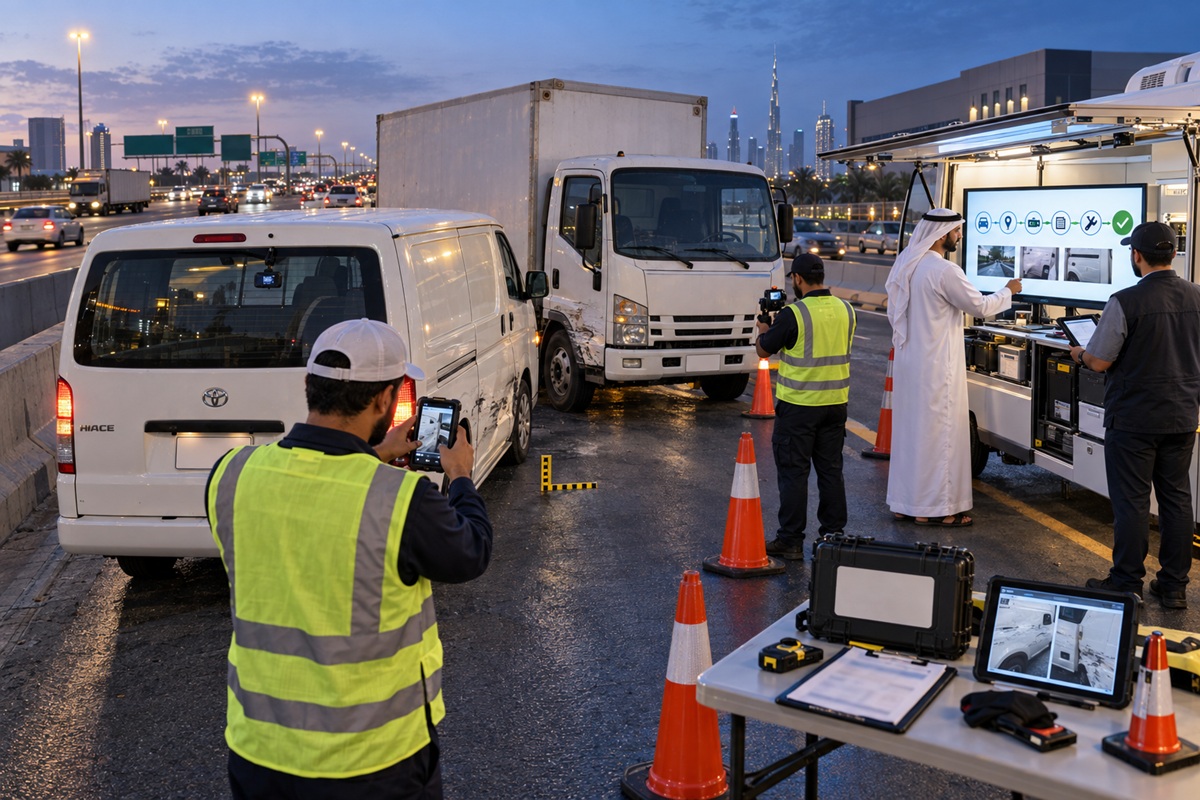
Fleet accident management is the structured process of responding to, documenting, investigating, and reporting commercial vehicle incidents from the moment the driver notifies the fleet manager to the completed insurance claim, ADNOC HSE report (for contractor fleets), and corrective action record. Fleet incident reporting software accelerates this process by providing GPS incident reconstruction (vehicle speed, route, and events in the period before and during the incident), dashcam footage retrieval (driver-facing and forward-facing camera recording), structured digital incident forms, and automated report generation for insurers, Police, and ADNOC HSE management. The 24-hour reporting target is achievable with integrated fleet incident software without it, gathering the same information manually typically takes 3 to 7 business days.

Read More »
Fleet Management: The Complete Guide

Fleet Management: The Complete Guide

A fleet management system is software that combines GPS vehicle tracking, driver behaviour monitoring, maintenance scheduling, fuel management, and compliance reporting into a single platform replacing spreadsheets, phone calls, and paper logs with a real-time operations dashboard. UAE commercial fleets using a fleet management system reduce total operating costs by 20 to 30 percent within 12 months: fuel waste eliminated (20–30%), maintenance breakdowns prevented (35–50%), and compliance violations avoided. VZone International operates the Wialon fleet management platform for 4,000+ UAE fleets supporting Asateel, IVMS, SecurePath, OPAL, and SIRA compliance alongside GPS tracking, AI driver scoring, predictive maintenance, and ERP integration.

Read More »
Fleet Tracking Software Buyer's Guide for Delivery Businesses

Fleet Tracking Software Buyer’s Guide for Delivery Businesses

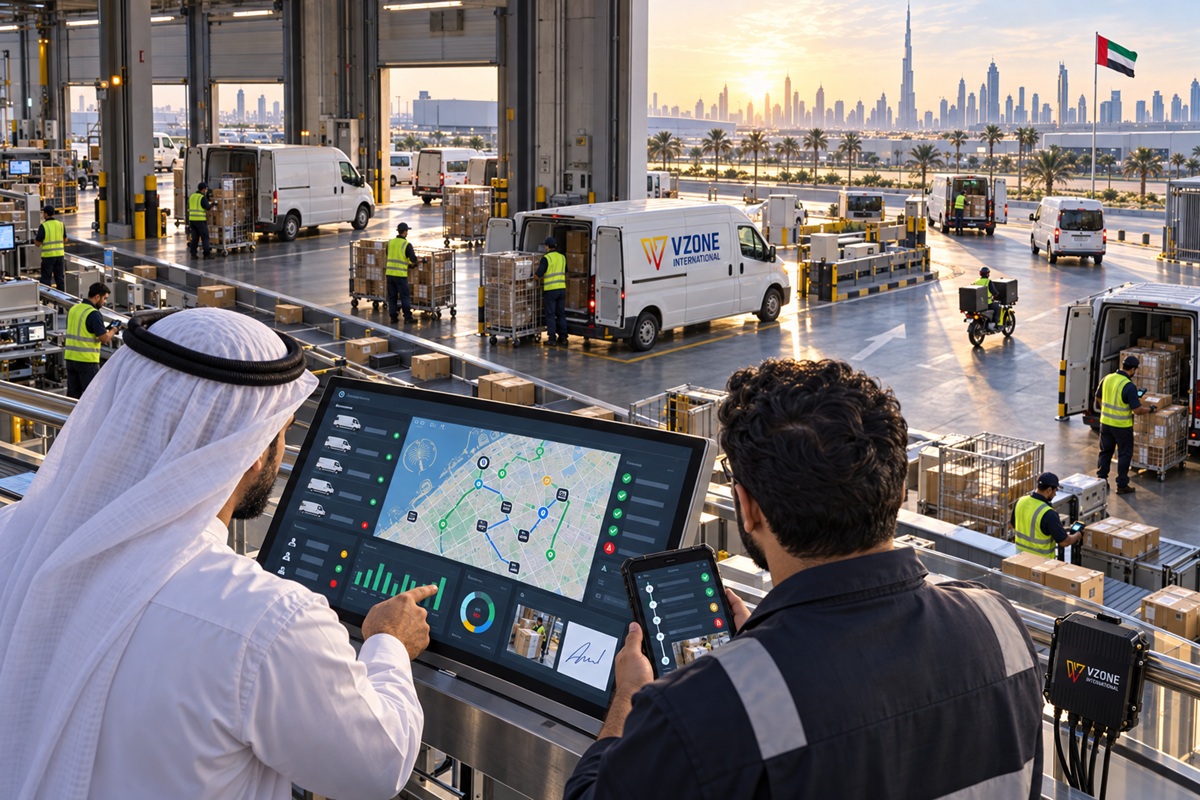
Choosing fleet tracking software for a delivery business requires reliable real-time GPS tracking, route optimisation, integration with existing dispatch systems and an easy-to-use driver app. This guide explains key features, pricing models and common buying mistakes for UAE delivery fleets, including electronic proof of delivery, bilingual support and applicable compliance requirements. Businesses should assess total ownership costs and run a 30-day trial using actual routes and drivers before committing.

Read More »
Real-Time Fleet Operations Visibility - How to Eliminate Surprises

Real-Time Fleet Operations Visibility: How to Eliminate Surprises

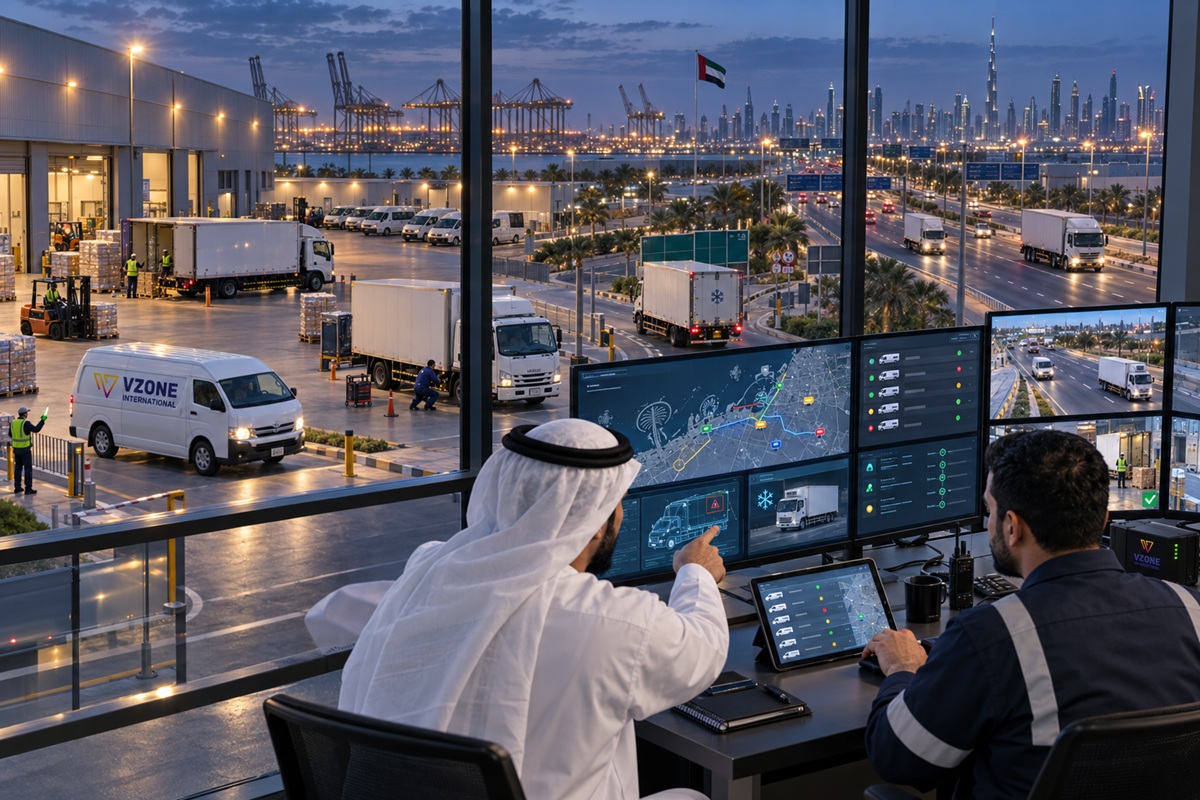
Real-time fleet operations visibility for UAE operations managers means knowing the status of every vehicle in the fleet at every moment not from driver phone calls and WhatsApp updates, but from GPS position data updating every 10 to 30 seconds on a live operations dashboard. The operational difference between reactive and proactive fleet management is the time gap between a problem occurring and the operations manager becoming aware of it: without real-time visibility, a breakdown on the E11 might not reach the operations manager for 20 to 40 minutes (driver notices, calls supervisor, supervisor calls ops manager); with real-time visibility, the vehicle stopping on the E11 with engine ignition off triggers an alert within 90 seconds and the operations manager is already re-routing the nearest available vehicle before the driver’s first call.

Read More »
Predictive vs. Preventive Fleet Maintenance - Which Saves More Money?

Predictive vs. Preventive Fleet Maintenance: Which Saves More Money?

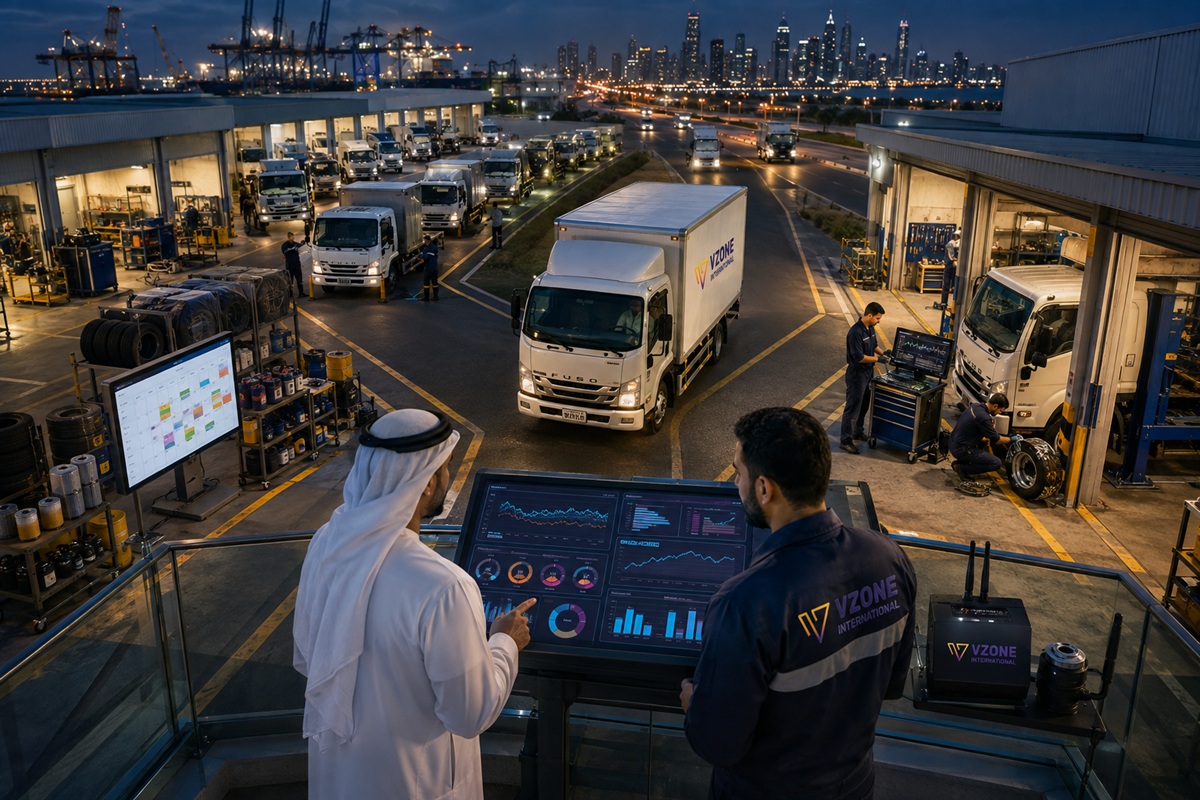
Preventive fleet maintenance schedules service at fixed intervals time or mileage regardless of actual vehicle condition, preventing failures by replacing components before they fail. Predictive fleet maintenance uses real-time telematics data (OBD diagnostics, GPS mileage, sensor readings) to forecast when specific components are likely to fail based on actual usage patterns and detected anomalies, scheduling service only when the data indicates it is needed. For UAE commercial fleets, predictive maintenance enabled by fleet maintenance software reduces unplanned breakdown frequency by 35 to 50 percent compared to interval-only preventive schedules, and reduces total maintenance cost by 10 to 25 percent by eliminating premature component replacement and emergency repair cost premiums.

Read More »
Fleet Management System - The Complete 2026 Guide for UAE & GCC Fleet Operators

Fleet Management System: The Complete Guide for UAE & GCC Fleet Operators

A fleet management system is a software platform that combines GPS vehicle tracking, driver behaviour monitoring, fuel consumption analytics, maintenance scheduling, and compliance reporting into a single integrated dashboard enabling fleet operators to manage every aspect of their vehicle operations from one interface. UAE operators running 50 or more vehicles without a fleet management system lose an estimated AED 3,000 to AED 5,000 per vehicle annually in preventable fuel waste, maintenance overruns, insurance overpayment, and compliance penalty exposure.

Read More »
Geofencing for Fleet Management in UAE - Complete Guide

Geofencing for Fleet Management in UAE: Complete Guide

Geofencing in fleet management uses GPS coordinates to create virtual boundaries around defined locations depots, client sites, construction zones, or restricted areas. When a fleet vehicle enters or exits a geofenced zone, the system fires a configurable alert to the fleet manager or operations centre. For UAE fleet operations, geofencing is used for depot departure and arrival monitoring, ADNOC and construction site access control, after-hours vehicle use detection, and route corridor compliance verification.

Read More »
Scroll to Top