Author: vzone-growth

Mobile App GPS Tracking - Managing Your Fleet From Your Phone

Mobile App GPS Tracking: Managing Your Fleet From Your Phone

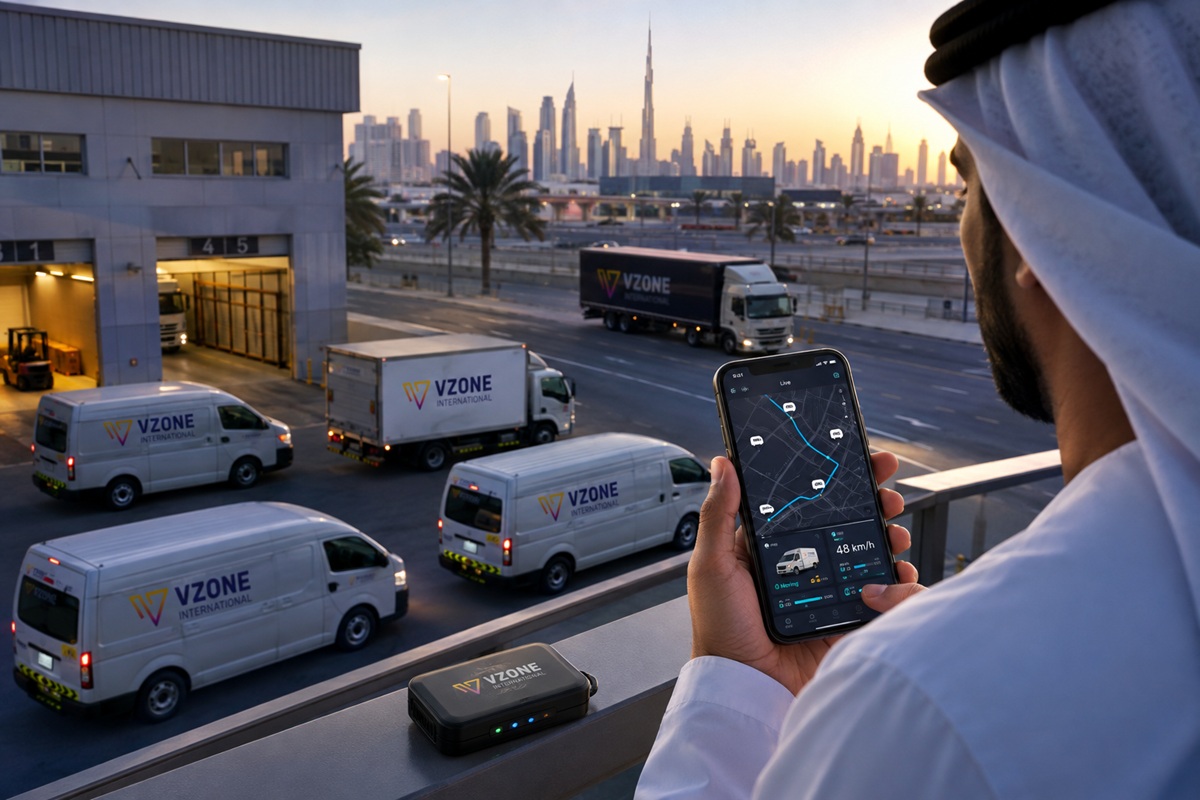
A fleet tracking mobile app has two distinct interfaces serving two user roles: the fleet manager app (live map with all vehicles, real-time alert push notifications, driver safety scores, and report access everything the web dashboard provides, optimised for a phone screen) and the driver app (job dispatch and navigation, electronic proof of delivery, driver safety score self-view, and driver identification at vehicle start). For UAE fleet operators, the manager app is essential for after-hours alert response geofence exit alerts and vehicle theft tamper alerts require immediate mobile response that desktop-only platforms cannot provide. The driver app is essential for ePOD delivery verification, driver coaching self-review, and Salik toll compliance documentation where drivers submit trip purpose alongside toll crossing records.

Read More »
GPS Tracking Data Privacy: What UAE Fleet Operators Must Know

GPS Tracking Data Privacy: What UAE Fleet Operators Must Know

GPS tracking of fleet vehicles in UAE is legal and for many commercial vehicle categories mandated by law under Asateel, IVMS, and SecurePath compliance programmes. UAE’s Personal Data Protection Law (Federal Decree Law No. 45 of 2021, effective 2023) requires that employees are informed when their location and behaviour data is collected through GPS tracking. Fleet operators must: disclose GPS monitoring in employment contracts or fleet policy documents, limit GPS data use to legitimate operational purposes, establish data retention policies, and ensure GPS data access is restricted to authorised personnel. There is no UAE legal requirement to obtain driver consent to track company vehicles only a requirement to disclose that tracking is in operation.

Read More »
How GPS Tracking Prevents Vehicle Theft for UAE Fleets

How GPS Tracking Prevents Vehicle Theft for UAE Fleets

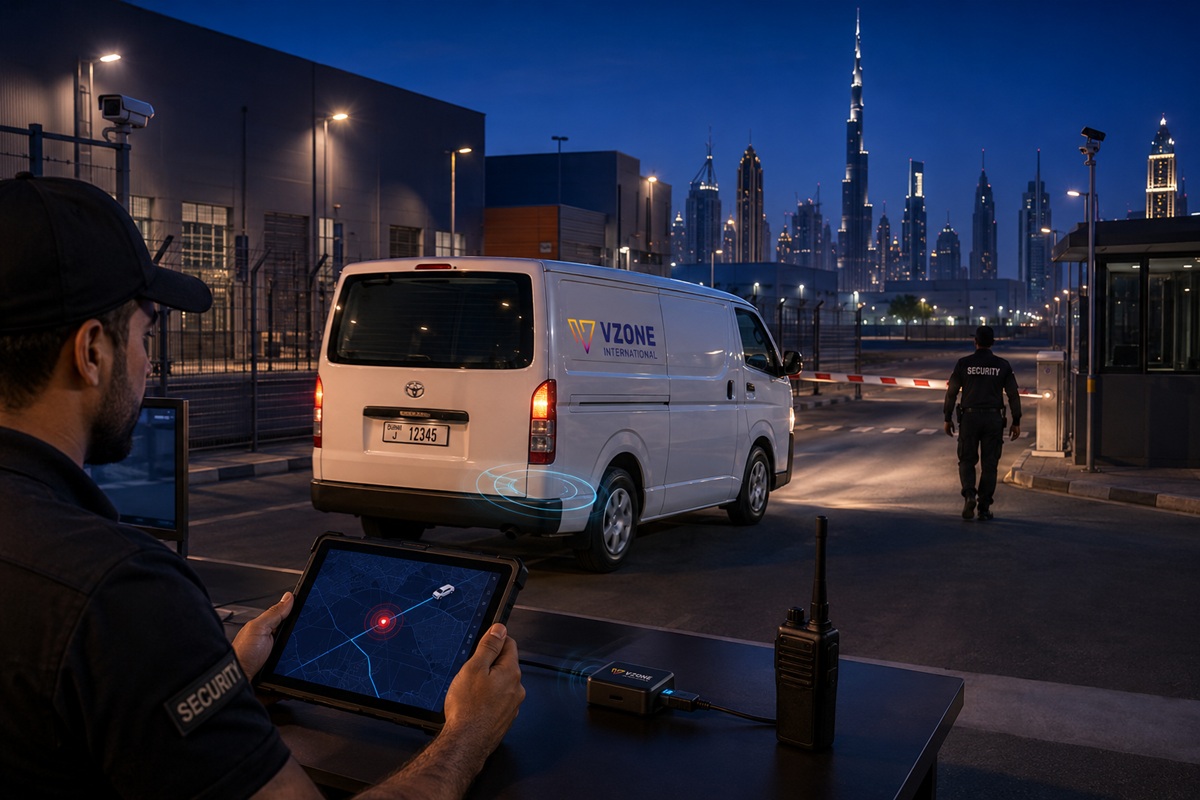
GPS tracking prevents vehicle theft for UAE fleets through four mechanisms: deterrence (visible or known GPS monitoring discourages opportunistic theft), immediate detection (after-hours movement alerts and tamper sensors fire within minutes of theft initiation), real-time recovery support (live GPS position data enables UAE Police and recovery teams to locate the vehicle while it is still moving), and insurance protection (GPS-tracked vehicles are recovered significantly faster than untracked vehicles, and insurance carriers in UAE offer lower theft premiums for GPS-monitored fleets). For high-value UAE commercial vehicles construction equipment, refrigerated trucks, specialist machinery GPS tracking is the primary theft mitigation technology, with recovery rates for GPS-tracked vehicles substantially higher than for untracked assets.

Read More »
EV Fleet Management - How to Transition Your UAE Fleet to Electric Vehicles in 2026

EV Fleet Management: How to Transition Your UAE Fleet to Electric Vehicles in 2026

EV fleet management is the specialised management discipline for electric vehicle fleets that extends traditional fleet management to include state of charge monitoring, charging schedule optimisation, range-aware route planning, battery health analytics, and energy cost tracking all of which require fleet management system capabilities that standard GPS vehicle tracking systems and traditional fleet platforms do not provide. In UAE, EV fleet management also requires planning for the specific challenges of battery performance degradation in extreme heat, charging infrastructure gaps outside major cities, and the energy cost optimisation available through DEWA’s off-peak smart charging tariffs.

Read More »
GPS Tracker Installation Guide for Fleet Vehicles in UAE

GPS Tracker Installation Guide for Fleet Vehicles in UAE

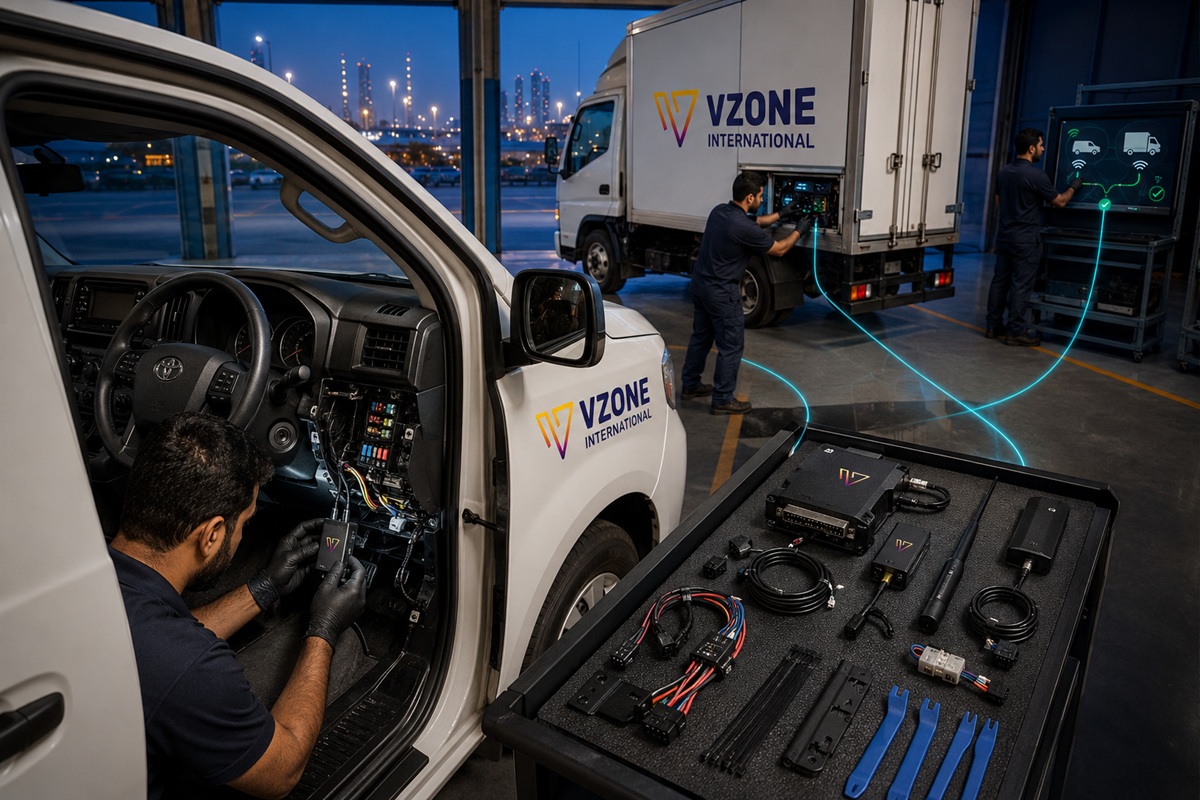
GPS tracker installation in UAE fleet vehicles follows three methods depending on vehicle type and compliance requirement: OBD-II plug-in (5-10 minutes, no tools, not compliant for Asateel/IVMS), hardwired to vehicle fuse box (45-90 minutes per vehicle, professional installer required for compliance programmes), and heavy vehicle CAN bus integration (specialist installation, required for ADNOC IVMS driver behaviour data). All UAE compliance programmes Asateel, IVMS, SecurePath, SIRA require hardwired professional installation with tamper-evident mounting. After installation, device registration with the applicable compliance portal (ITC Asateel, RTA SecurePath, ADNOC IVMS) activates compliance status typically within 1 to 3 business days.

Read More »
Real-Time vs. Passive GPS Tracking - Which Should Your UAE Fleet Use

Real-Time vs. Passive GPS Tracking: Which Should Your UAE Fleet Use?

Real-time GPS tracking transmits vehicle position to a cloud dashboard continuously every 10 to 60 seconds so fleet managers see live vehicle locations, receive instant alerts, and dispatch based on actual positions. Passive GPS tracking stores position data in the device’s memory and uploads it in bulk later producing a historical trip record but no live visibility and no real-time alerts. For UAE commercial fleet operations, real-time vehicle tracking is the only architecture that satisfies ITC Asateel and ADNOC IVMS compliance requirements, which mandate continuous active data submission to government portals. Passive tracking has no compliance application in UAE and is appropriate only for retrospective trip analysis with no operational management requirement.

Read More »
Cold Chain Monitoring System: Temperature and Humidity Tracking Guide

Cold Chain Monitoring System: Temperature and Humidity Tracking Guide

A cold chain monitoring system is a combination of calibrated temperature sensors, optional humidity sensors, door-open detection hardware, and a cloud-connected fleet management platform that continuously measures, records, and alerts on the condition of temperature-sensitive cargo during transport and storage. It is used by pharmaceutical distributors, food and beverage logistics operators, dairy and fresh produce transporters, and flower supply chains to maintain cargo within required temperature and humidity ranges and generate the unbroken audit records that UAE regulators MOHAP, Dubai Municipality, and ADAFSA require for compliance.

Read More »
What Is a Fleet Management System? - Complete Guide

What Is a Fleet Management System? Complete Guide

A fleet management system is software that integrates GPS vehicle tracking, driver behaviour monitoring, fuel analytics, and maintenance scheduling into a single operational platform enabling fleet operators to manage every vehicle, driver, and cost from one dashboard. Fleet management as a discipline is the organisational practice of overseeing vehicles, drivers, and costs; a fleet management system is the technology that makes fleet management scalable beyond what manual methods can handle. UAE fleets using a fleet management system report 10 to 25 percent fuel cost reduction, 30 to 40 percent fewer at-fault accidents, and 15 to 20 percent insurance premium reduction within 12 months of deployment.

Read More »
What Is ADAS in Fleet Vehicles A Guide to Advanced Driver Assistance Systems for UAE Fleets

What Is ADAS in Fleet Vehicles? A Guide to Advanced Driver Assistance Systems for UAE Fleets

ADAS (Advanced Driver Assistance Systems) in fleet vehicles are technology systems that monitor the vehicle’s road environment and driver behaviour to warn of, or automatically intervene to prevent, specific accident scenarios. For UAE fleet operations, the most relevant ADAS capabilities are forward collision warning, lane departure warning, blind spot monitoring, and pedestrian collision warning delivered through AI dashcam forward cameras that simultaneously provide incident footage and real-time ADAS alerts without requiring separate dedicated hardware.

Read More »
Live Streaming Dashcam for Fleets: Real-Time Driver Monitoring Explained

Live Streaming Dashcam for Fleets: Real-Time Driver Monitoring Explained

Live streaming dashcams for fleet vehicles transmit continuous or on-demand video from vehicle cameras to a remote monitoring platform over 4G cellular enabling operations managers to view a live feed from any vehicle in real time. For UAE fleets, live streaming is most valuable for high-risk cargo, welfare checks on remote drivers, and incident verification but consumes significantly more data than event-based AI recording, making it a targeted rather than fleet-wide deployment in most operations.

Read More »
Scroll to Top